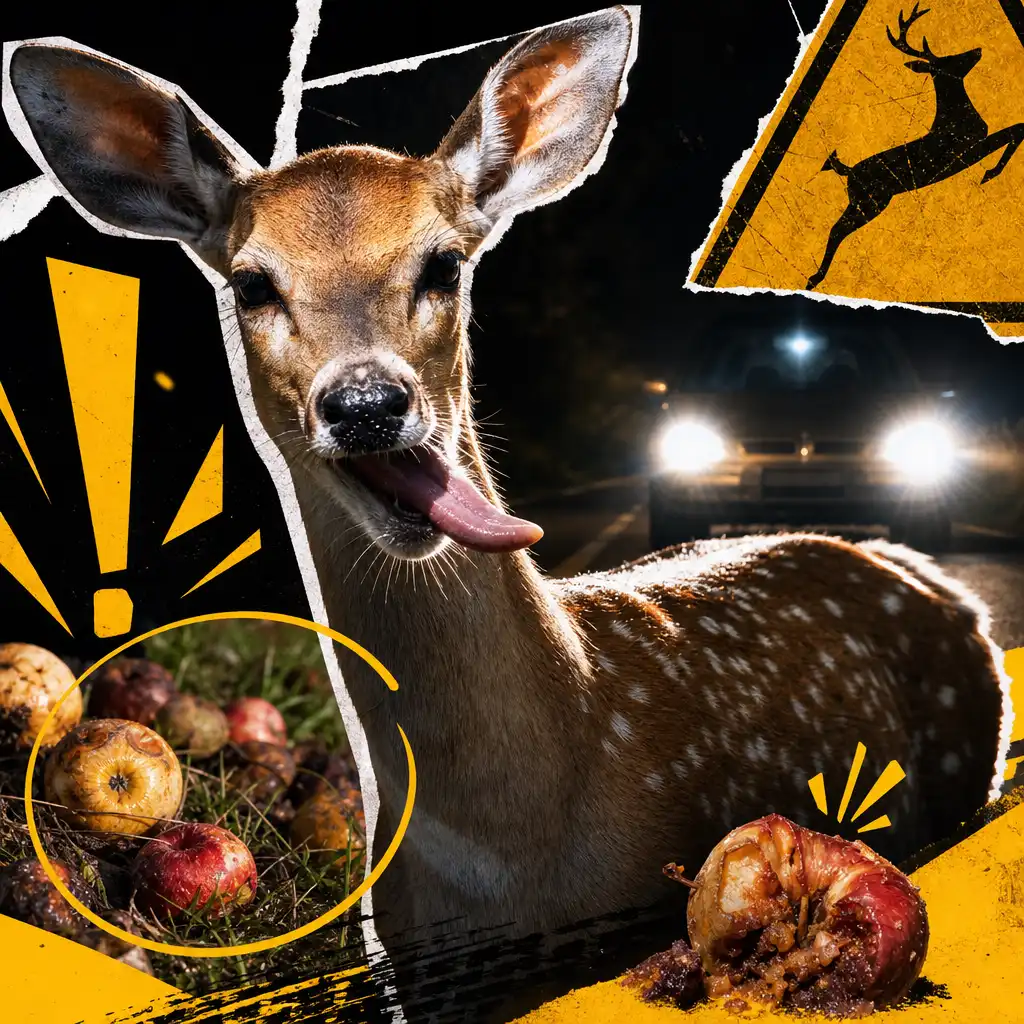
French police are warning motorists about a road risk that sounds invented but is, unfortunately for everyone involved, quite real: drunk deer. In Saône-et-Loire, authorities say some deer have been behaving erratically after eating buds, fermented fruit, or decaying vegetation, making them harder for drivers to predict.
The warning came from the Gendarmerie de Saône et Loire, which posted a video on Facebook showing a deer spinning in circles beside a road. It is the sort of clip that feels funny for about three seconds, until you remember cars are heavy and deer do not read traffic signs.
Why deer may act intoxicated in spring
According to the gendarmerie, the issue can appear in spring, when some wild animals feed on natural material that has begun to ferment or decay. That can affect how they move and react, leaving them disoriented or unpredictable near roads.
“No way, ladies and gentlemen… not all road users are sober,” the police wrote in their post. “In spring, some wild animals consume buds, fermented fruit, or decaying vegetation… and can exhibit completely unpredictable behavior.”
The concern is not that deer are deliberately wandering out for a woodland happy hour. The point is simpler and more useful: an animal that is confused, startled, or moving strangely can turn a normal drive into a collision risk very quickly.
What police are telling drivers to do
The gendarmerie urged drivers to be especially careful at night, on secondary roads, and in wooded areas where animals may suddenly enter the carriageway. Their advice was practical and familiar, if newly attached to the phrase “forest aperitifs.”
Drivers were told to:
- Slow down in areas where wildlife may be present
- Anticipate sudden animal movement
- Avoid sharp steering if a deer appears
- Stay especially alert on rural roads and near woodland
“Where there is danger, there is consequence: a collision can happen very quickly, especially at night or on secondary roads,” the police wrote. “So, we slow down, we anticipate, we avoid sudden steering movements, and we are extra vigilant in wooded areas.”
They added: “If Bambi is overindulging in forest aperitifs, it might not be the time to drive as if the road were entirely yours.”
A fair point, even if Bambi’s public relations team may object.
The warning surprised plenty of people
The post drew amused and surprised reactions from commenters, with some saying they had no idea wild animals could appear intoxicated after eating fermented natural food.
“I didn’t know it could happen. Thanks to you tonight I’ll sleep less stupid,” one commenter wrote.
Another joked: “You missed the opportunity to pull him for drunkenness on the public road.”
Behind the jokes, the message is fairly serious. Wildlife warnings can become background noise for drivers who use rural roads often, but animals do not always behave in neat, predictable ways. A deer that runs across the road is dangerous enough. A deer that spins, staggers, or changes direction suddenly is even less helpful to the general project of everyone getting home intact.
Driver attention is still the main issue
The French warning also fits into a wider road safety theme: drivers need to pay attention to what is happening around them, whether the hazard is wildlife, weather, another vehicle, or their own questionable decisions.
In China, one woman was reportedly caught doing her makeup instead of driving, saying the car’s driver-assist systems handled the road “better” than she did. In Northern Ireland, police stopped another driver at 135mph after the motorist claimed they were speeding to pick up Chinese takeout.
Those cases do not involve fermented fruit or confused deer, but the basic lesson is the same. Roads are shared spaces, sometimes with people making poor choices and sometimes with wildlife having a bad reaction to fallen fruit. Either way, staying alert remains the least dramatic option available.