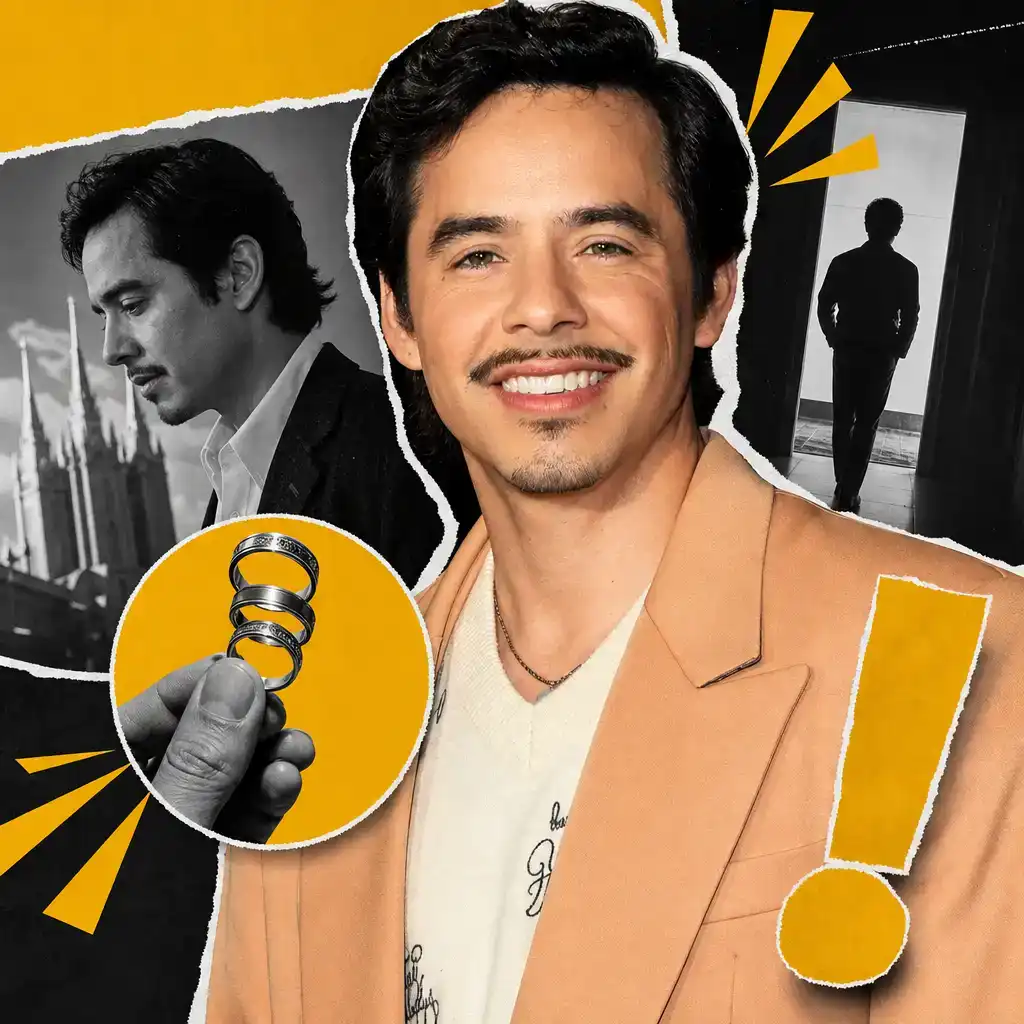
“The answers that they gave me didn't seem like they were educated responses,” Archuleta said. “They said, ‘If you marry a woman, God will bless you to be rid of those feelings.’”
So he followed that path, or at least tried to.
“I went into those marriages with that idea,” he said.
It is a stark admission from someone who became famous as a teenager with a wholesome public image attached to him almost immediately. Public sweetness is useful for branding. Less useful, apparently, when you are trying to figure out who you are while everyone else has opinions about it.
What changed before the third wedding
Archuleta said the pressure became impossible to ignore during his third engagement. As the wedding date approached, his body started sending signals his mind could no longer negotiate away.
“We're approaching the wedding day, and I was starting to get anxiety attacks,” he said. “I was starting to realize I'm trying to lie to myself in order to fit the future other people had mapped out for him and I just can't do it.”
His conclusion was simple, even if getting there was not.
“I just knew it wasn't right,” he said.
Archuleta emphasized that the relationships were not fake. He said he loved his fiancées and was physically attracted to them. But he eventually understood that marrying a woman would not erase his stronger attraction to men.
“I realized how much of a disservice I was doing, not just to myself, but also to the women I was engaged to,” he said.
He added that he could feel the situation would worsen if he kept forcing it.
“You could just sense these feelings aren't going to go away, and if anything, I'm going to become bitter and resentful, and it can get really messy in this relationship,” he said.
Why he says honesty became necessary
Archuleta said his feelings for men were not passing crushes. They were part of him, and denying that had consequences for everyone involved.
“I could tell eventually it's going to spiral and probably just crash and burn,” he said.
Instead of letting that happen, he chose to step away from the future he had been trying to build. He described his former partners with affection, not blame.
“I loved these girls. They were wonderful and they were beautiful,” he said. Still, he added, “I had to be honest to myself and honest to them and eventually honest to everybody else.”
Archuleta publicly came out as part of the LGBTQ+ community in 2021. The following year, he left the Mormon church.
That chronology matters because his story is not just about celebrity disclosure. It is about the slow, costly process of separating personal truth from institutional expectation, especially for someone whose career and faith background were both tied to a public image of goodness.
Why he is now talking about sexual health
Archuleta is also speaking more openly about sex and sexual health through a partnership with pharmaceutical company Gilead. He said he wishes he had grown up seeing more people discuss topics such as STI testing, HIV prevention, and PrEP, short for pre-exposure prophylaxis, a medication used to help prevent HIV.
“I wish I had someone that I could see talking about this so that I wasn't so scared of it,” he said. “I'm hoping that if there's somebody who was raised that way, who was afraid of these topics, afraid to go get STI testing, to show how not scary it is.”
Archuleta said information from Gilead’s HealthySexual website helped him move away from the belief that sex would “ruin your life” and toward a more practical understanding of healthy choices and self-discovery.
“I used to be so scared before,” he said. “The more you learn about sexual health and being sexually responsible, it's a game changer. You can walk with so much more assurance in yourself and in who you are, and empower yourself by doing so.”
For Archuleta, the message now is less about shock and more about relief: knowing yourself, protecting yourself, and not waiting for permission to be honest.