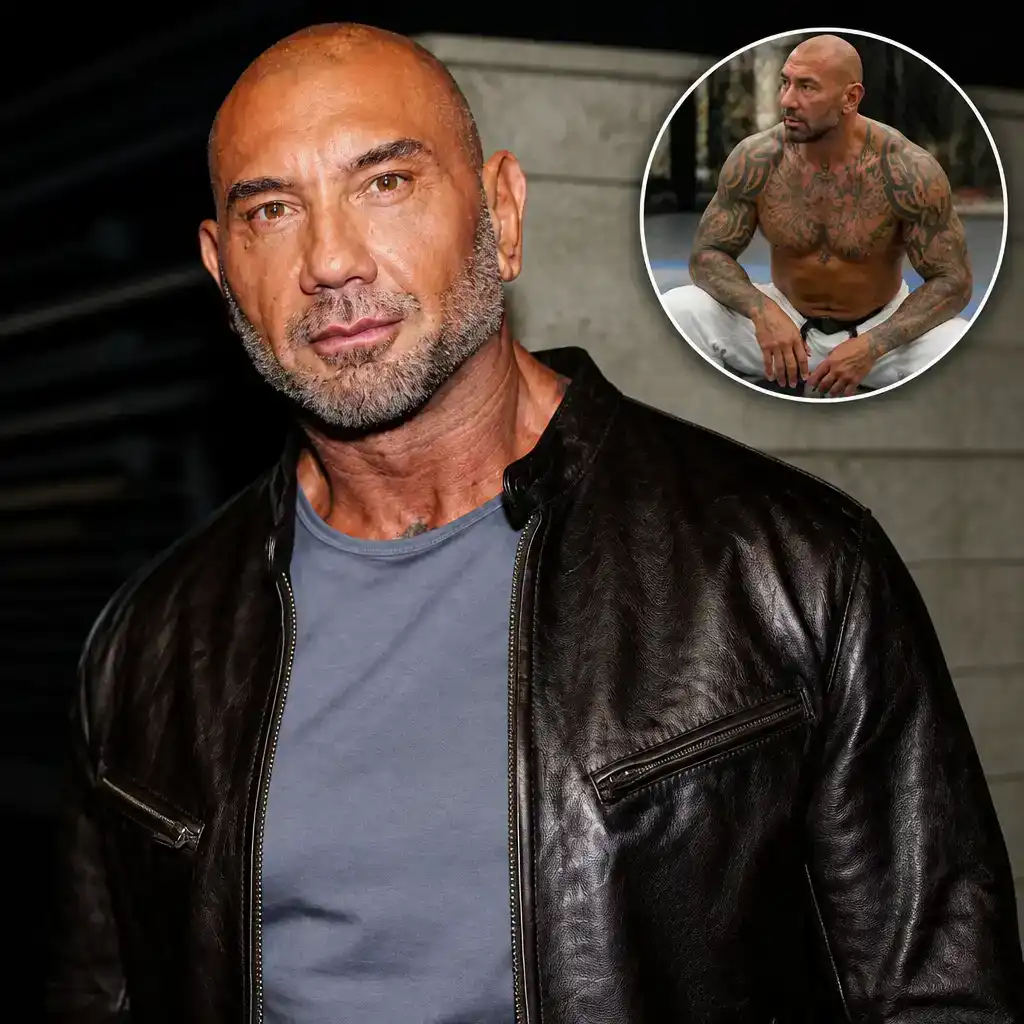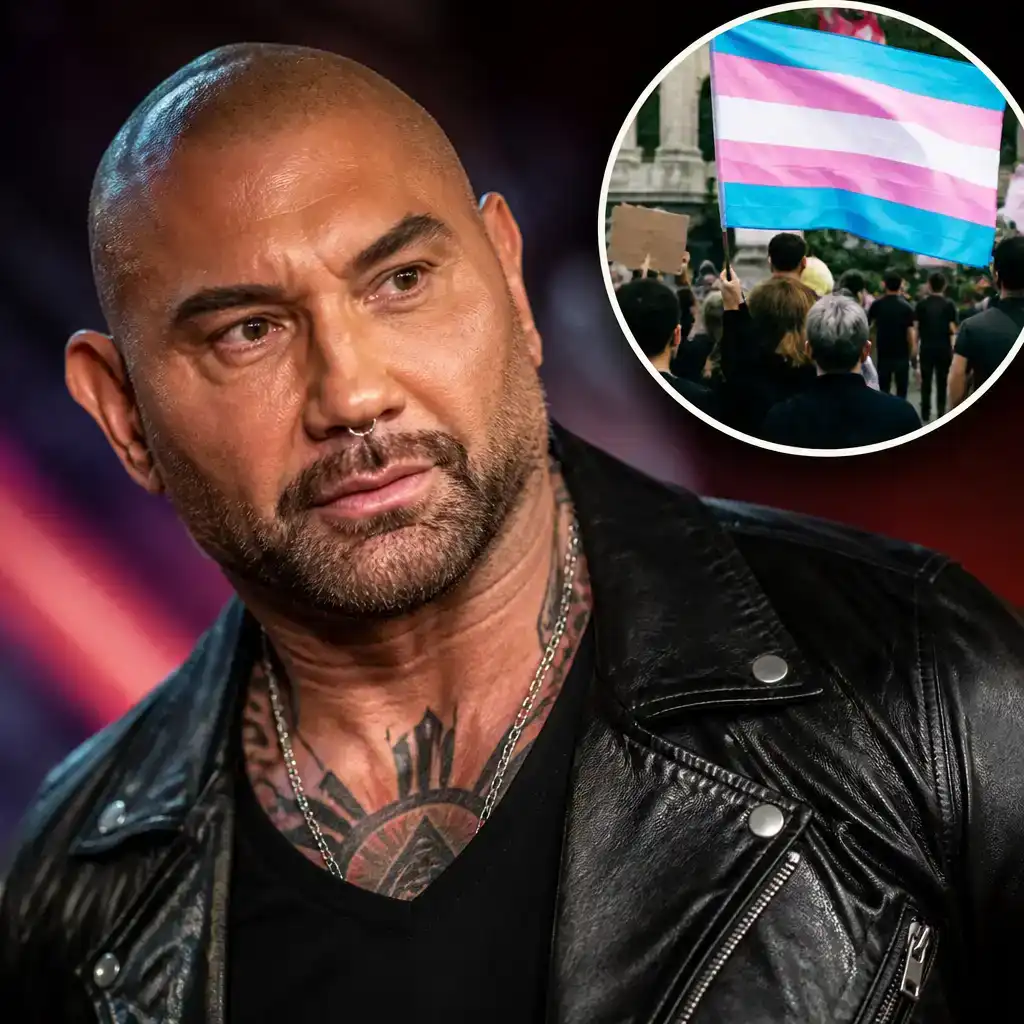
Dave Bautista has delivered a blunt message about prejudice, questioning why some people appear more disturbed by transgender individuals than by Nazis.
The actor, best known for his roles in Guardians of the Galaxy and Glass Onion, shared a short statement that quickly attracted attention online: "If trans people bother you more than Nazis, re-evaluate."
It was a pointed intervention in an increasingly contentious debate over transgender rights, discrimination and the political priorities shaping public outrage.
Rather than addressing a particular politician or controversy, Bautista's message challenged the way people assess perceived threats and decide where to direct their anger.
Dave Bautista challenges the priorities behind public outrage
Bautista's statement draws a deliberate contrast between transgender people, a community frequently targeted by discrimination, and Nazis, whose ideology is associated with racial supremacy, antisemitism and the systematic persecution of minorities.
The actor's argument is straightforward: if someone's hostility towards transgender people outweighs their opposition to Nazi ideology, their moral priorities deserve serious examination.
The wording leaves little room for ambiguity. Bautista did not offer an elaborate political explanation or attempt to soften the comparison. He delivered a single sentence designed to make readers confront an uncomfortable question about their own attitudes.
That simplicity helps explain why the message resonated. In a social media environment where political arguments often become lengthy exchanges of accusations and counterarguments, Bautista reduced his position to a direct challenge.
His post subsequently prompted debate about tolerance, empathy and the different standards people apply when responding to discrimination.
Why the Guardians of the Galaxy star speaks out on LGBTQ+ rights
Bautista has established a public reputation for supporting LGBTQ+ equality and challenging discriminatory attitudes.
Although many audiences associate him primarily with Drax, the physically imposing but frequently unintentionally hilarious character from Marvel's Guardians of the Galaxy films, his public commentary has often addressed subjects considerably more serious than superhero entertainment.
His latest statement fits that pattern. Rather than limiting his public presence to film promotion and entertainment news, the actor has repeatedly used his visibility to express support for marginalized communities.
That visibility matters because Bautista reaches audiences beyond those who regularly participate in political discussions or follow LGBTQ+ advocacy.
His background as a professional wrestler and his subsequent Hollywood career have also given him a public identity that does not necessarily fit the stereotypes sometimes attached to celebrity activism.
None of this means his opinions carry special political authority. Celebrity status does not automatically make an argument correct. But a recognizable public figure can introduce an issue to people who might otherwise avoid the conversation.
Why Bautista's comparison has sparked debate
The statement's central comparison is intentionally provocative, but it is important to distinguish what Bautista actually said from interpretations of his message.
He did not claim that every person who disagrees with a particular transgender rights policy supports Nazism. Nor did he suggest that all disagreements over gender-related legislation are equivalent to extremist ideology.
Instead, his statement focuses on the relative intensity of people's reactions. It asks why the existence or rights of transgender individuals might provoke stronger hostility than an ideology historically responsible for extraordinary persecution and violence.
That distinction is essential to understanding the argument.
There are legitimate political and legal debates involving gender identity, public policy and competing rights. Those discussions can involve complex questions without automatically implying hatred or extremism.
Hostility towards transgender people simply because of who they are, however, is a different matter from disagreement over a specific policy.
Bautista's message appears directed at that hostility, particularly when it becomes more emotionally charged than opposition to openly hateful ideologies.
The online reaction reflects how difficult these conversations have become. A statement intended as a moral challenge can also become a flashpoint for wider arguments about free expression, identity and political polarization.
Why the distinction between disagreement and discrimination matters
In my view, Bautista's statement is effective precisely because it challenges priorities rather than demanding agreement on every aspect of transgender rights. People can reasonably disagree about individual policies, but treating transgender people themselves as a greater source of concern than an ideology built around persecution reveals a troubling imbalance. The comparison is deliberately sharp, and some readers may find it reductive. Still, its underlying argument is difficult to dismiss: political disagreement should not become an excuse for abandoning basic human dignity.
There is also a broader question about how public figures participate in sensitive political discussions.
Some celebrities prefer carefully worded statements that leave room for multiple interpretations. Others, including Bautista in this instance, choose language that makes their position unmistakable.
Neither approach guarantees a productive debate. A blunt message can encourage reflection, but it can also prompt defensive reactions from people who believe their views have been misrepresented.
The challenge is whether the discussion moves beyond the immediate controversy and addresses the actual issue being raised.
What Bautista's message says about the wider debate
Bautista's post arrives against the broader backdrop of continuing disputes over LGBTQ+ rights and the treatment of transgender people in public life.
Those disputes frequently involve political rhetoric, questions of personal identity and competing interpretations of equality and individual freedom.
The actor has not presented a detailed policy proposal or attempted to resolve those disagreements. His intervention operates on a more fundamental level: how society decides which beliefs and behaviours deserve its strongest condemnation.
There is no indication in the supplied account that Bautista has expanded on the statement or identified a particular event that prompted it.
For now, the significance of his message lies in the contrast he chose to draw. The actor has placed a simple question before his audience, one that does not require agreement on every political issue to be worth considering.
And while the internet may continue arguing over his choice of words, the underlying challenge remains: why should someone's identity inspire more outrage than an ideology defined by hatred?