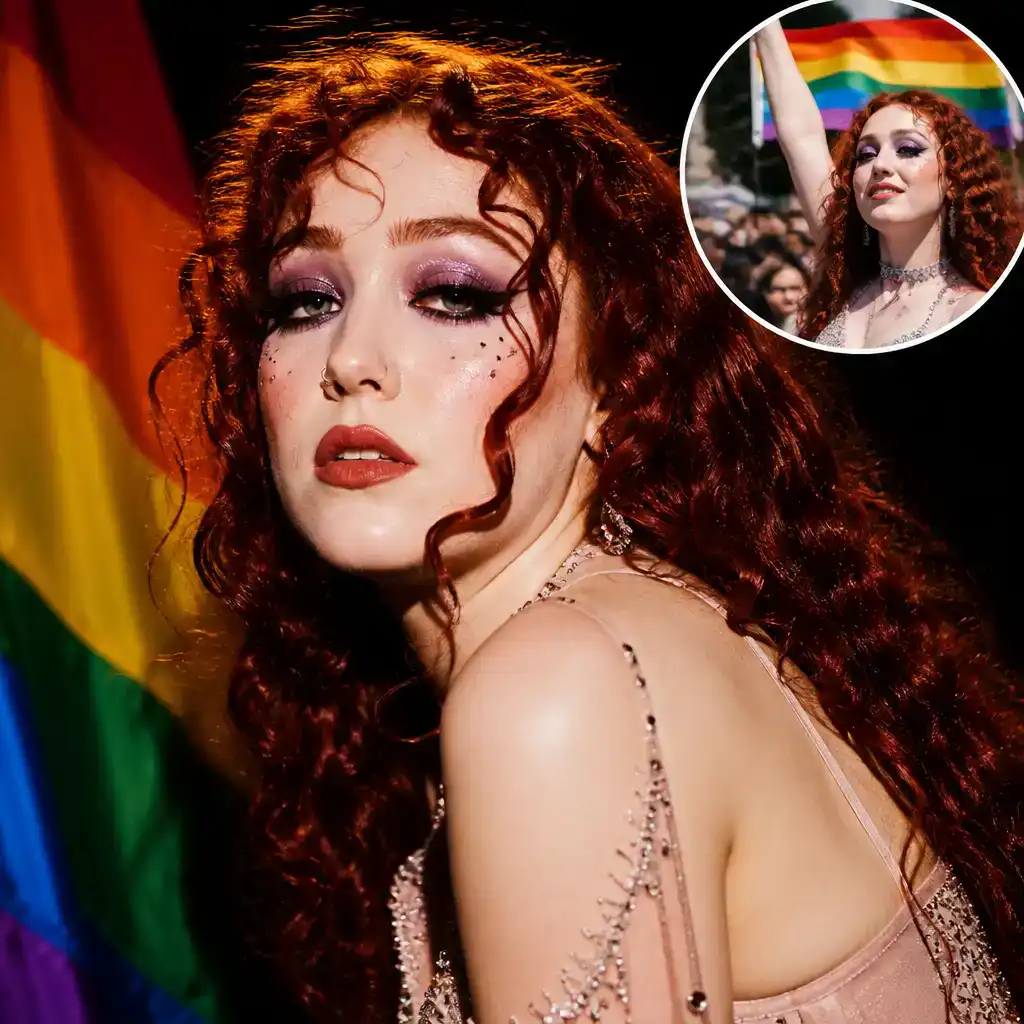
For Chappell Roan, coming to terms with her sexuality has led to a declaration she once thought she would never make: “Thank God I’m gay.”
The pop star shared the deeply personal reflection in a Pride Month love letter written for Billboard, describing how her understanding of her queer identity has changed over time. What makes the statement particularly striking is not simply its confidence, but Roan's admission that she once could not imagine saying those words.
Her message captures a complicated part of self-discovery: the distance between recognising who you are and reaching a point where you can celebrate it without hesitation.
Chappell Roan celebrates her queer identity in a candid Pride Month message
Roan's contribution to Billboard's Pride Month coverage offered a remarkably direct expression of gratitude for her sexuality.
“‘Thank God I’m gay’ is a sentence I thought I’d never say, but it’s true. Thank God I love women,” she wrote.
The quote is brief, but its wording reveals an important shift in perspective. By acknowledging that she never expected to express such gratitude, Roan suggests that her relationship with her identity has changed considerably.
Rather than framing her sexuality as something requiring explanation or justification, she presents it as something worth celebrating.
That distinction gives the message its emotional weight. The emphasis is not on convincing anyone else to accept her identity, but on recognising how she now feels about herself.
Why her words reveal a deeper journey of self-acceptance
One of the most revealing elements of Roan's statement is the contrast between her past expectations and her present feelings.
Her admission that she once thought she would never say those words suggests that arriving at this level of self-acceptance was not something she always considered possible.
That experience may resonate with people who have struggled to reconcile their sexuality with expectations they previously held about themselves.
Self-discovery is not necessarily a single moment of realisation. For many people, understanding an aspect of their identity and becoming comfortable expressing it are separate experiences.
Roan's reflection speaks to that distinction without attempting to provide a universal account of what coming out or embracing a queer identity should look like.
Importantly, her short statement does not explain every stage of her personal journey. It would be misleading to assign specific experiences, pressures or struggles to her without further evidence.
What she does communicate is the significance of reaching a point where something once difficult to imagine has become a source of genuine happiness.
Why Chappell Roan's message matters during Pride Month
Pride Month provides a particularly relevant setting for Roan's reflection because her message centres on the personal meaning of accepting and celebrating queer identity.
While public conversations about LGBTQ+ experiences frequently focus on discrimination, political disputes and social acceptance, Roan's words draw attention to another dimension: the simple pleasure of feeling comfortable with who you are.
Her declaration does not deny that self-acceptance can be complicated. In fact, the admission that she once could not imagine making it is precisely what prevents the message from sounding like an effortless celebration.
There is also something notable about the absence of elaborate explanation. Roan does not need a lengthy argument to communicate the significance of her feelings. Two sentences are enough to establish both the change and the happiness that followed.
In my view, the most powerful part of Roan's message is not the declaration itself, but her acknowledgment that she once considered it unimaginable. That contrast makes her words more meaningful than a straightforward statement of pride. It suggests that self-acceptance can involve changing the way a person understands their own future, although the limited details she shared do not allow us to reconstruct precisely how that transformation happened.
A personal declaration with a wider meaning
Roan's Billboard message also illustrates why personal reflections from public figures can resonate beyond the individuals sharing them.
Her statement is rooted in her own experience, but the underlying idea is accessible: feelings about identity can evolve, and a person may eventually embrace something they once struggled to imagine accepting.
That does not mean every queer person's journey follows the same path. Some experience uncertainty, others encounter external obstacles, and many do not regard their identity as something they ever needed to reconcile.
Roan's words are most effective when understood as an individual account rather than a prescription for anyone else's experience.
There is no need to turn her declaration into a sweeping lesson about sexuality or celebrity influence. Its significance lies in the contrast she chose to share with readers.
At one point, saying “Thank God I’m gay” seemed impossible to Chappell Roan. In her Pride Month letter, she said it openly, followed immediately by an even simpler expression of happiness: “Thank God I love women.”
Sometimes the clearest evidence of personal change is hearing someone say, without apology, the very thing they once believed they never could.