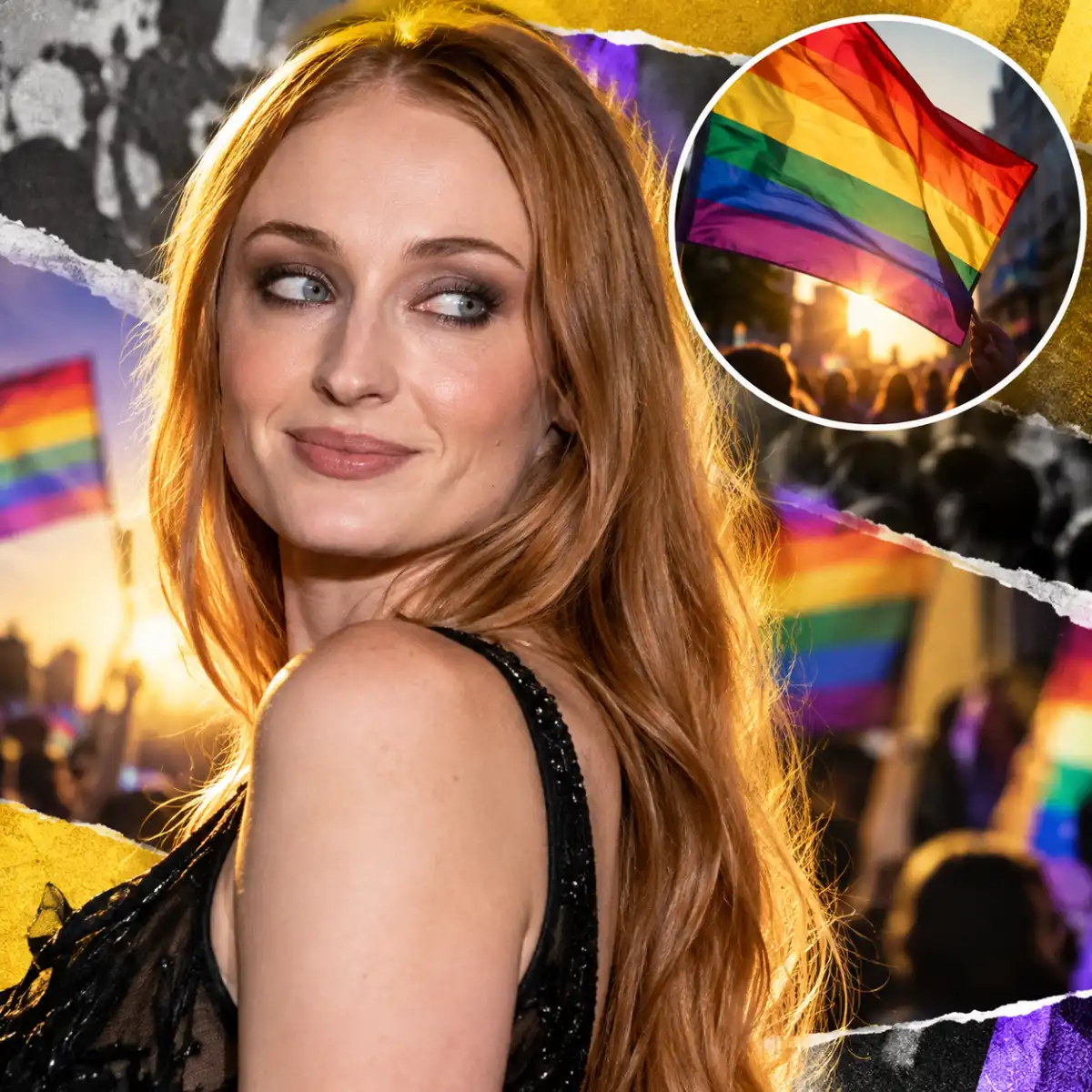
Five years after Sophie Turner shared a playful Pride Month message on Instagram, one particular line continues to attract attention whenever the Game of Thrones actress becomes a trending topic: "Time isn't straight, and neither am I."
Originally posted in June 2021, the remark was accompanied by a collection of LGBTQ+ Pride stickers and quickly prompted fans to discuss whether Turner was publicly addressing her sexuality.
It was brief, witty and seemingly spontaneous. But the message also raised a question that remains relevant whenever the post resurfaces: how much should the public read into a celebrity's personal statement?
The seven words that sparked a conversation
During Pride Month in 2021, Turner shared an Instagram Story featuring several animated stickers celebrating LGBTQ+ identities.
Among them were messages reading "Gay Pride", "Bi Pride" and "Move, I'm Gay". The actress also included the sentence that would become the most memorable part of the post:
"Time isn't straight, and neither am I."
The combination immediately attracted attention. Turner, already internationally recognised for playing Sansa Stark in HBO's Game of Thrones and Jean Grey in Dark Phoenix, had delivered what many fans interpreted as a candid reference to her own sexuality.
There was no lengthy explanation, carefully staged interview or formal announcement accompanying the message. Instead, the actress used the informal language of an Instagram Story, leaving the words to speak for themselves.
For supporters who welcomed the post as a coming-out moment, that simplicity was part of its appeal.
Why fans interpreted Sophie Turner's Pride post as coming out
The wording of Turner's message was central to the reaction.
While sharing Pride-themed stickers can simply express solidarity with the LGBTQ+ community, the phrase "neither am I" appeared to make the statement personal.
Combined with the references to both gay and bisexual Pride, it was understandable that fans interpreted the Story as Turner acknowledging that she was not heterosexual.
However, an important distinction remains: the post did not explicitly identify a particular sexual orientation.
Although some readers connected the message specifically to bisexuality, the available wording does not establish that Turner was choosing a particular label.
That distinction matters. A public figure can communicate something meaningful about their identity without necessarily offering the precise definition that social media users might prefer.
Turner's message was widely celebrated as an expression of LGBTQ+ identity, but the original post itself remains the clearest evidence of what she chose to share.
How a temporary Instagram Story became a lasting pop-culture moment
Instagram Stories are designed to disappear after 24 hours, yet Turner's Pride Month message has continued to circulate in discussions about the actress years after its original publication.
Its staying power is easy to understand.
The statement combined a familiar joke about time with an unexpected personal declaration. It was short enough to remember, distinctive enough to quote and direct enough to invite an immediate reaction.
It also arrived from an actress whose public profile had been shaped by major film and television franchises, giving the message an audience far beyond her existing social media followers.
Unlike a traditional celebrity interview, the post offered no extended discussion of identity or personal history. That absence of explanation made the words particularly easy to share, but it also created room for competing interpretations.
The result was a piece of celebrity social media history that continued to generate conversation long after the original Story had expired.
Why the distinction between expression and labels matters
In my view, the most interesting aspect of Turner's post is not the debate over which label might apply to her. It is the fact that a few informal words could communicate something personal without turning it into a detailed public disclosure. The wording reasonably invited interpretations about her sexuality, but it did not provide every answer. Respecting that distinction seems more meaningful than trying to extract a definitive identity from a single Instagram Story.
There is also something refreshing about the tone of the original message.
Celebrity announcements often arrive through carefully prepared statements, interviews or publicity campaigns. Turner's post, by contrast, was built around animated stickers and a joke.
That does not make the message less meaningful. It simply demonstrates that personal expression does not always follow the conventions audiences expect from famous people.
And while fans may understandably want to celebrate someone they admire, celebration does not require filling in details that the person has not publicly provided.
Why Sophie Turner's 2021 message still resonates
The continued interest in Turner's Pride Month Story illustrates how a fleeting celebrity post can become a lasting reference point in online culture.
For some fans, the message represents an entertaining example of the actress's humour. For others, it carries the additional significance of seeing a major television and film star express herself in language associated with LGBTQ+ identity.
Both reactions can coexist without requiring a more elaborate explanation from Turner herself.
The original post remains notable precisely because of what it said, rather than what later discussions might attempt to add to it.
Five years on, its central line still works as both a joke and a personal statement. And perhaps that is why it has lasted: Turner offered seven memorable words, while the internet has spent years discussing everything around them.