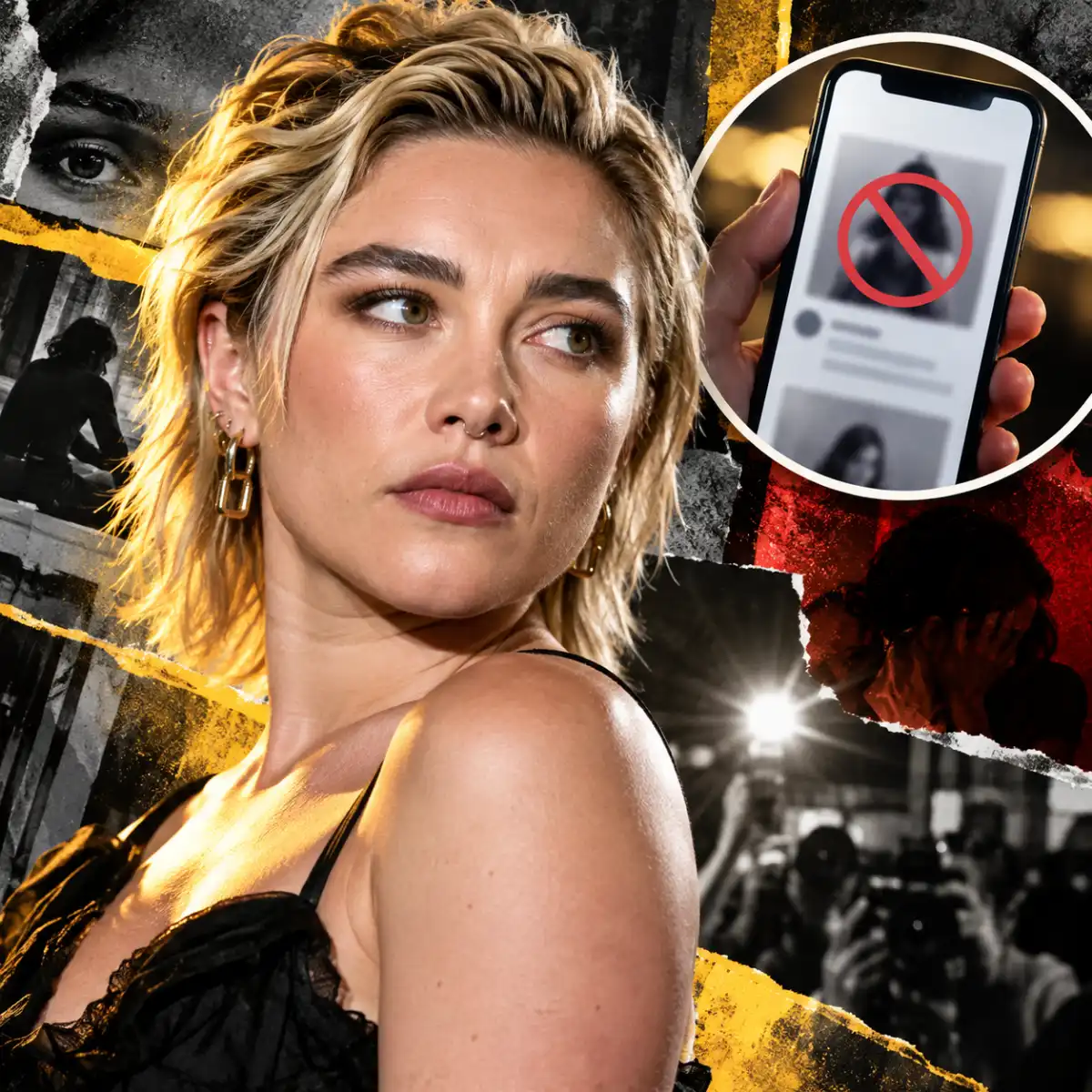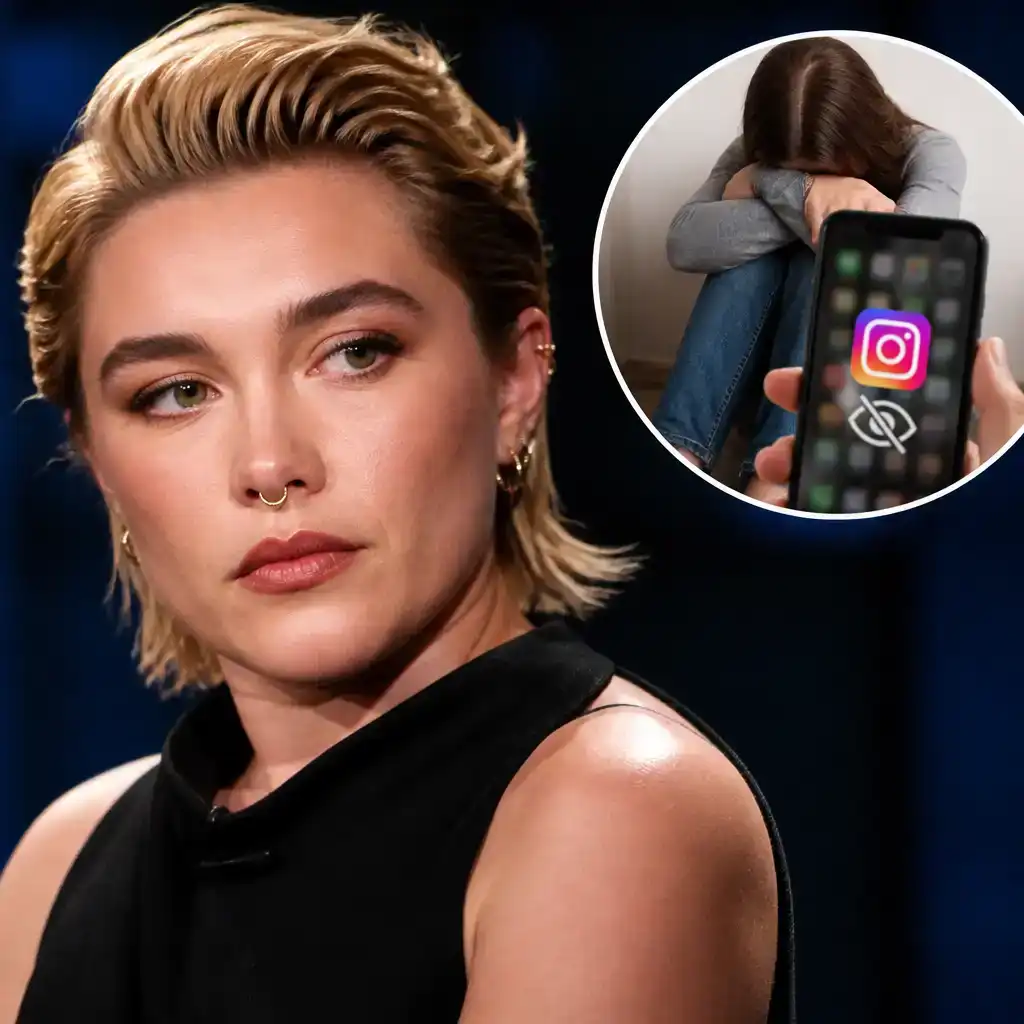
Florence Pugh says Instagram censored her when she tried to speak publicly about sexual assault allegations, raising an uncomfortable question about how freely women can discuss sexual violence on social media.
Appearing on The View while promoting East of Eden, the actress revealed that her attempt to draw attention to the Cornell 7 sexual assault allegations had encountered restrictions on Instagram.
For Pugh, the experience highlighted a troubling contradiction: women are encouraged to speak out about sexual violence, yet the platforms they use to share those experiences may also restrict their voices.
Florence Pugh says Instagram censored her sexual assault comments
During the television appearance, Pugh explained that she had previously attempted to raise awareness about the Cornell 7 allegations through her social media presence.
According to the actress, Instagram restricted that effort, leaving her unable to communicate her message as intended.
"I was able to come here and talk about it in real life, even though sadly Instagram censored me when I said it," Pugh told the programme.
She went further, suggesting that the incident reflected a wider problem with how women's discussions of sexual violence are treated.
"Which is also just another shock that women are censored. Even when they go through these things, they can't talk about it."
Pugh did not provide technical details about the restriction in the supplied account. It remains unclear whether Instagram removed the content, limited its visibility or applied another form of moderation.
That distinction matters when assessing what happened. Pugh's description establishes her experience and criticism, but it does not independently explain why the platform acted.
Why the Cornell 7 allegations became part of the conversation
Pugh's remarks concerned allegations of sexual assault associated with the Cornell 7, a subject she had sought to bring to public attention.
Her comments focused less on the specifics of the allegations than on the obstacles she says she encountered while discussing them.
The material available does not establish the identities of those involved, the precise nature of the accusations or the status of any investigation or legal proceedings. Those allegations therefore remain allegations and should not be treated as proven misconduct.
Nevertheless, Pugh's decision to address the subject on national television gave her an opportunity to discuss an issue she believes had been restricted on her own social media account.
The contrast was striking. A television interview provided space for a conversation that, according to Pugh, had been curtailed on a platform designed to let people communicate directly with their audiences.
The wider problem of discussing sexual violence online
Pugh's criticism raises a difficult issue for social media platforms: how to moderate sensitive material without unnecessarily restricting legitimate discussions about abuse.
Content involving sexual violence can require careful handling, particularly when allegations concern identifiable individuals. Yet discussions intended to raise awareness are not necessarily equivalent to harmful or exploitative material.
The challenge lies in distinguishing between the two.
In Pugh's case, the available information does not establish which moderation policy, if any, was applied or whether the restriction resulted from an automated system or a human decision.
Without that information, it would be premature to conclude that Instagram deliberately suppressed her comments because they concerned violence against women.
What can be established is that Pugh believes her attempt to discuss the allegations was censored, and that she considers the experience part of a broader problem affecting women's ability to speak openly.
Why Pugh believes public pressure still matters
Despite her frustration, Pugh used the interview to argue that conversations about sexual violence must continue.
She expressed appreciation for the opportunity to address the issue before a national audience, suggesting that visibility and sustained public attention remain important.
"It's an ongoing conversation and will always be an ongoing conversation until we are harder on those that do that to women," she said.
Her comments linked the question of online expression to the broader issue of accountability for sexual violence.
In her assessment, discussing abuse is not enough on its own. The conversation must also confront how perpetrators are treated and whether society responds firmly enough to misconduct.
In my view, the most concerning aspect of Pugh's account is the apparent gap between the purpose of her message and the outcome she describes. Platforms have legitimate reasons to moderate sensitive content, particularly when unproven allegations are involved. But restrictions affecting discussions of sexual violence deserve clear explanations and meaningful opportunities for review. Without knowing precisely what Instagram did, it is impossible to judge whether this particular decision was justified. That uncertainty is itself a reason to seek greater transparency rather than assume either deliberate censorship or a harmless technical error.
Questions remain over Instagram's response
Pugh's television appearance brought attention to her experience, but several important questions remain unanswered.
The available account does not include an explanation from Instagram about the alleged restriction, the content of the original post or whether any moderation decision was subsequently reversed.
Those details would help establish whether Pugh's experience reflected a specific enforcement decision, a broader moderation problem or another issue affecting the visibility of her post.
For now, her comments have placed the debate over social media moderation alongside a much more serious conversation about sexual violence and accountability.
Pugh was able to discuss the issue on television. The unresolved question is why, according to her account, she could not communicate the same message freely through her own Instagram platform.