The source told Puck that Hammer ended up in tears and said, “Fuck. This is hateful, disgusting.”
That alleged reaction matters because Hammer’s presence is one of the reasons the film became a public story at all. His casting already carried notoriety. Pairing that with Boll’s inflammatory material gave the project an attention-grabbing edge, even before Musk amplified it. If the report is accurate, Hammer may have signed onto a film whose final tone and message hit differently once assembled. That is not a rare Hollywood problem, though most examples do not involve a movie being passed around a major social platform like a political grenade.
What the PlayStation game is promising
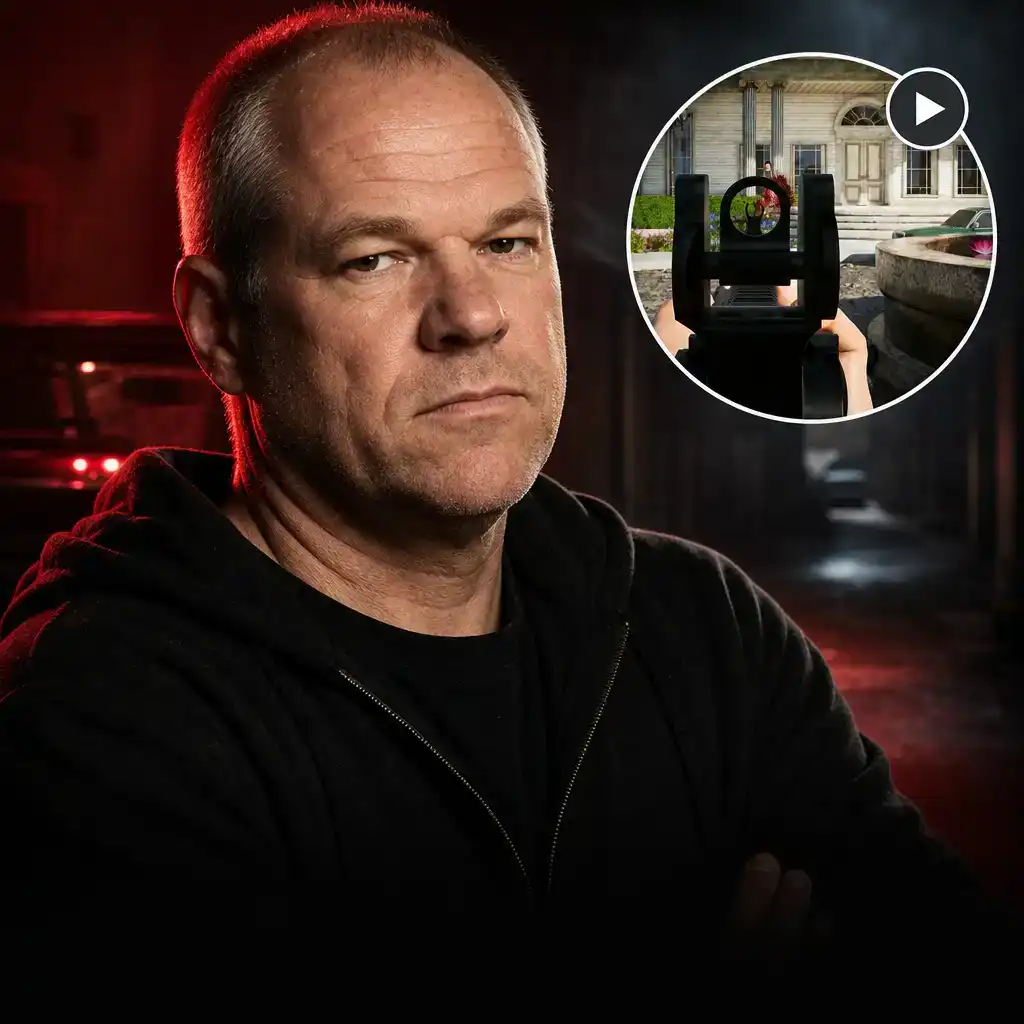
The game version comes from German developer Polygon Art and appears to be led by Daniel Wengenroth. Its trailer shows a first-person shooter with surprisingly serviceable visuals in places, though the look appears to rely heavily on familiar modern game-engine assets. The lighting and presentation are rougher, and the trailer includes what sounds like a re-recorded version of Hammer’s speech from the film, likely performed by the actor voicing the character in the game.
It also repeatedly shows heads coming off bodies after gunshots, in case anyone was worried subtlety had applied for a job here.
The game’s own description promises:
- “brutal, fast-paced action combat”
- “gritty, violent gameplay with gore and dismemberment”
- a “story-driven vigilante experience”
Those selling points make the game sound much more physically active than the film itself. That may be the most generous possible reading of an adaptation: it appears to be adding the action the movie mostly talked about.
The developer’s track record is modest
Polygon Art is not a major studio with a long list of widely reviewed hits. Wengenroth’s sole individually listed credit is Oil Refinery: The Simulation, a 2025 release that currently has “Mostly Negative” user reviews on Steam.
Under the Polygon Art label, Wengenroth has released a string of lesser-known shooters dating back to 2019. Those include the Strike Force, United Assault, and Beyond Enemy Lines series. The titles have attracted only small numbers of Steam reviews, and the reception that does exist is generally unkind.
That context does not guarantee the Citizen Vigilante game will be poor, but it does suggest expectations should be handled with care and maybe protective gloves. This is not a prestige adaptation from a studio with a deep bench and a marketing machine. It is a quick-looking tie-in to a film that became notorious less for craft than for controversy.
How much action was in the film itself?
One odd part of the adaptation is how little the movie gives the game to work with. Citizen Vigilante reportedly contains only two violent sequences, both staged as static scenes in small rooms. One includes a man’s head exploding in a large burst of liquid after being shot with a machine gun.
Beyond that, much of the character’s anti-immigration killing spree is apparently described secondhand through awkward news broadcasts rather than shown directly. The trailer for the game already contains more movement than the film’s 90 minutes, which means the developers have either expanded the premise substantially or built playable scenes from events the movie only referenced.
That may make the game a strange companion piece: not so much a faithful adaptation as an action-heavy expansion of the film’s most inflammatory ideas. For viewers and players, the central question is less whether the tie-in exists. It clearly does. The more useful question is why this particular story needed an interactive version at all.