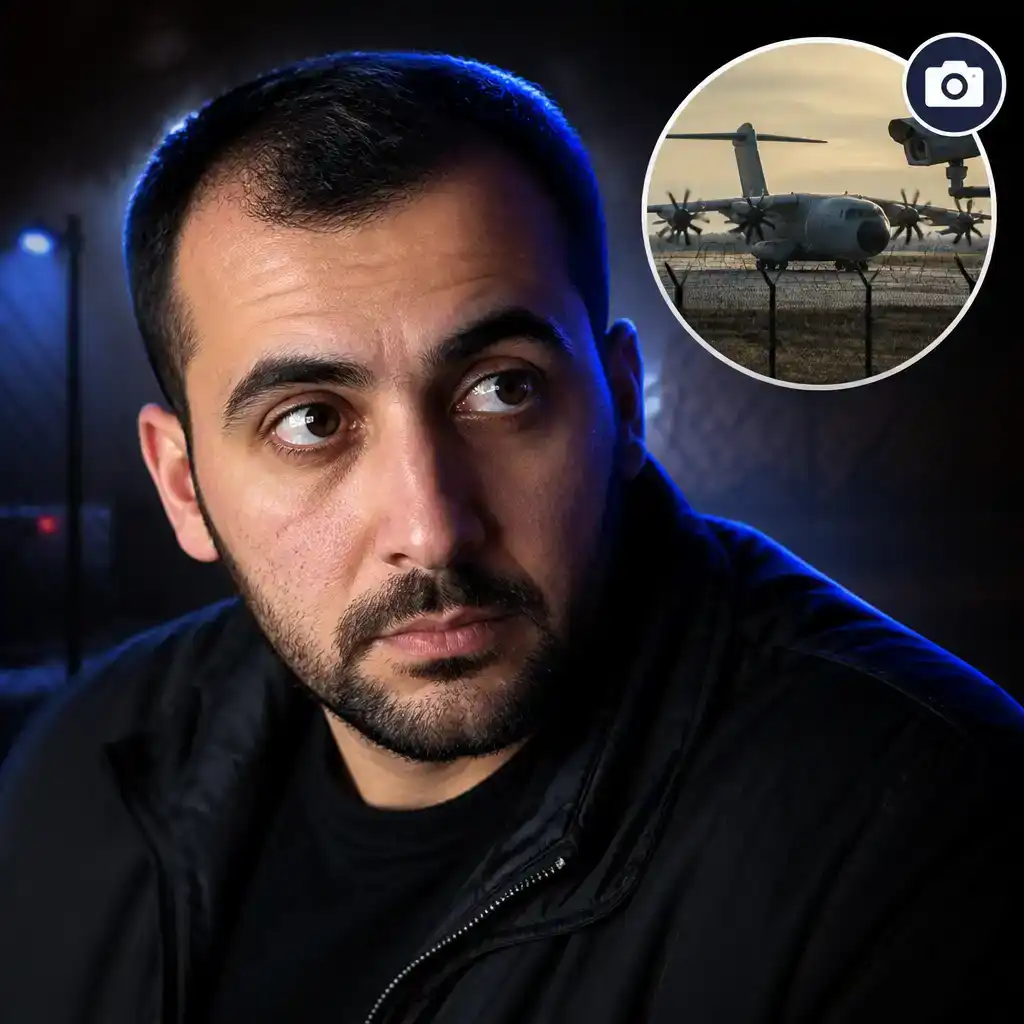
A British man is facing allegations in an RAF Akrotiri spying case involving Iran’s military, after authorities accused him of conducting “hostile surveillance” at the United Kingdom’s base in Cyprus.
Rashad Sultanov, 44, from Islington in north London, allegedly gathered information about the base and shared it with Iran’s Islamic Revolutionary Guards Corps. He holds both British and Azerbaijani citizenship.
Cypriot police arrested Sultanov on 17 July. He remains in custody while extradition proceedings continue.
What charges could Sultanov face?
The Crown Prosecution Service said Sultanov will be charged under the National Security Act 2023. According to prosecutors, this is the first time an alleged offence under the legislation has been investigated in an overseas territory.
The investigation was led by Counter Terrorism Policing London and focused on suspected surveillance carried out between 11 May and 22 June 2025.
Commander Helen Flanagan, who leads Counter Terrorism Policing London, said the case demonstrated that the National Security Act could be applied overseas when British military sites were allegedly targeted by a hostile state.
“A huge amount of partnership work has been carried out between British and Cypriot law enforcement agencies,” Flanagan said.
She added that investigators were continuing to work with the Crown Prosecution Service, the National Crime Agency and authorities in Cyprus as the extradition process moved forward.
Why is RAF Akrotiri strategically important?
The United Kingdom has maintained a permanent military presence at Akrotiri since the 1950s. Its location has made the base an important launch point for British operations in the region, which also makes alleged surveillance there rather more serious than an overly curious interest in military aircraft.
In recent months, Royal Air Force missions launched from Akrotiri have been involved in shooting down Iranian missiles and drones.
Sultanov has not yet been extradited, and the allegations against him remain subject to court proceedings. For British authorities, however, the case is already significant as the first overseas test of investigative powers created by the 2023 national security law.