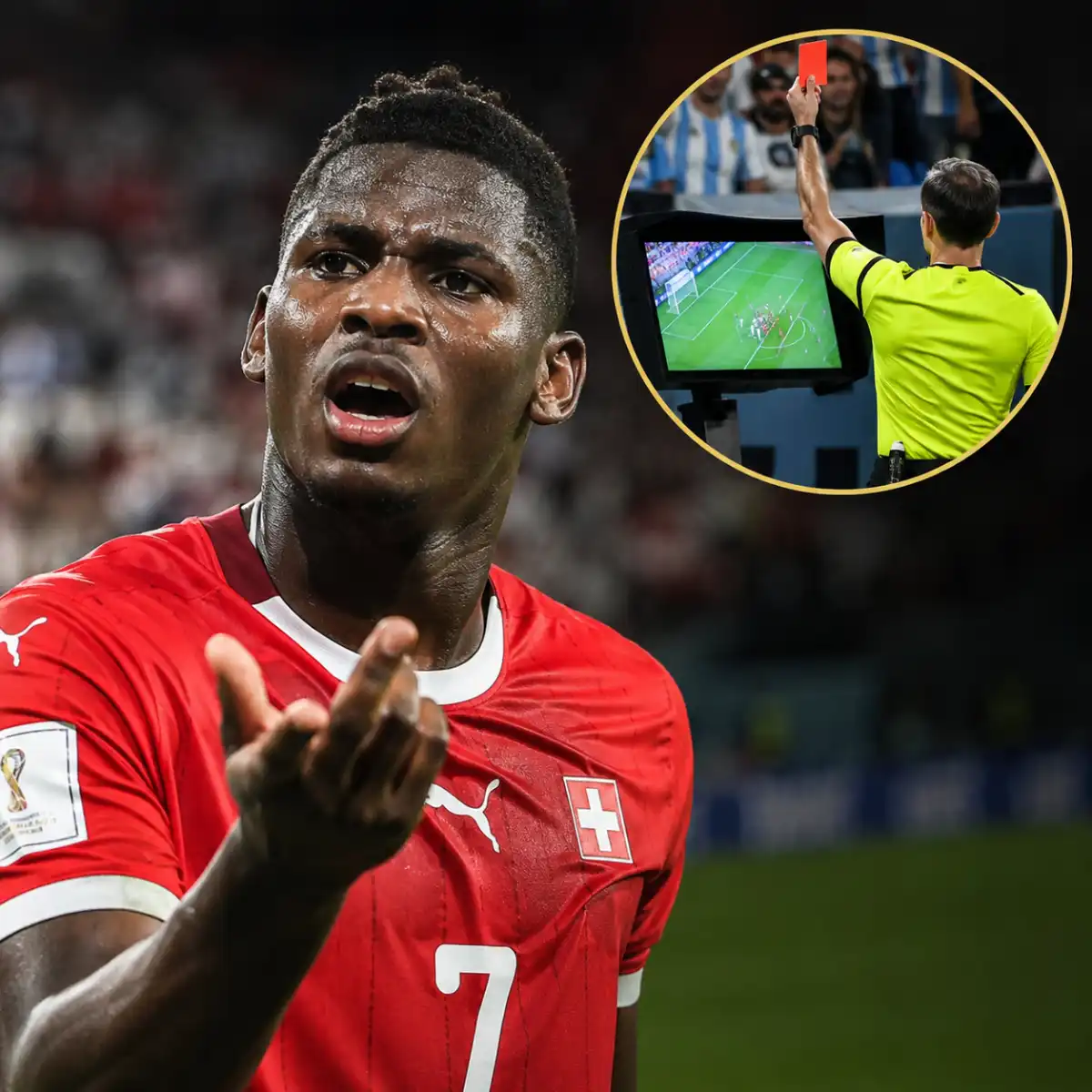
Five minutes after Switzerland’s goal, referee João Pinheiro initially showed a yellow card to Argentina midfielder Leandro Paredes. After VAR intervention, he reversed that decision and instead booked Embolo for simulation. Because Embolo had already been cautioned, the second yellow became a red card.
Switzerland were down to 10 men. The match had a new center of gravity.
Why did VAR intervene on Embolo’s red card?
The review was not a standard VAR check for a foul. It came under an expanded VAR protocol approved before the tournament by FIFA and the International Football Association Board.
That protocol allows video officials to intervene in specific disciplinary situations, including:
- Mistaken identity when the wrong player is cautioned or sent off
- Cases where the wrong team is penalized and a yellow or red card is issued
- Clearly incorrect second-yellow dismissals
In this case, the key issue was that Pinheiro had initially punished Paredes, then the review shifted the caution to Embolo for simulation. Technically, the intervention followed the rulebook rather than a referee’s improvisation, which may comfort someone reading a refereeing manual and do less for anyone watching a World Cup quarterfinal unravel in real time.
The timing made the ruling feel even heavier. Switzerland had equalized only minutes earlier and appeared to have seized the emotional rhythm of the match. Once Embolo was dismissed, Yakin’s side had to defend the rest of normal time and all of extra time with one fewer player.
Switzerland’s frustration was immediate
Yakin criticized the rule after the match, saying his team had been punished by a protocol he considered unacceptable. Switzerland midfielder Remo Freuler called the red-card episode disastrous, a fair description from a player who had just watched his team’s first World Cup quarterfinal since 1954 turn on a highly technical review.
Switzerland did not collapse after the dismissal. Goalkeeper Gregor Kobel made several important saves, and the Swiss held Argentina deep into extra time despite the numerical disadvantage. Their performance was stubborn, organized and increasingly tense, the sort of effort that tends to deepen frustration when the exit arrives through a disputed refereeing moment.
Argentina, for their part, did not immediately turn the extra player into control. The South American champions pushed, but Switzerland resisted long enough to make the match feel far less inevitable than the final score suggests.
The breakthrough finally came in the 112th minute, when Julián Álvarez curled a long-range right-footed strike beyond Kobel to restore Argentina’s lead. Lautaro Martínez then added a third in stoppage time of extra time, sealing a 3-1 win and Argentina’s place in the last four.
Why fans claimed the World Cup was being rigged
The reaction online was swift and predictable, in the way storms are predictable once the windows start rattling. Neutral supporters and Argentina critics accused FIFA of favoring Messi’s team, with some claiming that close knockout-stage decisions have repeatedly gone Argentina’s way.
Those claims gained fuel because the Switzerland incident followed an earlier refereeing dispute involving Argentina. After Argentina’s 3-2 Round of 16 win over Egypt in Atlanta on July 7, Egyptian officials and players publicly questioned the officiating. The Egyptian Football Association raised concerns about the fairness of key decisions and pointed to what it saw as inadequate use of VAR.
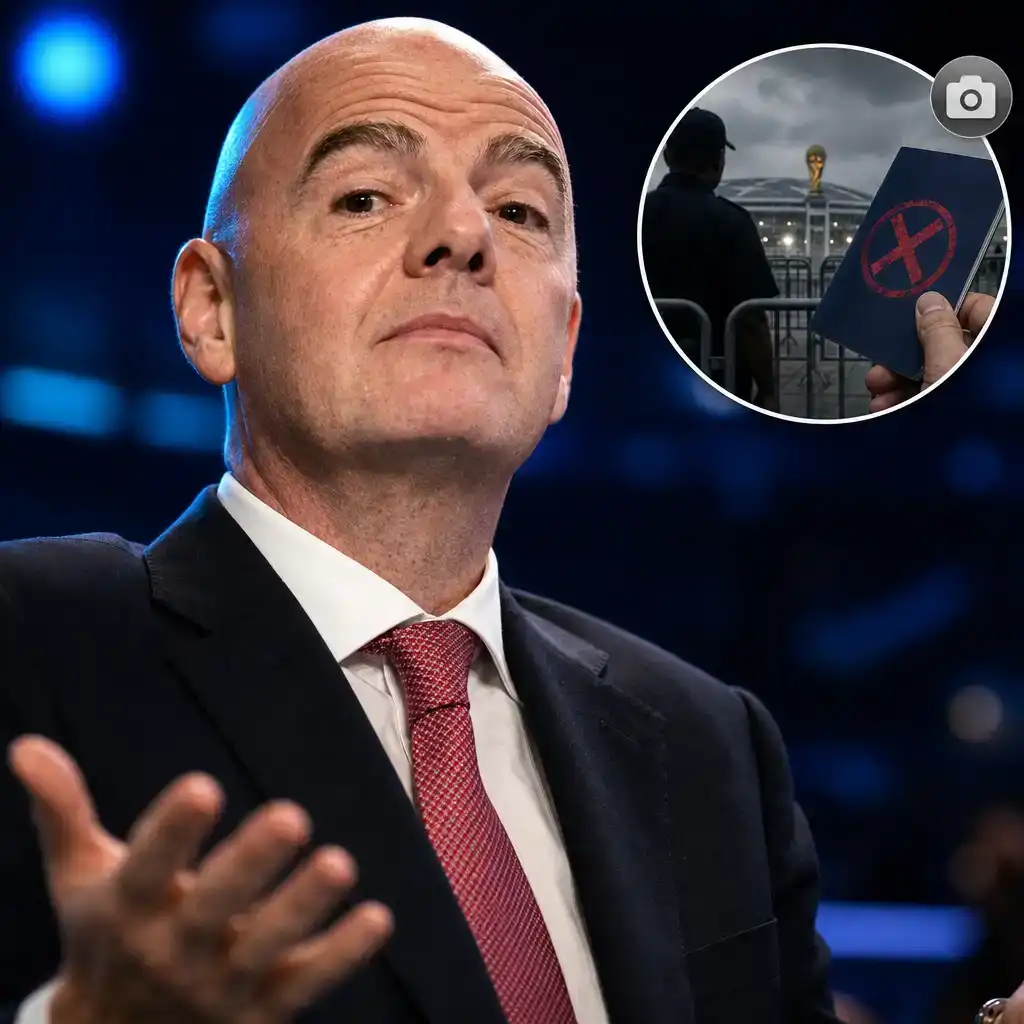
That earlier controversy had already pushed FIFA’s refereeing department into defensive mode. FIFA chief refereeing officer Pierluigi Collina rejected suggestions that officials could be influenced by outside pressure, saying refereeing could not be influenced “by anyone,” including FIFA president Gianni Infantino.
Collina’s comments were aimed at the Egypt fallout. The Embolo red card has now ensured the same debate will follow Argentina into the semifinal.
What evidence exists for the rigging claims?
There is no verified evidence that Argentina’s win over Switzerland was fixed, or that the World Cup is rigged in Argentina’s favor.
The available reporting points to a disputed VAR intervention that appears to fit the protocol. Critics see it as overly technical, poorly timed and damaging to the flow of a major knockout match. Defenders of the decision argue that the protocol exists for exactly these situations and that Embolo was correctly punished for simulation.
That distinction matters. A controversial decision is not the same as a corrupt one. Still, FIFA’s problem is not only whether the decision can be defended under the laws. It is whether millions of viewers can understand why a yellow card changed teams after a video review, and why that review was allowed to produce a second-yellow red card.
When the explanation requires several paragraphs and a working knowledge of expanded VAR protocols, conspiracy theories tend to travel faster. Especially when the beneficiary is the team led by the tournament’s biggest remaining star.
What comes next for Argentina and FIFA?
Argentina will face England in a marquee semifinal on Wednesday, July 15, in Atlanta. England reached the last four with a 2-1 win over Norway earlier Saturday. France and Spain will meet on the other side of the bracket.
According to the Associated Press, this is the first time the top four teams in the FIFA rankings have all reached the World Cup semifinals. On paper, that gives the tournament a heavyweight final week. In practice, FIFA now has another officiating debate attached to one of its biggest matches.
For Argentina, the controversy does not alter the result. Scaloni’s side are two wins from becoming the first nation since Brazil in 1962 to retain the World Cup. For Switzerland, the defeat will be remembered as both a brave performance against the reigning champions and a painful entry in the growing VAR file.
The larger issue is credibility. FIFA must show not only that refereeing decisions follow the laws, but that viewers can understand them well enough to accept them. The Argentina-Switzerland quarterfinal showed, again, that in the VAR era the final whistle rarely ends the argument. Sometimes it only starts the better-organized version of it.