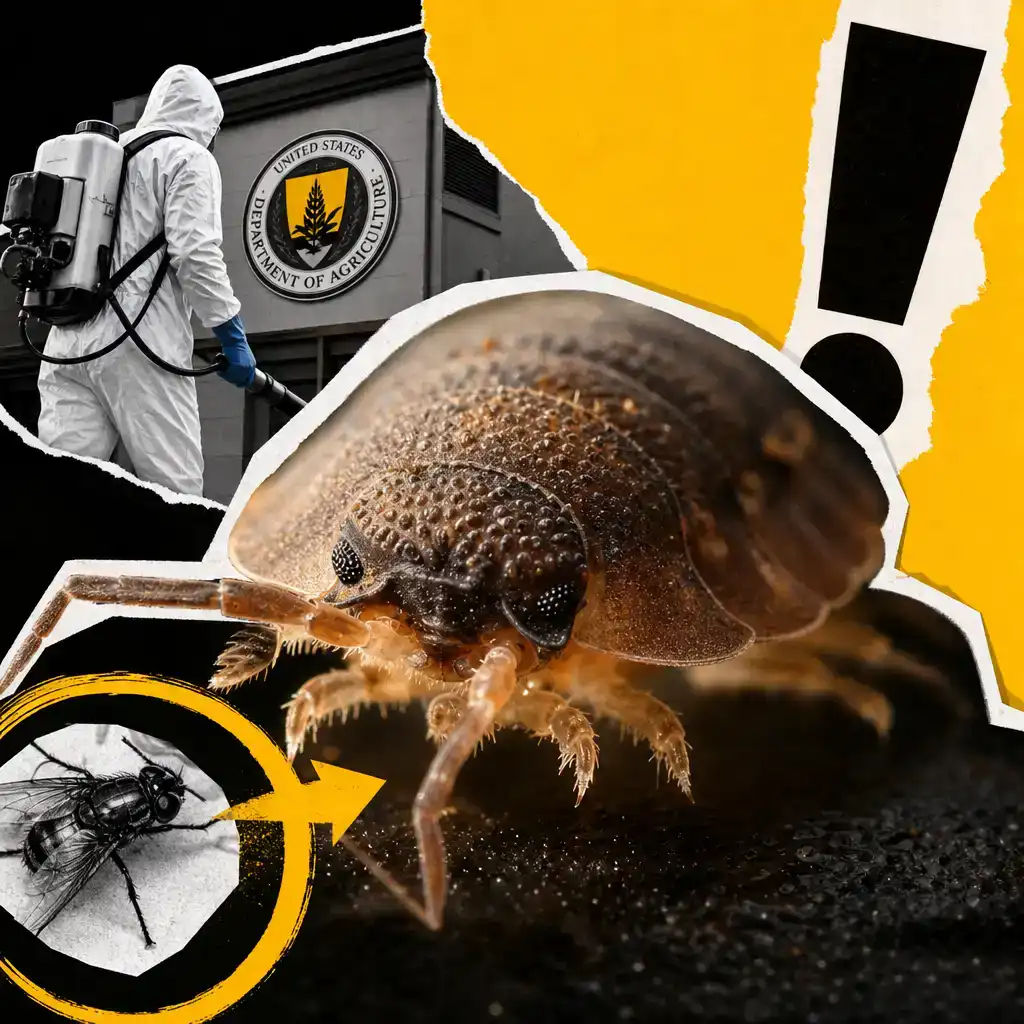
A USDA bed bugs infestation has forced an awkward question inside the very agency tasked with keeping pests and parasites under control: what happens when the bugs get into the pest office?
Employees at the United States Department of Agriculture’s Animal and Plant Health Inspection Service, or APHIS, were told in May that bed bugs had been found at their workplace in the George Washington Carver Center in Maryland. APHIS is the branch that works to limit the spread of animal and plant diseases, parasites, and invasive pests, including bird flu and the flesh-eating New World screwworm.
So yes, the optics are doing a lot of work here.
What happened at the Maryland APHIS office?
After workers were notified of the infestation, staff were sent home for several days while the building was treated. The USDA fumigated the office, and employees were allowed to work remotely during that first response.
When workers returned, some said the treatment had left behind fumes that were making them feel sick. Those employees were again allowed to telework while the air cleared.
But after the fumes faded and staff came back, so did the bed bugs. Management later blamed the ongoing problem on staff behavior, according to reporting from NOTUS. An email from Chief Operating Officer Carson Hawley cited “insufficient compliance regarding personal items” as the reason the infestation had continued.
That explanation has not landed gently with employees, especially because the agency changed its response the second time around.
Why employees say the response is a safety risk
This time, remote work was reportedly not approved for affected staff. Employees have said they were expected to keep regular office hours in a building with an active parasite problem, or use their own vacation time if they did not want to come in.
For some workers, the issue is not only the obvious discomfort of sharing an office with bed bugs. It is also the timing.
The USDA is also dealing with concerns about New World screwworm in U.S. cattle. The parasitic fly, which can infest warm-blooded animals, is exactly the kind of threat APHIS specialists are meant to help contain.
One employee told NOTUS that keeping experts in an infested office could interfere with that work.
“Not allowing employees to telework while the office is infested with bed bugs is an unnecessary significant risk to U.S. cattle health,” the employee said. “With experts dealing with the [New World Screwworm] situation forced to go home if they don’t want to get bed bugs.”
Complaints are now going to workplace regulators
Many USDA employees are now filing complaints with the Occupational Safety and Health Administration, according to the report. OSHA handles workplace safety concerns, which makes it the natural next stop when the office hazard is small, persistent, and extremely unpopular.
The situation is a strange internal problem for an agency whose public mission is built around biosecurity, inspection, and containment. Bed bugs are not known for respecting job titles, but the symbolism is hard to miss.
For APHIS staff, though, the issue is less ironic than practical. They are asking whether they should have to choose between reporting to an infested workplace and losing personal leave, particularly while some of their colleagues are working on a livestock parasite threat with national consequences.