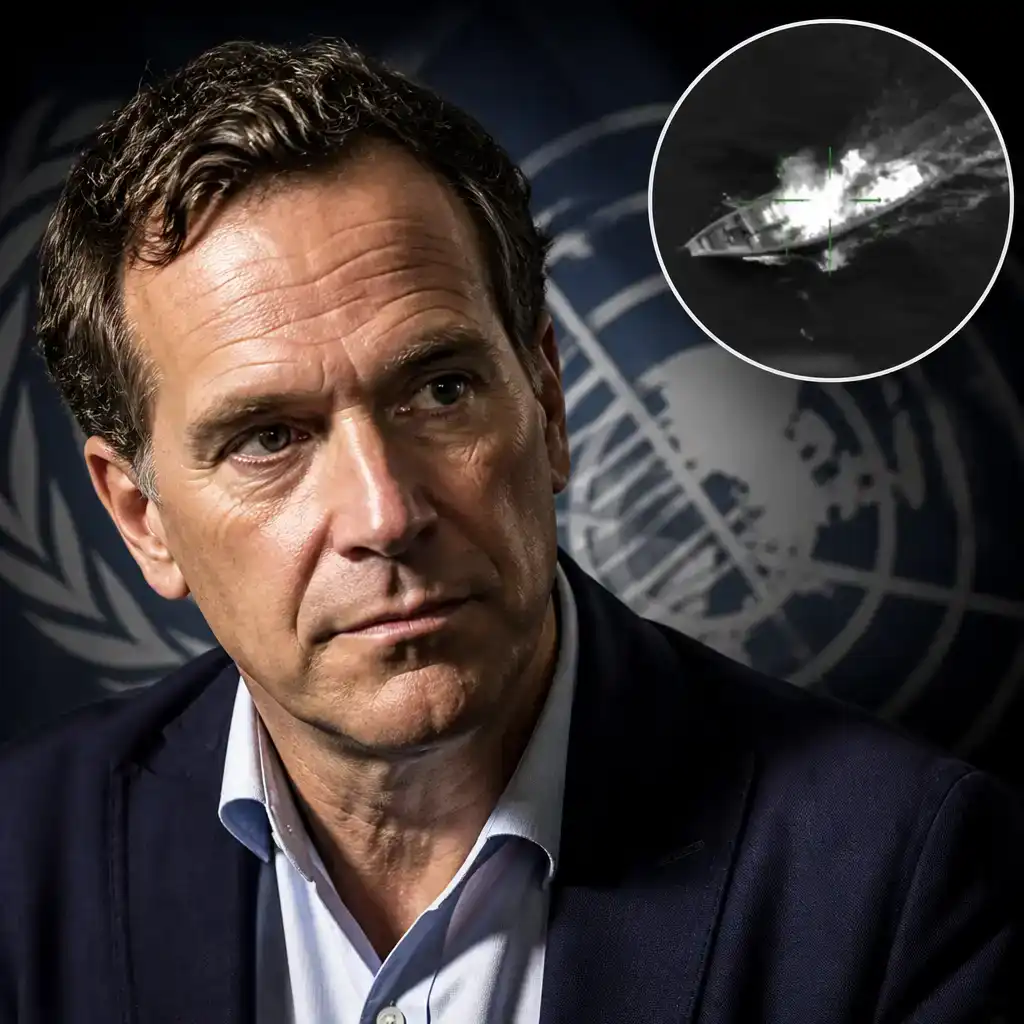
A United Nations report says US strikes on alleged drug boats breached international law and may constitute crimes against humanity. At least 68 attacks in the Caribbean and Pacific have killed 223 people since September last year, according to Ben Saul, the UN special rapporteur on counter-terrorism and human rights.
The strikes took place outside US territorial waters. Saul concluded that they amounted to repeated extrajudicial killings and could not be justified under the laws governing self-defence, armed conflict, maritime activity, drug enforcement or counter-terrorism.
His assessment arrived two days after the US military announced another attack on a vessel in the Caribbean. United States Southern Command, known as SOUTHCOM, said four people were killed.
“Confirmed intelligence revealed the vessel's active involvement in narco-trafficking. The operation killed four narco-terrorists,” SOUTHCOM said alongside a grainy video of the strike. The statement did not provide definitive evidence supporting the trafficking allegation.
Why does the UN say the strikes were unlawful?
In a briefing note released by the United Nations Human Rights Council on Monday, Saul said the people targeted had not carried out an armed attack against the United States. Without such an attack, he argued, Washington could not invoke the right to self-defence under international law.
That position would remain unchanged even if US authorities proved that those aboard the vessels belonged to organizations designated as terrorist groups. A government label, however forcefully applied, does not automatically create an armed conflict or authorize lethal military action.
“Such attacks amount to serial extrajudicial killings in violation of the right to life,” Saul wrote. He said they were not justified by national or personal self-defence, international humanitarian law, the law of the sea, drug-control conventions or international counter-terrorism law.
“There are reasonable grounds to believe that the reported 68 attacks that killed 223 people constituted crimes against humanity of murder under customary international law,” he concluded.
The White House and US State Department were contacted for a response to the findings. Neither had provided one in the original report.
What is Operation Southern Spear?
The US military began the campaign, called Operation Southern Spear, in early September. Defence Secretary Pete Hegseth has said its purpose is to remove “narco-terrorists from our hemisphere” and protect the United States from “the drugs that are killing our people”.
US officials have repeatedly described the targeted vessels as part of narcotics trafficking operations. They have not, however, publicly produced conclusive evidence establishing that each boat was carrying drugs or that those aboard posed an imminent threat. That missing detail is rather important when missiles are involved.
Legal experts questioned the operation from its earliest days. The criticism focused on Washington's decision to use military force in international waters against suspects who could otherwise fall under criminal law, maritime enforcement rules and established drug-interdiction procedures.
Latin American leaders also condemned the strikes, particularly after their citizens became targets.
How did regional opposition change?
Venezuelan leader Nicolás Maduro was among the campaign's most prominent critics. His opposition ended abruptly at the beginning of this year, when US forces seized him during a highly controversial nighttime raid on Caracas.
Gustavo Petro, Colombia's left-wing president at the time, also spoke out against Operation Southern Spear. He left office in August after a candidate backed by Donald Trump won Colombia's presidential election in June.
Those political changes reduced two major sources of regional resistance, but they did not resolve the central legal question. Saul's report argues that suspected drug trafficking, even when linked to designated terrorist groups, does not by itself permit a state to kill people at sea without trial.
The US military continues to present the campaign as a national security operation. The UN expert's assessment presents it instead as a series of unlawful killings, with potential criminal consequences reaching far beyond the government's preferred terminology.