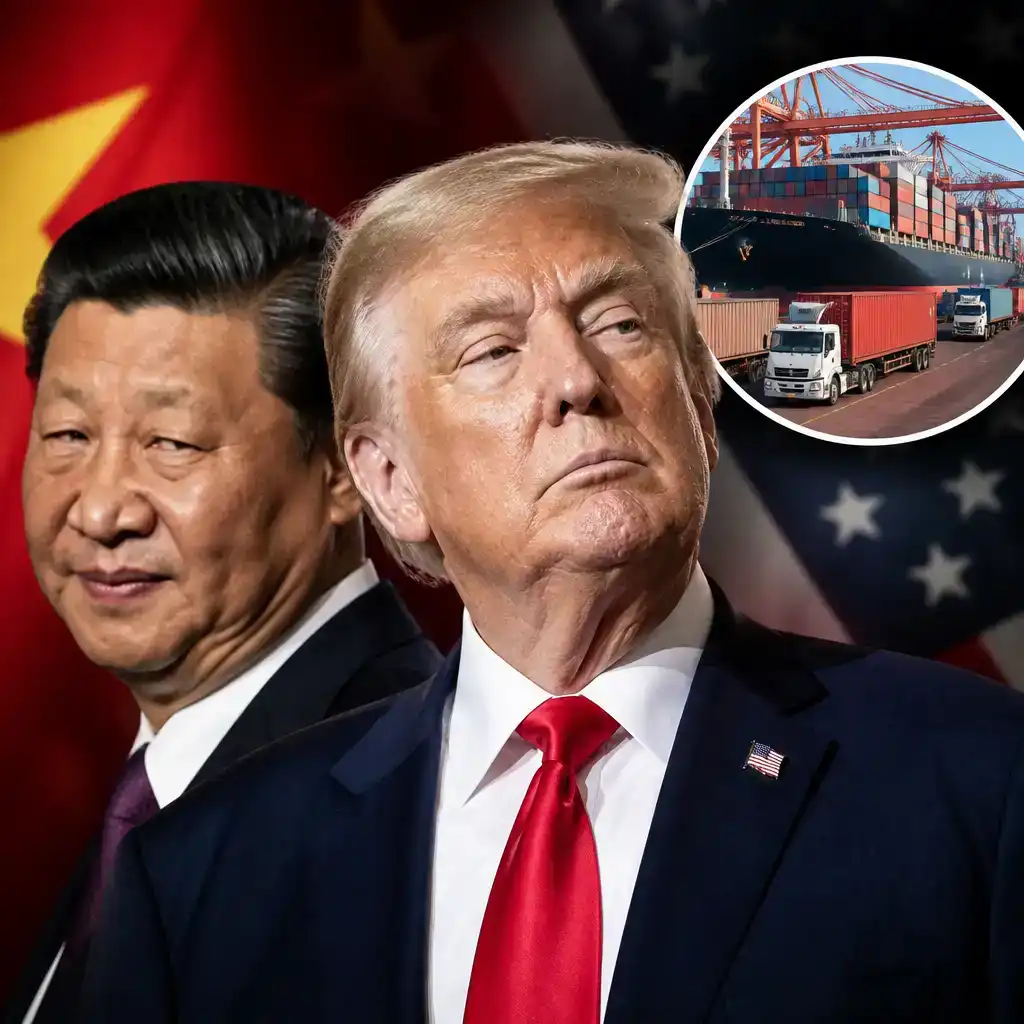
The US-China tariff cuts proposed after last week’s summit between Presidents Donald Trump and Xi Jinping would cover $60bn in bilateral trade. Washington and Beijing have now identified the goods that could receive more favourable treatment, from poultry and dairy products to microwave ovens and artificial flowers.
The lists are recommendations rather than immediate reductions. Both governments still need to negotiate the framework and reach a final agreement, so importers should probably keep the celebration within reasonable limits.
Which products could receive lower tariffs?
The proposal covers $30bn of imports on each side. China listed 77 goods for possible tariff relief in the United States, while Washington identified more than 1,600 American products that could face lower duties in China.
Chinese goods under consideration include:
- Microwave ovens
- Fish hooks
- Artificial flowers
- Weighing scales
The much longer US list includes:
- Poultry and dairy products
- Noodles and eggs
- Peanuts and canned tomatoes
- Pure-breed breeding horses
- Silk
The White House announced the list on Sunday. China’s Ministry of Commerce confirmed it on Monday, saying officials would discuss “a reciprocal tariff reduction framework of $30 billion for $30 billion, aiming to reach a consensus”.
The ministry said the arrangement could stabilise trade, improve conditions for Chinese exporters and help meet domestic demand. It also pointed to potential cooperation in agriculture, energy, manufactured goods and consumer products.
What does Washington expect from the agreement?
United States Trade Representative Jamieson Greer said the plan would improve access to the Chinese market for roughly 30 percent of US exports to China. He also argued that lower duties on selected Chinese goods would benefit American consumers.
“The Trump Administration will continue to pursue fair, balanced, and reciprocal trade with China by ensuring compliance with commitments on agricultural and energy purchases, pursuing balanced trade in non-sensitive goods, and securing market access for American farmers, manufacturers, businesses, and workers,” Greer said.
That language reflects the administration’s broader approach to China: targeted trade openings, continued pressure over purchases and close scrutiny of products considered strategically sensitive.
The agreement followed a summit rich in ceremony but rather less generous with concrete outcomes. Trump and Xi concluded their talks on Friday without announcing major breakthroughs on the wider disputes between the two countries, which include artificial intelligence, Taiwan and trade restrictions.
When will Trump and Xi meet again?
Trump and Xi have held three face-to-face summits since last October. They are expected to meet again at the Asia-Pacific Economic Cooperation summit in Shenzhen, China, in November.
Another meeting could follow at the Group of 20 gathering in Miami, Florida, in December. Those events would give both leaders further opportunities to turn the current recommendations into an enforceable deal, or at least produce another carefully arranged photograph while negotiations continue elsewhere.
Relations between the world’s two largest economies have become notably less commercial since Trump returned to the White House in January last year. A longtime critic of free-trade policies, he has relied heavily on tariffs as a tool for reshaping trade with China.
Two-way commerce totalled $495bn in 2025, according to the Office of the United States Trade Representative. That represented a 25 percent decline from the previous year, showing how sharply tariffs and political tensions have already affected the trading relationship.
Will the tariff changes make much difference?
Trade specialists have cautioned against treating the product lists as a major reset. Deborah Elms, head of trade policy at the Hinrich Foundation in Singapore, said the selected goods were unlikely to alter overall trade flows significantly.
“Instead, both sides have largely listed goods that do not move the needle on overall trade flows,” Elms said.
Some tariff reductions could lower prices for American consumers, but she said the effect would probably be too small to make a noticeable difference to inflation or provide substantial relief for most US buyers.
The same limitation applies to the Chinese side of the deal. Although Beijing’s list includes many agricultural products, Elms said most are either not exported to China or sold there only in limited quantities.
The proposal therefore offers a practical, if narrow, easing of trade barriers rather than a broad settlement. Thousands of products may sound substantial, but the value and volume of the affected trade matter more than the length of the spreadsheet. For now, the two governments have established a framework for further talks, not ended their economic rivalry.