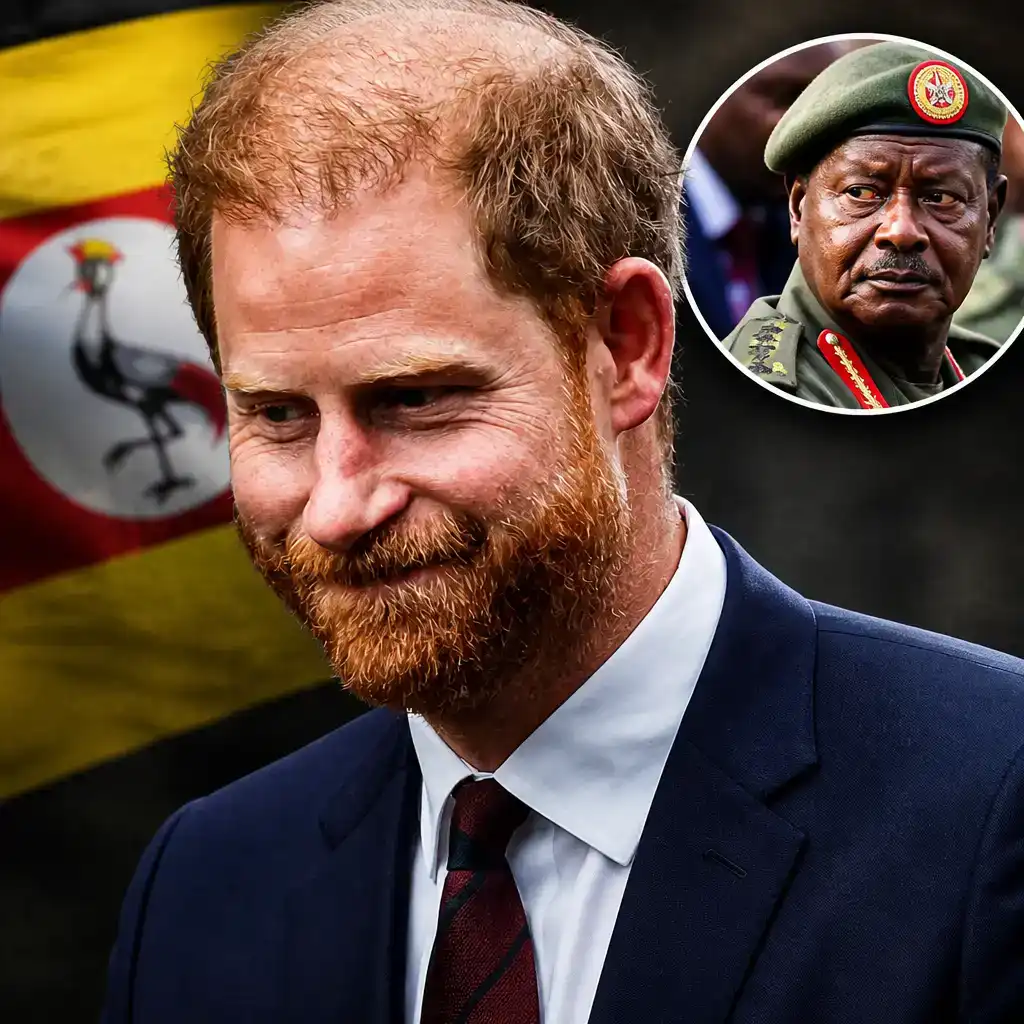
He then posted a more formal declaration on X: “In order not to be construed as being opposed to His Majesty King Charles III of the United Kingdom, whom we deeply revere, Uganda hereby withdraws from the Invictus Games.”
“We shall not participate in anything that does not have His Majesty’s approval,” he added.
The announcement was corroborated by The Guardian, The Independent, ABC Australia and ITV News. Yet no separate confirmation had emerged by September 10 from President Museveni, Uganda’s Defence Ministry or the Uganda High Commission.
That leaves an awkward procedural question: can one military commander complete a national withdrawal through social media, even when that commander is both the defence chief and the president’s son? Uganda’s disappearance from current participation figures suggests organisers are treating the answer as yes, or at least preparing accordingly.
Does King Charles oppose the Invictus Games?
There is no reported evidence that King Charles has withdrawn support from Invictus. ITV News explicitly said there was “no suggestion” the monarch opposed the event.
The palace letter concerned the Sussexes’ status after stepping down as working royals. The Associated Press characterised it as a restatement of existing arrangements, rather than a new ban on Harry’s charitable work.
Harry and Meghan said they were “surprised” by the letter and sought to present themselves as public figures rather than private citizens. They also questioned why the guidance had been released while they prepare to return to the United Kingdom after several years in the United States.
A Sussex source told ITV that Uganda’s withdrawal was “clearly a consequence” of guidance from the Lord Chamberlain that had been “rushed out without consultation”. The source added: “Sadly, the only people who will suffer are the Invictus Games competitors.”
That claim establishes the Sussex view of events, not the King’s position. Kainerugaba appears to have treated the palace guidance as a wider verdict on Harry’s activities. So far, Buckingham Palace has issued no fresh statement supporting that interpretation.
What does the withdrawal mean for Birmingham 2027?
Uganda joined the Invictus community in July as its 26th nation. It was the first East African country admitted and the second African participant, despite some reports incorrectly describing it as Africa’s first.
The official Birmingham 2027 website now advertises 550 competitors from 25 nations, suggesting the expected field has already been revised. No public reversal from Uganda or response from the Invictus Games Foundation had appeared by September 10.
The Games will take place from July 10 to 17, 2027, at Birmingham’s National Exhibition Centre and Sandwell Aquatics Centre. Organisers expect around 150,000 spectators.
The programme includes nine core sports, alongside:
- esports
- pickleball
- laser run
The British government has committed £26 million to underwrite delivery. Birmingham 2027 chief executive Helen Helliwell previously described the competition as a global stage for “courage, determination, and inspiration”. It is now also hosting an argument about royal protocol that the athletes did not request.
Why was Uganda’s admission already controversial?
The dispute is not limited to palace correspondence. Uganda’s original inclusion raised questions about how the Invictus Games Foundation assesses participating armed forces and their senior leadership.
Amnesty International has reported allegations connecting Kainerugaba to the disappearance and torture of an opposition activist. Those allegations sit uneasily beside an event created to celebrate recovery, dignity and international military cooperation.
Prince Harry founded the Invictus Games in 2014 after serving in the British Army. The competition supports wounded, injured and sick service personnel and veterans through adaptive sport. Its focus has traditionally remained on competitors rather than the political conduct of participating governments.
Uganda’s brief membership exposes the limits of that separation. National teams do not arrive without institutions attached, and military leaders can turn participation into a political statement just as quickly as they can cancel it.
For now, Birmingham is planning for 25 nations, Uganda’s commander has declared loyalty to the King, and there is still no evidence that Charles asked him to do any of this. The clearest consequence belongs to the Ugandan competitors who expected to take part and now appear unlikely to reach the starting line.