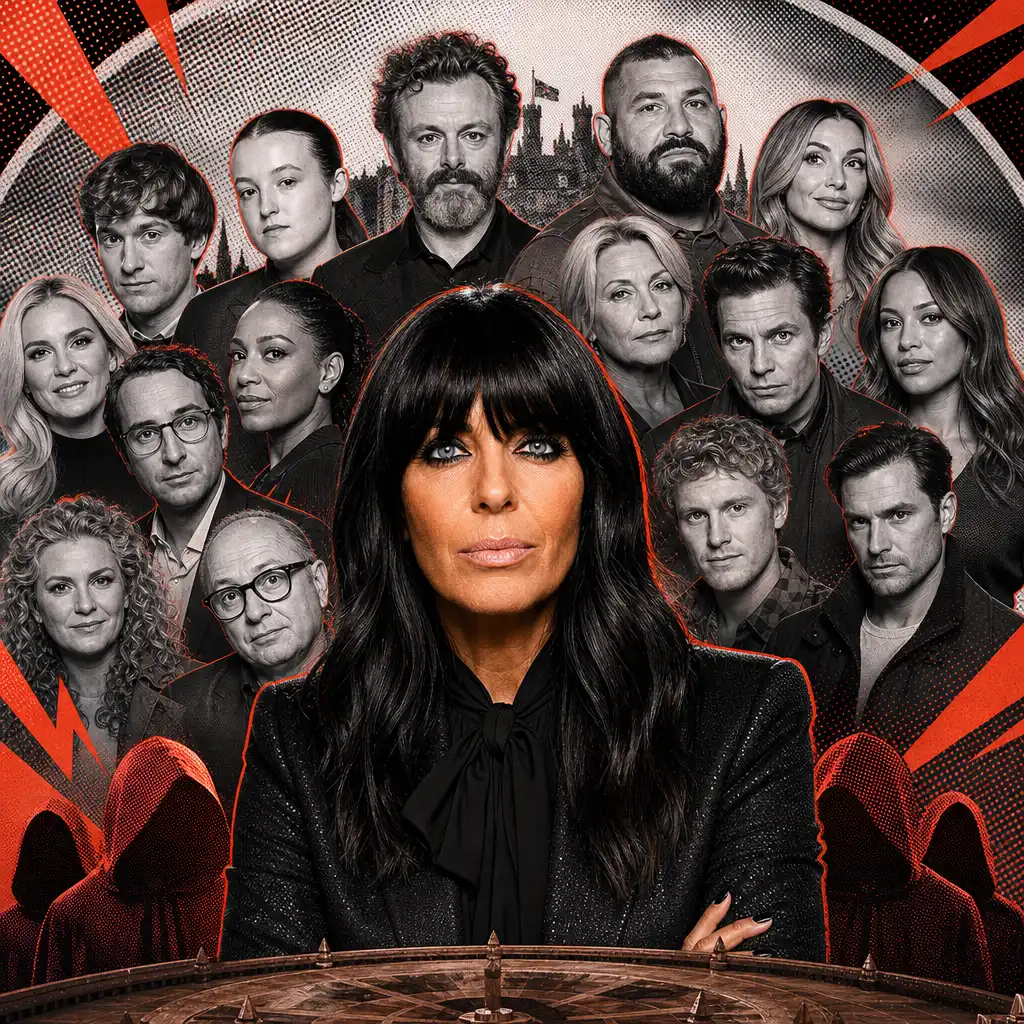
The BBC has clearly not struggled to persuade famous people into a Scottish castle. On Saturday morning, May 2, the broadcaster announced the full cast for The Celebrity Traitors series 2, with Claudia Winkleman returning to oversee the psychological carnage at Ardross Castle.
On paper, it is a very strong booking sheet. Bella Ramsey, James Acaster, Jerry Hall, Amol Rajan, James Blunt, Joanne McNally, Joe Lycett, Miranda Hart, Michael Sheen and Richard E. Grant are all in the mix, alongside a long list of familiar faces from TV, comedy, music and acting.
That matters. The Traitors has become one of the BBC’s most reliable entertainment brands, and this line-up proves celebrities are not treating the show like a novelty detour. They are turning up for it.
Still, there is one obvious gap. For a format built on suspicion, pressure and people making questionable choices in rooms with dramatic lighting, series 2 looks short of a major sports star.
A strong cast, but a very familiar social circle
The new series has 21 celebrity players, and the BBC has gone heavy on performers, broadcasters and comedians. That gives the show plenty of wit, charisma and professional polish. It may also make the early round tables a little too polite.
The full line-up is:
- Amol Rajan, broadcaster
- Bella Ramsey, actor
- James Acaster, comedian
- James Blunt, singer and songwriter
- Jerry Hall, model and actress
- Joanne McNally, comedian
- Joe Lycett, comedian
- Julie Hesmondhalgh, actor
- King Kenny, content creator
- Leigh-Anne Pinnock, musician
- Maya Jama, broadcaster
- Michael Sheen, actor
- Miranda Hart, actor
- Myha’la, actor
- Professor Hannah Fry, broadcaster and TV scientist
- Richard E. Grant, actor
- Rob Beckett, comedian
- Romesh Ranganathan, comedian
- Ross Kemp, actor
- Sebastian Croft, musician
- Sharon Rooney, actor
It is a cast with real reach. There are prestige actors, panel-show regulars, a pop star, a model, a scientist, broadcasters and one content creator. The online reaction has largely been positive, aside from some predictable muttering that Rob Beckett and Romesh Ranganathan have somehow found another TV format to enter. Television is a small island, apparently.
The concern is not star power. The concern is temperature.
Why an athlete changes the game
Sportspeople often bring something reality TV cannot manufacture: competitive wiring that does not switch off just because the cameras are rolling. They are used to direct contests, public pressure and losing in front of people. Crucially, they also tend to sit slightly outside the entertainment industry’s usual social web.
That matters on The Traitors. The round table is not just about detecting lies. It is about whether players are willing to challenge each other in public, risk looking rude and push someone into a mistake.
The first celebrity series showed exactly why that type of player is useful. In its early episodes, the atmosphere was surprisingly friendly. A lot of the tension came from the fact that Alan Carr, visibly nervous as a Traitor, somehow kept avoiding detection while looking like the castle’s least relaxed resident.
That was funny, for a while. But a whole series of warm chats and gentle suspicion would have worn thin. Reality TV needs friction, especially when the format depends on people cracking under pressure.
Joe Marler supplied that friction.
The former rugby player did not approach the game like someone trying to protect a showbiz friendship circle. Once he settled in, he prodded, provoked and challenged people at the table. Speaking to Metro at the time, he explained why he felt able to play that way.
“I just got so lost in the game, and at no point was I thinking of how it was coming across or how I should behave.”
That attitude led to some of the series’ sharpest moments, including clashes with Jonathan Ross and Alan Carr. In one notably awkward exchange, Marler pushed Alan to contribute more.
“I haven’t heard a huge amount from you at the roundtable,” he said. “Open up your lugholes.”
It was uncomfortable, but it did what the best Traitors scenes do. It forced a player onto the back foot and made the room change shape.
The round table needs pressure, not just charm
Actors, comedians and musicians can obviously be competitive. No one gets to the level of Michael Sheen, Miranda Hart, Leigh-Anne Pinnock or Richard E. Grant by being passive. But the competitive instinct of an elite athlete is often more bluntly visible, and that can be useful in a game designed to turn social pressure into entertainment.
Richard E. Grant, for instance, is a brilliant booking. He is also an Oscar-nominated actor with very little to prove to a room full of celebrities. That is not a criticism. It is a different kind of energy.
There are players in this new cast who could still bring chaos. James Acaster has already shown on Taskmaster that he can be fiercely competitive, even when the actual execution goes somewhere more experimental. He has also challenged fellow comedians to wrestling matches in the past, and his appearance on Sunday Brunch remains a small monument to live-TV unpredictability.
Ross Kemp could also bring a harder edge, and Maya Jama is unlikely to disappear quietly into the wallpaper. But as a whole, the cast leans toward people who know how television rooms work, know each other’s worlds and may be more inclined to keep things cordial until the game absolutely forces their hand.
That is the risk.
The BBC has booked names. Has it booked conflict?
The Celebrity Traitors series 2 does not look underpowered. If anything, the BBC has assembled the kind of cast that confirms the show’s status as appointment television. The names are big, the mix is broad, and the autumn return should land with plenty of attention.
But The Traitors is not won on recognisable names. It comes alive when suspicion overrides manners, when someone asks the question everyone else is avoiding, and when a Traitor has to improvise under real heat.
This line-up may yet deliver that. For now, though, the missing sports star feels less like a minor casting note and more like a structural choice. The castle has celebrities. What it may need is someone willing to make the room uncomfortable.