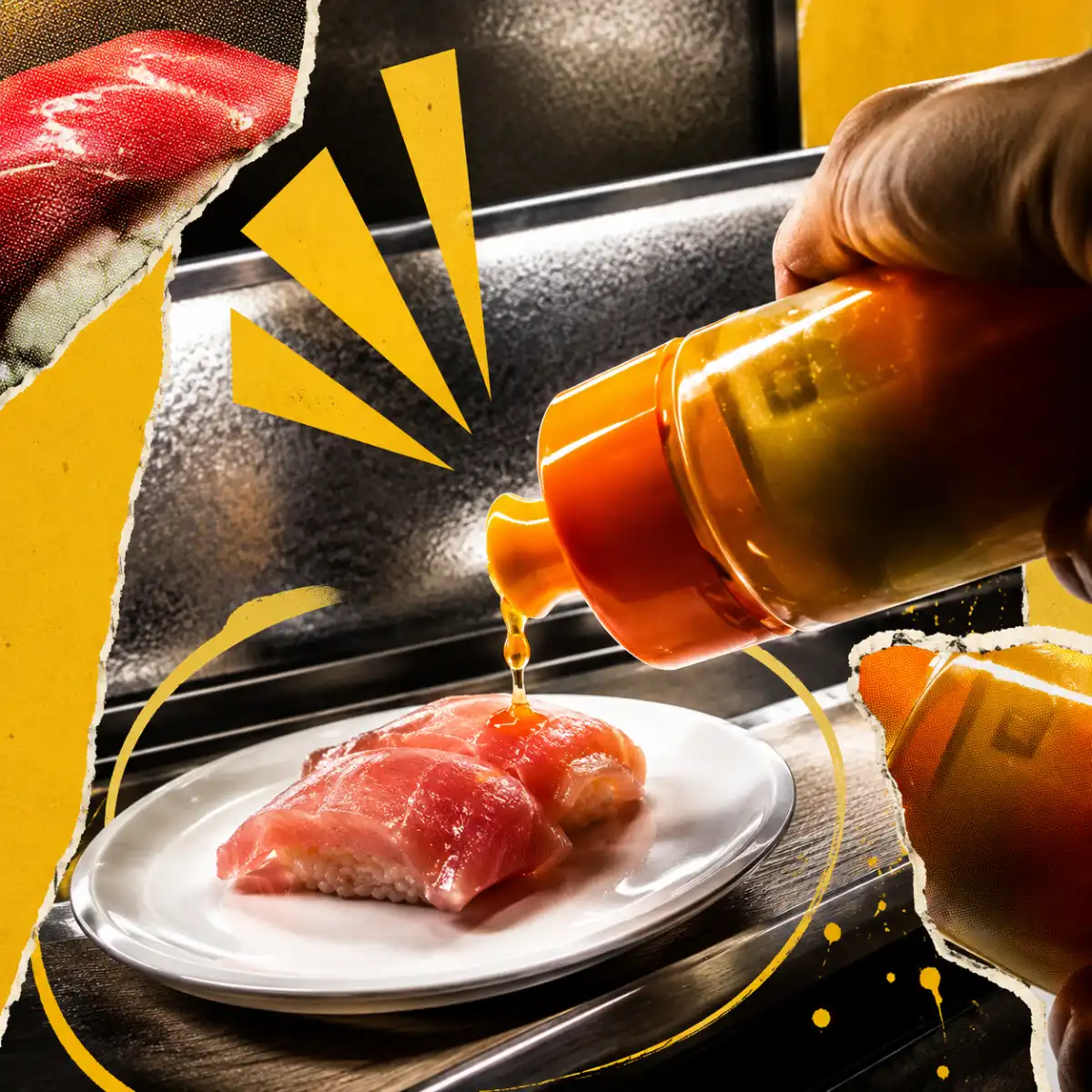
A sushi TikTok arrest in Japan has put another spotlight on an odd little corner of the internet built on filming yourself making life worse for everyone nearby. Police in Saitama Prefecture arrested 43-year-old Yuta Shinishi after a video appeared to show him pouring liquid from a detergent-style squeeze bottle onto sushi at a Hama Sushi restaurant.
The clip was uploaded to TikTok on May 27 and showed a plate of sushi passing his booth on a conveyor belt as he sprayed it with liquid from a transparent container. Hama Sushi is one of Japan’s best-known conveyor belt sushi chains, where speed, convenience and a basic trust that strangers will not tamper with your food are fairly central to the experience.
Who police say was behind the video
According to reports, police identified the person who posted the now-deleted video about a week after it appeared online. The suspect was named as Yuta Shinishi, an unemployed 43-year-old man living in Moroyama, Saitama Prefecture.
Shinishi was arrested on suspicion of forced obstruction of business. He reportedly admitted to the act and told investigators he “wanted to increase the number of views on social media.”
He also said the liquid was not detergent, but “water from a detergent container.” That distinction may matter to investigators, but it does not exactly turn this into a customer-service training video. A detergent container near food is still enough to alarm a restaurant, diners and anyone else who prefers sushi without a chemical mystery attached.
How Hama Sushi responded
Hama Sushi said it is cooperating with police and made clear it does not see the incident as a harmless prank.
“Such disruptive behavior is completely unacceptable. We will continue to fully cooperate with the police investigation,” the company said in a statement.
The chain also said it intends to take legal action against Shinishi, adding that it “absolutely cannot accept” what happened.
The company’s response is not surprising. Conveyor belt sushi restaurants depend on public confidence in food safety, and viral food-tampering videos can do damage beyond a single plate. Even if the suspect’s claim about the liquid being water is accurate, the footage suggested contamination at a restaurant table, which is exactly the kind of image a food business does not want circulating online.
Was the sushi meant for another customer?
One important detail gives the incident some context, though not much comfort. Japanese outlet SoraNews24 reported that the plate was not part of an open system where sushi is made in advance and left to circulate until any customer takes it.
At Hama Sushi, plates are reportedly sent directly to customers rather than randomly passing from table to table for anyone to choose. That means the sushi in the video was not necessarily headed to an unsuspecting diner elsewhere in the restaurant.
Still, that does not remove the concern. Liquid from a detergent container could affect the belt, nearby plates, surfaces or diners in the surrounding area. It also forces staff to deal with cleaning, safety checks and the reputational mess that follows when a restaurant becomes content for someone else’s follower count.
Several conveyor belt sushi chains in Japan have already introduced measures to reduce tampering, including covered plates and other changes designed to protect food as it moves through restaurants. Those changes are less charming than the old self-serve rhythm, but customers generally enjoy not having to wonder whether their lunch has appeared in someone’s stunt video.
Why food-tampering videos keep causing backlash
This case is part of a wider pattern of people filming food-related misconduct for online attention. In 2021, a woman drew widespread backlash after spitting into a bag of chips at a grocery store and resealing it. In 2023, a couple was criticized online after licking a tub of ice cream in a store and putting it back on the shelf.
The formula is bleakly simple: a person records a short clip, posts it for views, and leaves businesses, workers and customers to deal with the consequences. Social platforms may reward shock in the short term, but police and companies are increasingly treating these incidents as more than bad manners.
For Hama Sushi, the stakes are practical. For customers, they are personal. A restaurant visit depends on a quiet agreement that the food has been handled safely before it reaches the table. Once that trust is turned into entertainment, the joke, such as it is, gets expensive very quickly.