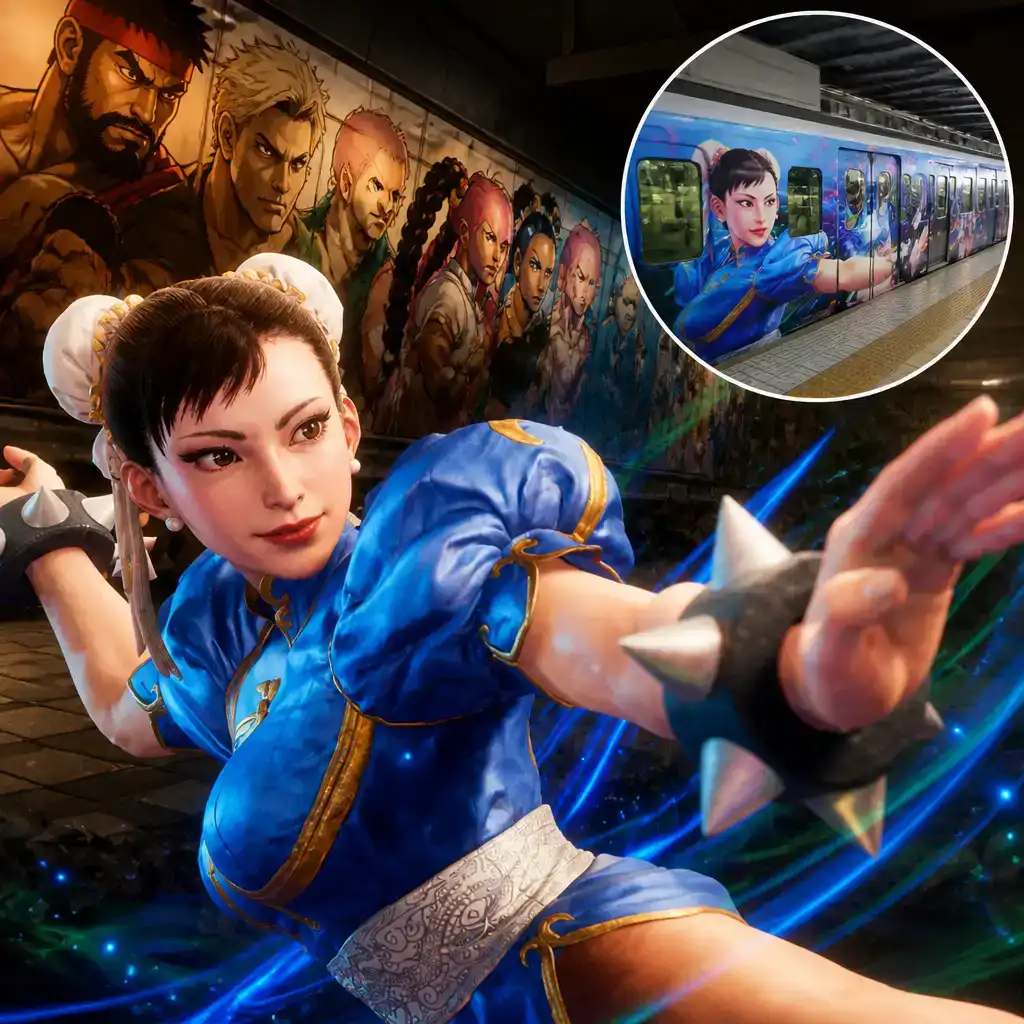
A Street Fighter 6 train station makeover has brought Ryu, Chun-Li and their fellow fighters to Yamato-Yagi Station in Kashihara, Nara Prefecture. The characters now appear on staircases, waiting rooms and even restroom signs, because apparently no part of the daily commute is beyond the reach of a crossover campaign.
The decorations form part of a collaboration promoting Kashihara and nearby attractions. Travellers will also hear specially recorded station announcements featuring two familiar voices from the Japanese version of the game.
What has changed at Yamato-Yagi Station?
The centrepiece is a large mural near the station’s north plaza. It recreates the character selection screen from Street Fighter 6 and includes a “Kashihara × Street Fighter” logo.
Artwork also covers the station’s central staircases and waiting areas, while character designs have been added to restroom signs near the ticket gates. The result is less a subtle tribute and more a coordinated occupation by Capcom’s international collection of people who solve disagreements with elaborate punches.
Japanese voice actors Hiroki Takahashi, who plays Ryu, and Fumiko Orikasa, who plays Chun-Li, recorded original messages introducing passengers to sightseeing destinations around the area.
The announcements highlight several historic locations:
- Fujiwara Palace Site
- Kashihara Jingu shrine
- Ishibutai Kofun, one of Japan’s largest ancient burial mounds
They play every 20 minutes from 9am until 6pm at both Yamato-Yagi Station and Kashiharajingu-mae Station. The recordings are scheduled to continue until July 30, 2027, giving visitors plenty of time to receive tourism advice from two veteran fighters.
Which limited-edition tickets are available?
The collaboration also includes two commemorative admission ticket sets, each supplied in a different limited-edition Street Fighter 6 holder.
Yamato-Yagi Station is selling 1,000 sets priced at ¥1,080, or roughly $6.83. Kashiharajingu-mae Station has another 1,000 sets available for ¥720, around $4.55.
The two holders are designed to sit side by side and form one complete image, providing collectors with the traditional incentive to buy both. At least the logistics are relatively forgiving: the stations are only about five minutes apart by train, so completing the design does not require an expedition across Japan.
Are game-themed railway collaborations common?
The makeover is the latest example of Japanese rail operators using major entertainment properties to turn stations into temporary attractions. The appeal is fairly straightforward. Fans get exclusive displays and merchandise, while local tourism officials gain an audience that may arrive for Chun-Li and stay for an ancient burial mound.
Other railway collaborations this year have included Tokyo Metro makeovers based on virtual singer Hatsune Miku and mobile game Goddess of Victory: Nikke.
For ordinary passengers, Yamato-Yagi remains a functioning station rather than a new fighting arena. Still, commuters can now pass a character-select mural, hear Ryu recommend local landmarks and collect matching ticket holders before continuing their journey. Public transport has had less entertaining promotional campaigns.