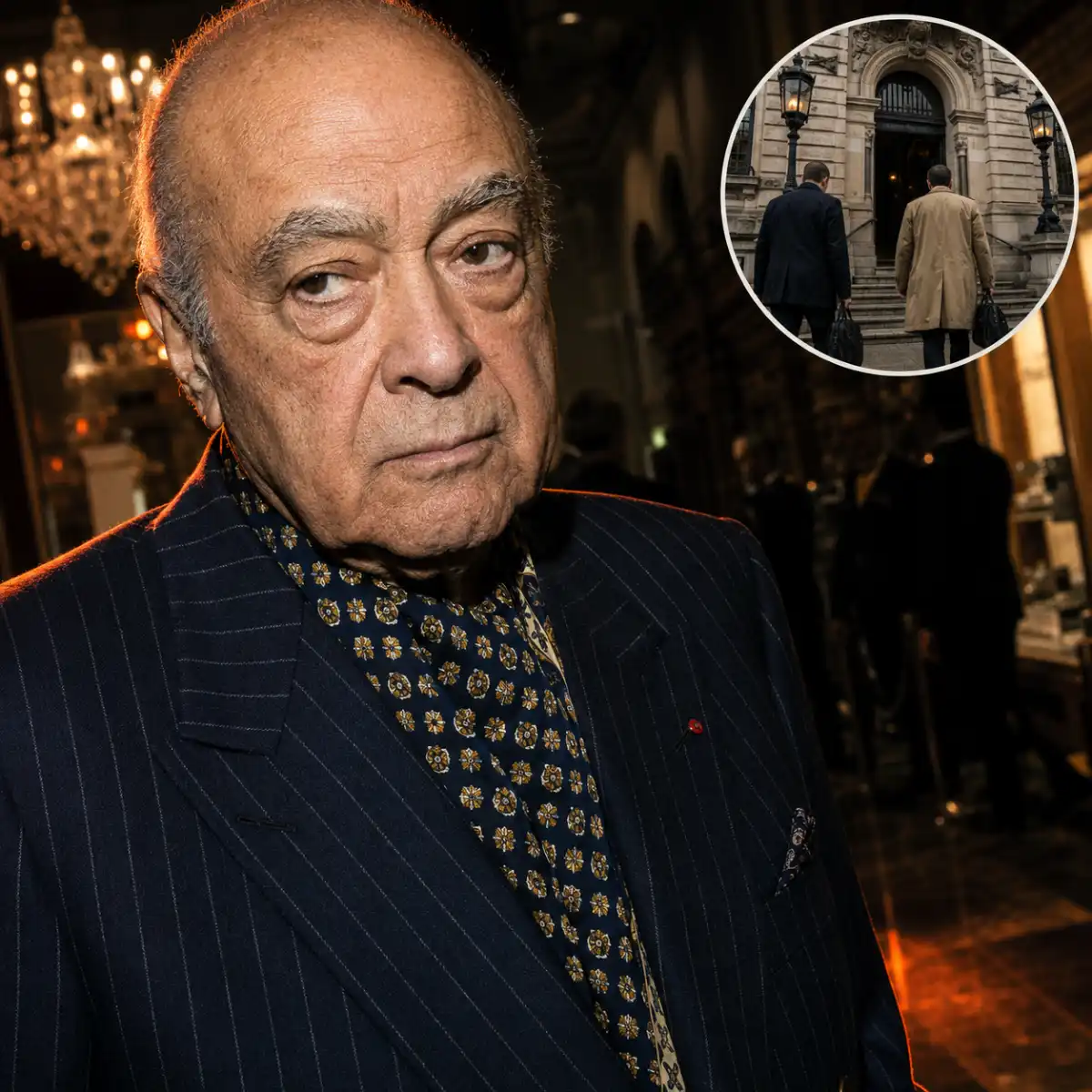
The Mohamed Al Fayed investigation has expanded again, with two more people formally questioned over allegations that they helped facilitate rape and sexual assault by the former Harrods owner.
A woman and a man, both in their 80s, were interviewed under caution between Monday and Wednesday, according to the Metropolitan Police. They are suspected of aiding and abetting rape and sexual assault, as well as assisting the commission of sexual offences.
Being interviewed under caution means their answers can be used as evidence. It does not mean they have been charged, and neither person was arrested.
The latest interviews bring the number of suspects questioned to six. The Met says its investigation remains active.
Who else has been questioned?
Earlier this year, detectives interviewed three women, aged in their 40s, 50s and 60s, and a man in his 60s.
Those four were questioned on suspicion of:
- Aiding and abetting rape and sexual assault
- Assisting the commission of sexual offences
- Human trafficking for sexual exploitation
The inquiry is focused on whether other people facilitated or enabled alleged offending by Mohamed Al Fayed, who owned Harrods from 1985 until 2010.
Hundreds of women have accused Al Fayed of rape, sexual assault and related abuse. He died in 2023 at the age of 94 and was never charged with a criminal offence.
Police say 157 alleged victims have now reported rape, sexual assault, sexual exploitation or human trafficking directly to the force. That figure has risen from 154 in the Met’s March update.
Separate reporting has put the overall number of allegations at more than 400. The totals are not directly comparable: one counts people who have contacted police, while the broader figure includes allegations reported through other channels.
Why the inquiry is unusually complex
The Met has described the investigation as one of its “largest and most complex”. The scale comes not only from the number of allegations, but from the need to establish whether employees, associates or other individuals helped arrange, conceal or enable offences over many years.
Investigators are also working with organisations and authorities in the UK and overseas. That matters because the allegations extend beyond a single building or period, requiring detectives to reconstruct employment structures, travel, communications and the roles played by potential facilitators.
Commander Andy Day called the two latest interviews another “important step in this complex and far-reaching investigation”.
“We would not have been able to secure these suspect interviews without the support of victims, who remain central to our investigation,” he said.
Day added that officers remained committed to bringing “anyone who is suspected to have played a part in his offending to justice”. For now, however, the operational position is unchanged: six people have been questioned, none has been arrested and no charges have been announced.
Earlier police decisions face separate scrutiny
The current inquiry is unfolding alongside questions about why Al Fayed was never prosecuted while alive.
According to the Associated Press, 21 women made allegations to police before his death. Detectives interviewed him in 2008 and referred evidence to prosecutors on two occasions, but no charges followed.
The Independent Office for Police Conduct is now investigating five serving or former Metropolitan Police officers for possible misconduct connected to the handling of allegations against him.
Steve Noonan of the police watchdog cited “widespread public concern” and said the investigation must identify missed opportunities or failures by officers. That review is separate from the criminal inquiry into alleged enablers, though the two raise an obvious shared question: how could complaints accumulate without producing a prosecution?
No evidence has been established that Al Fayed’s wealth or influence determined those decisions. Still, the repeated failure to bring charges is now part of the institutional scrutiny, not an inconvenient historical detail that can be placed in a filing cabinet and forgotten.
Compensation does not settle accountability
Harrods established a private redress scheme for former employees who said they were abused by Al Fayed. Applications closed on March 31, 2026, with ITV reporting that 200 women had applied.
AFP previously reported that more than 75 women had received full compensation, while a large number of claims remained under consideration at that stage. The scheme operates separately from the police investigation and does not determine criminal liability.
Some survivors have objected to Harrods administering the process, particularly amid concerns about liability waivers and the company’s historical role. Jen Mills told ITV it was “preposterous” that people she alleges enabled the abuse were overseeing compensation.
Another survivor, Cheska Hill-Wood, said women had been placed on a “conveyor belt” and called for accountability. Lucy Duckworth of the Survivors Trust has also demanded greater transparency, stronger safeguarding and closer examination of the systemic failures that allowed the alleged abuse to continue.
Survivors have called for an independent public inquiry, arguing that compensation alone cannot establish who knew what, how internal systems operated or why police and prosecutors repeatedly failed to act. The latest suspect interviews move the criminal investigation forward, but they also underline how much of that structure remains unresolved.