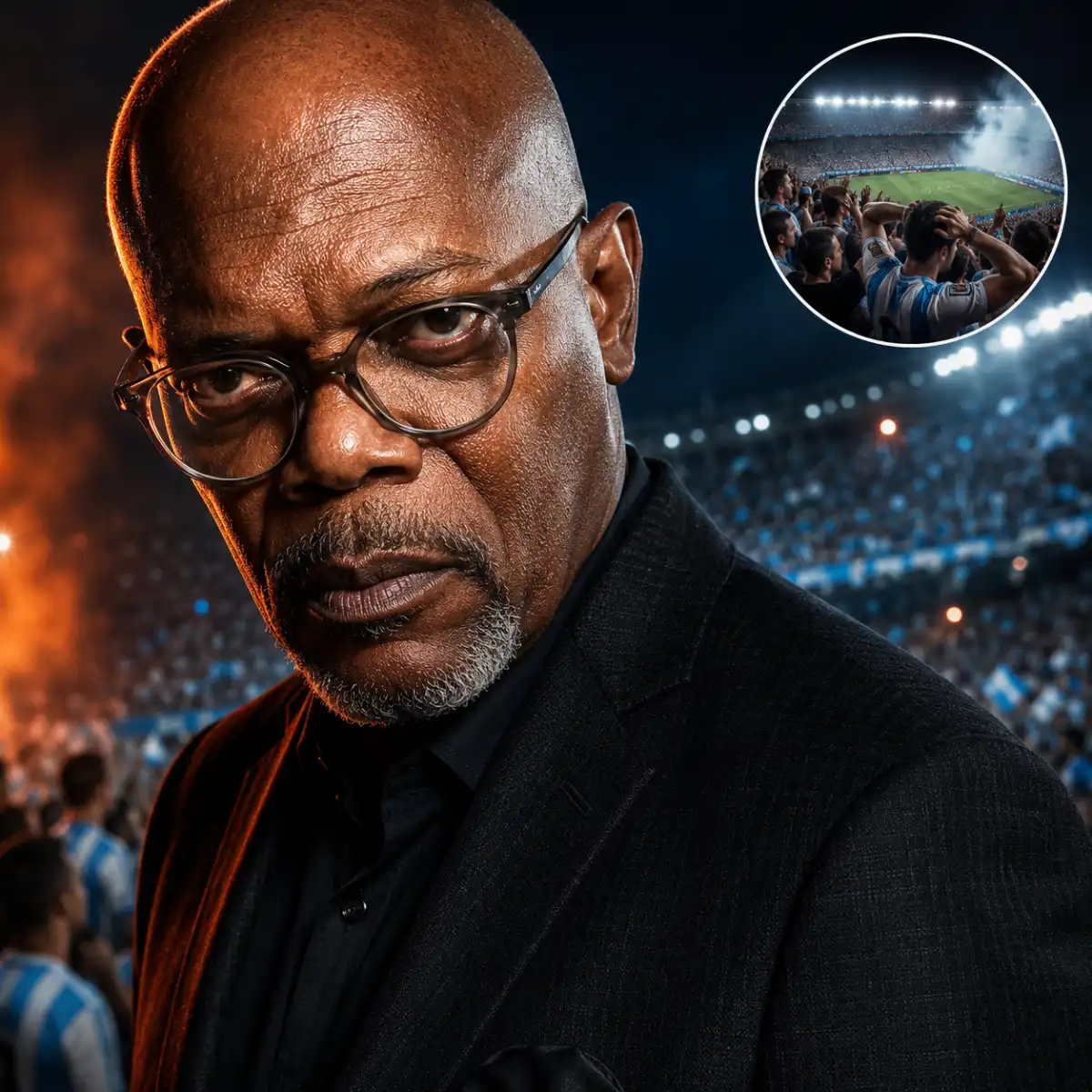
Samuel L Jackson called Argentina racist in a pointed Instagram Story ahead of the 2026 World Cup final, urging Black fans not to support the team before Spain went on to beat Lionel Scaloni’s side 1-0 in extra time.
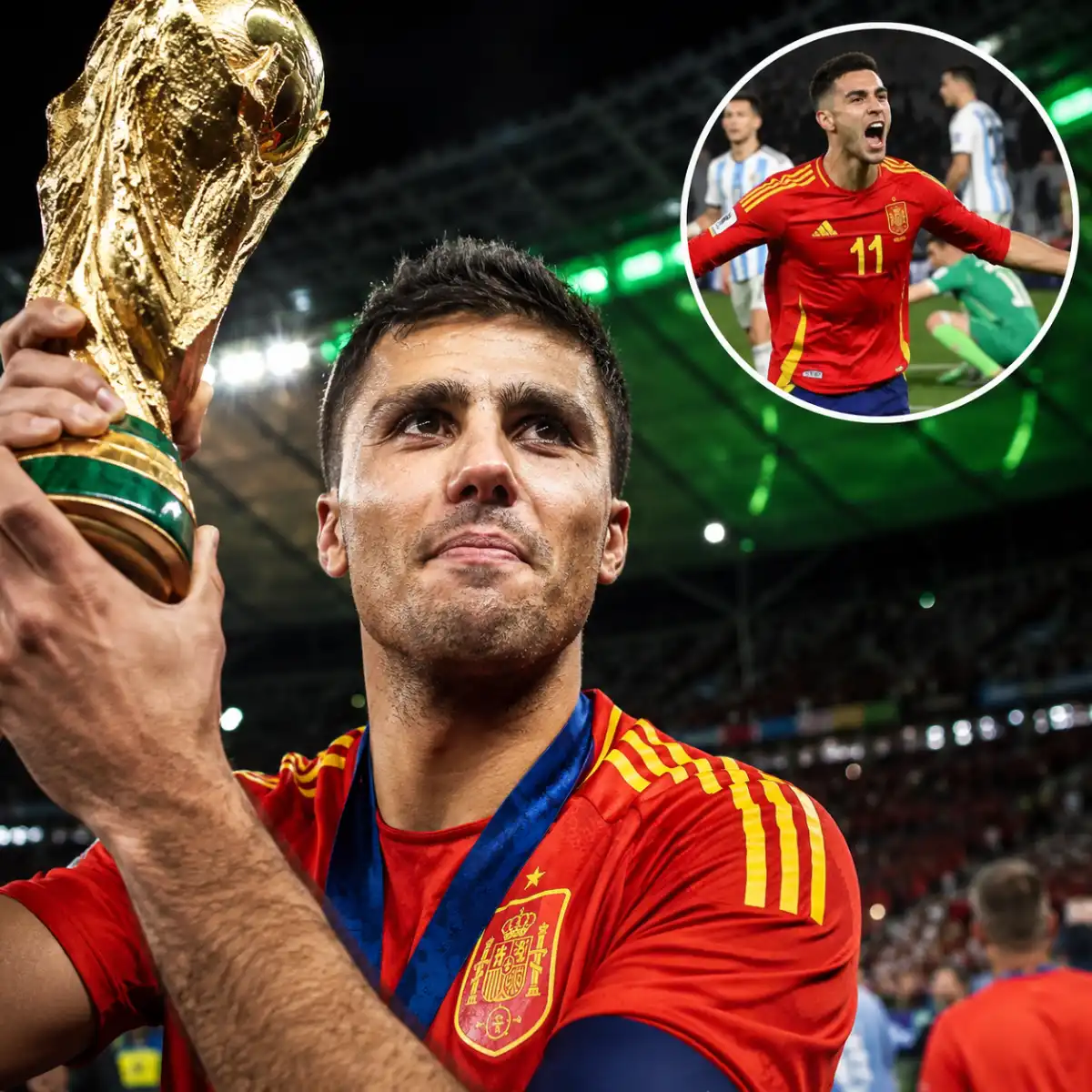
Spain, managed by Luis de la Fuente, lifted the trophy at New York New Jersey Stadium after the final, with Donald Trump presenting the winners’ trophy. The match had drawn a major celebrity crowd, including David Beckham and his family, and the usual global attention that comes with a World Cup deciding night. Because apparently a final can never arrive with just football attached.
What did Samuel L Jackson post before the final?
Before kickoff, Jackson reshared a post from the SEC Black Alumni Network on his Instagram Story. The image used an AI-generated version of Stephen, Jackson’s character from Quentin Tarantino’s 2012 film Django Unchained, wearing an Argentina football shirt.
The post addressed Black viewers directly and read: “Dear Black People… Please do not cheer or root for Argentina to win the FIFA World Cup.
“Argentina has historically been one of, if not the most racist countries in the world.
“‘If you are a Black person cheering for Argentina, this is what you look like to me.’
“We hear you loud and clear.”
The reference was deliberately sharp. In Django Unchained, Jackson plays Stephen, an enslaved house servant on a Mississippi plantation, in a story about a man trying to rescue his wife with the help of a German bounty hunter.
How did fans respond to Jackson’s repost?
Jackson’s repost spread quickly, and reaction from Argentina supporters was fierce. Some called the message “outrageous,” while others accused the actor of accepting “anti-Argentina propaganda” and said he “evidently” did not know enough about the country’s history.
The criticism did not arrive in a vacuum. Jackson, 77, has long used his public platform to speak about racism and American politics. His films have collectively earned more than $27 billion worldwide, giving him the kind of reach most public figures would be advised to use carefully. He has rarely treated that reach as a reason to stay quiet.
In a 2023 interview with Rolling Stone, Jackson reflected on growing up under segregation, saying: “When I grew up in segregation, I knew which white people didn’t want to be bothered with me, and I knew how they felt about me.”
He also said that when he “sees Trump,” he sees “the same rednecks” who used racist slurs against him when he was younger to “keep [him] in [his] place.”
“That’s what the Republican Party is to me,” Jackson added. “They’re doing it to young people, gay people. They don’t care who you are. If you’re not them, you’re the enemy.”
Why was Argentina already a divisive finalist?
Argentina’s run to the final was complicated long before Jackson’s Instagram Story. The team, led by Lionel Messi in its familiar blue and white kit, was the last Latin American side left in the tournament. That might usually bring regional support. This time, it often did not.
Many football fans across Latin America openly rooted against Argentina, citing racism and arrogance among sections of the fanbase. The pushback was especially visible among Mexican audiences, where the rivalry has sporting and cultural layers. Argentina has not lost to Mexico since 2004, and that history has added plenty of fuel to an already tense relationship.
Not every Mexican supporter was comfortable with the tone of the backlash, however. Some fans expressed regret over the wave of anti-Argentine commentary online, particularly when it became abusive or disorderly.
The discomfort was also voiced elsewhere in the region. Brazilian journalist and columnist Julia Duailibi, who writes for O Globo, said after Argentina beat England in the semi-final that she had wanted to support a fellow South American team.
“I have always been an admirer of the hermanos [an affectionate term for Argentinians] and would have loved to cheer on a fellow South American team,” she wrote.
“But I admit that the racist scenes involving a minority of the fans and the silence of the majority on the pitch turned my stomach.”
What racism allegations did FIFA investigate during the tournament?
The wider debate intensified during the tournament after racist behavior by some fans was captured on video. FIFA launched an investigation into alleged racist abuse involving American social media influencer IShowSpeed and an Argentina supporter after Argentina’s win against Cape Verde.
IShowSpeed, whose real name is Darren Jason Watkins Jr, is 21 and has more than 100 million followers across his platforms. He livestreamed matches throughout the World Cup, with FIFA president Gianni Infantino and former Barcelona and AC Milan forward Zlatan Ibrahimović appearing in some of his content.
The alleged incident happened on July 3 after the last-32 match. Footage showed Watkins wearing a Cape Verde kit in the stands when he was confronted by an Argentina fan.
FIFA said it “immediately” opened a probe after the incident. In a later statement, the governing body said: “The FIFA World Cup is a celebration of unity, diversity, and respect.
“It brings together people, cultures, and communities from around the world, and anyone who acts in a manner that undermines these values is not welcome in our game.”
What happens next?
Spain’s victory now sits in the record books, but the argument around Argentina’s fan culture has not disappeared with the final whistle. Jackson’s repost did not create that debate. It amplified it, with the kind of bluntness that tends to travel faster than context.
The post also landed because football audiences are not only watching what happens on the pitch. They are watching who gets defended, who stays silent, and what behavior is treated as part of the atmosphere rather than a problem.
Representatives for Samuel L Jackson have been contacted for comment.