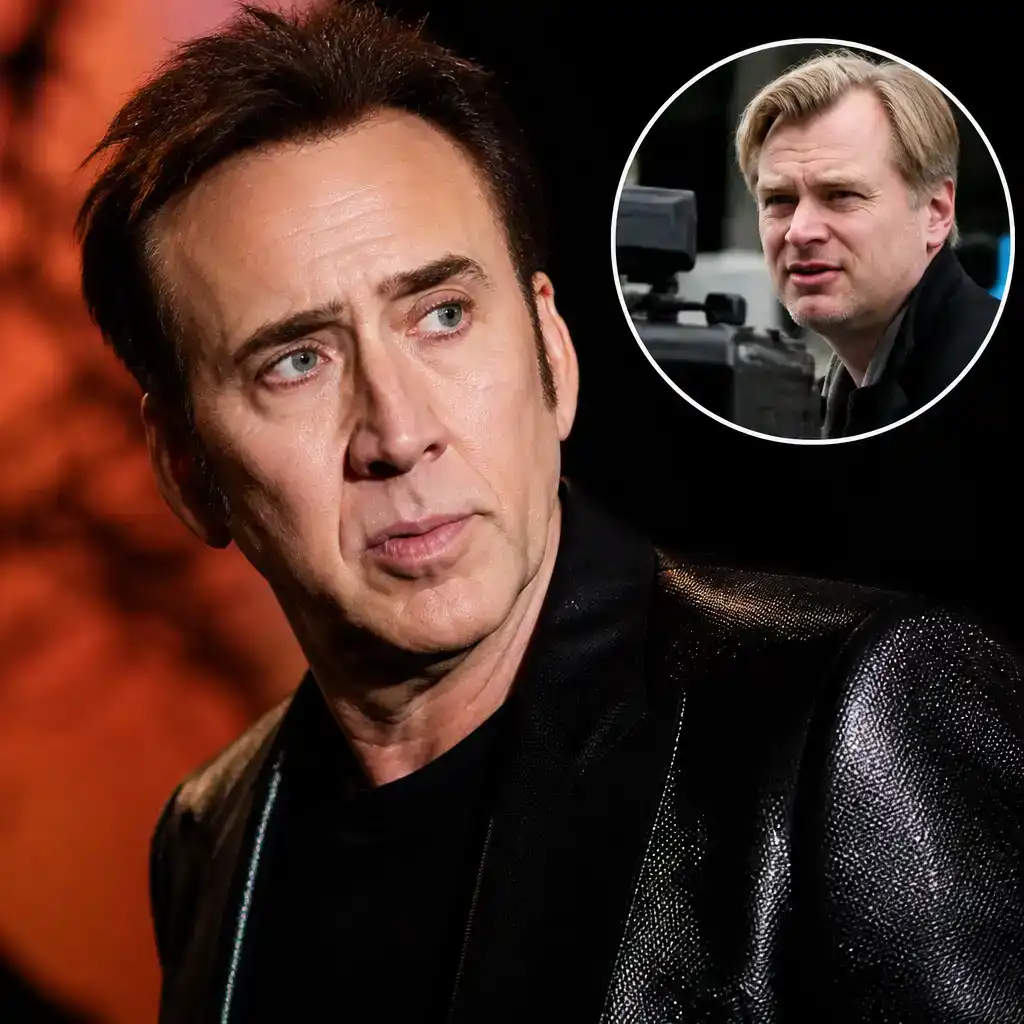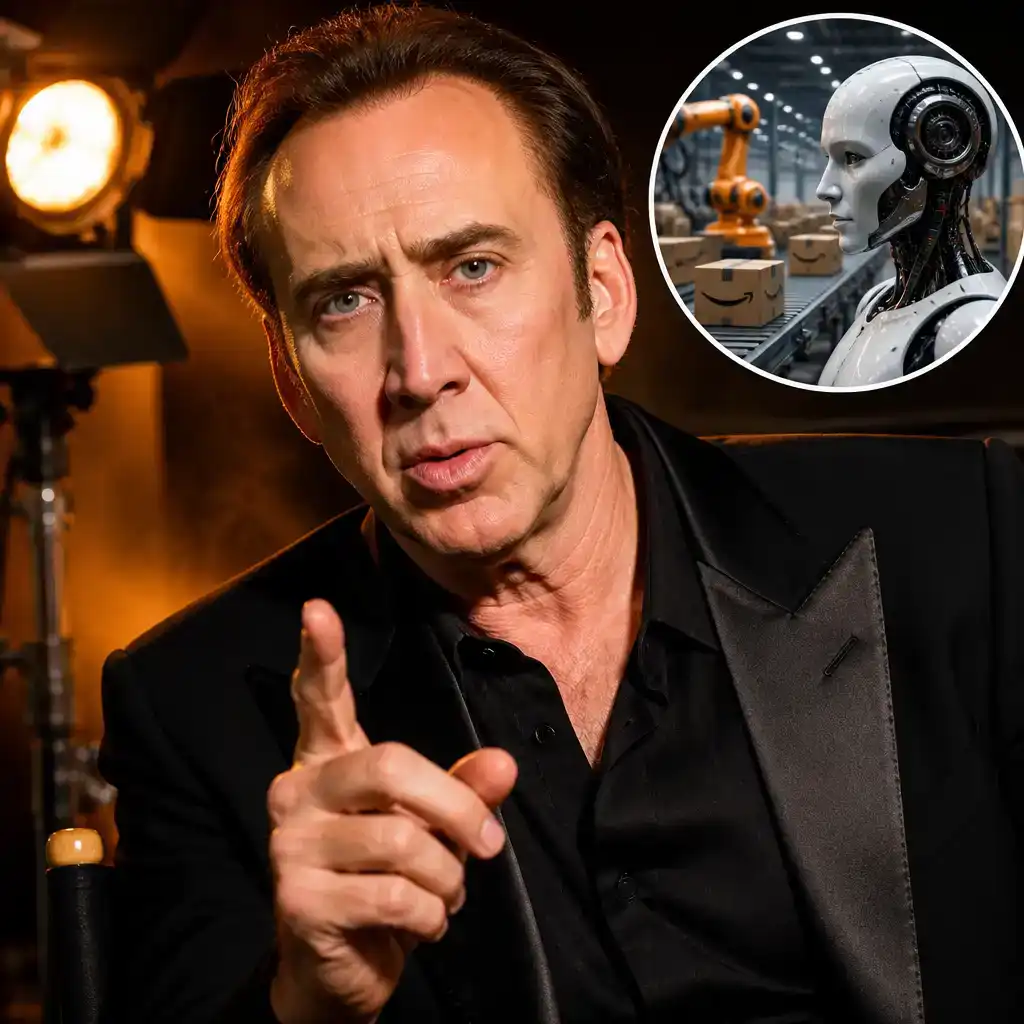
Nicolas Cage has drawn a firm line over artificial intelligence in Hollywood, revealing that he refused to sign an AI waiver connected to Amazon's live-action series Spider-Noir, even if the decision could cost him future opportunities with the studio.
Speaking at New York Comic Con, the actor suggested that his opposition to AI-generated performances matters more to him than maintaining a comfortable relationship with one of the entertainment industry's biggest corporate players.
And in typically unfiltered Cage fashion, he did not appear particularly troubled by the potential consequences.
Nicolas Cage says he refused Amazon's AI waiver for Spider-Noir
Cage, known for films including National Treasure and Face/Off, addressed the issue while discussing his involvement in Spider-Noir, the live-action series in which he portrays a version of Marvel's Spider-Man Noir.
According to the actor, Amazon wanted him to sign a waiver permitting the use of artificial intelligence in connection with the production. Cage said he declined.
"Amazon is a very AI-friendly company, to the tune of $50 billion invested in OpenAI," Cage explained.
He then made his own position considerably less ambiguous.
"I am not an AI-friendly actor, so it's like, connect those dots! I'm not a member of their club. I didn't sign the waiver to let them use AI on 'Spider-Noir.' I'm probably not going to be working with that studio again, but that's okay."
The remarks are striking because Cage is openly acknowledging a possible professional cost. Rather than treating the disagreement as something to resolve quietly behind closed doors, he has made it part of a public conversation about how actors should respond to the growing influence of artificial intelligence.
His comments do not establish whether Amazon has actually decided against working with him again. That remains Cage's own assessment of the situation, rather than a confirmed studio decision.
Why the Spider-Noir disagreement matters beyond one actor
The dispute raises a question that extends well beyond Spider-Noir: how much control should performers retain over the use of their image, voice and creative work when artificial intelligence becomes part of film and television production?
AI technology presents possibilities for studios, particularly in areas involving digital imagery, production processes and the recreation or manipulation of performances. But those possibilities also raise concerns about consent and the boundaries of an actor's involvement in a project.
Cage's objection appears rooted in that broader conflict between technological experimentation and artistic control.
Importantly, the exact terms of the waiver he refused have not been detailed in the information available. It is therefore unclear which specific AI applications Amazon wanted to authorize or how they might have affected his performance.
That distinction matters. Rejecting permission for an unspecified use of AI is not necessarily the same as rejecting every technological tool used in modern filmmaking.
Nevertheless, Cage's language leaves little doubt about his personal attitude toward the direction he believes the industry is taking.
Cage would rather work with Gen Z filmmakers creating art by hand
Rather than focusing exclusively on what he is unwilling to do, Cage also described the kind of filmmaking he wants to support.
The actor expressed an interest in collaborating with younger, Gen Z filmmakers who create their work "from scratch and by hand."
It is a revealing preference from a performer whose career has included major studio productions, independent films and some decidedly unconventional creative choices.
His comments suggest that he sees greater artistic value in working directly with emerging filmmakers than in accommodating technological practices he does not support.
That does not mean smaller productions are automatically more creative or that younger directors are universally opposed to AI. Cage's remarks are better understood as a statement about the kind of creative process he personally wants to participate in.
For an actor who has spent decades moving between commercial entertainment and more experimental projects, the appeal of a hands-on approach is not particularly difficult to understand.
Is Nicolas Cage taking a risk Hollywood's biggest stars can afford?
There is also a practical complication in Cage's position.
Established performers with recognizable names and lengthy careers may have more freedom to reject contractual terms than actors who are still trying to secure their first major roles.
Cage has an extensive filmography and a level of public recognition that could make his willingness to walk away from potential studio opportunities easier to sustain.
That does not diminish the principle behind his decision, but it does raise questions about whether less established performers would feel equally comfortable making the same choice.
In my view, Cage's refusal is valuable precisely because he is treating consent as something that should be negotiated rather than assumed. Without knowing the exact wording of Amazon's waiver, it would be premature to declare the studio's request unreasonable. But an actor's willingness to reject contractual permission for AI use is a legitimate exercise of creative control, and the industry benefits when those boundaries can be discussed openly.
There is a difference between embracing new production technology and expecting every performer to accept its potential applications without objection.
Cage has made clear which side of that distinction matters to him.
Could Nicolas Cage's AI stance affect his Hollywood future?
For now, the most immediate unanswered question is whether Cage's refusal will have any lasting effect on his relationship with Amazon.
His prediction that he may not work with the studio again is notable, but it should not be mistaken for an official announcement that the two parties have ended their professional relationship.
Nor does the available account establish whether the waiver disagreement has affected the production or release plans for Spider-Noir.
What Cage has provided is a particularly public example of an actor deciding that certain technological permissions are not worth granting, even when a major studio is involved.
As Hollywood continues exploring artificial intelligence, disputes over how performers' contributions can be used may become an increasingly important part of contract negotiations.
Cage, meanwhile, appears comfortable with the possibility of fewer studio opportunities if that means preserving his preferred approach to acting.
For an industry accustomed to negotiating almost everything, his refusal is a reminder that some performers still intend to make the word "no" mean exactly that.