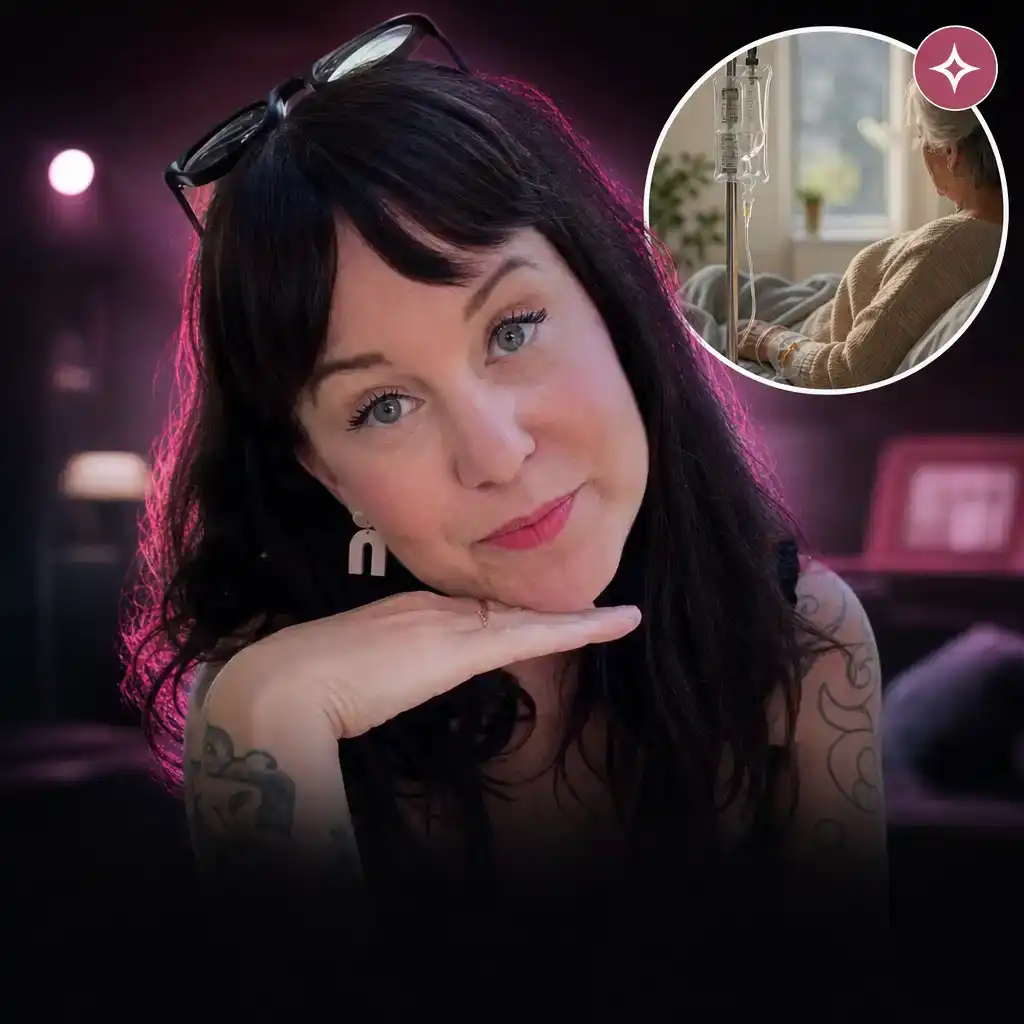
Rebecca Luna’s death has drawn attention not only because she shared her illness with tens of thousands of people, but because dementia can leave patients with a painfully narrow period in which they are still able to make major medical decisions for themselves.
The 49-year-old TikTok creator died through medical assistance in dying, known as MAID, on July 25, 2026. A message posted to her account the following day said she died at approximately 1:15 p.m., surrounded by loved ones.
“Thank you for your support and privacy,” the announcement said.
Why Rebecca Luna moved her MAID date forward
Luna, a mother of two daughters from Victoria, British Columbia, said she was diagnosed with young-onset Alzheimer’s in April 2025. She spent more than a year documenting her decline and decisions online, building an audience of about 93,000 followers on her latest TikTok account.
On July 23, she told followers that her MAID appointment, originally planned for August, had been moved to July 25. CityNews reported that the change followed a faster decline than expected.
“It’s a hard decision to make, because I’m living in a body that doesn’t feel comfortable, safe, good, nothing,” Luna said in the video. “It feels terrible. And so the idea of waiting two weeks felt like too much. I don’t wanna be dying before I’m 50, but I have had a good life actually.”
She had previously described how the disease affected ordinary tasks and her sense of independence. In an interview recounted by UNILAD, Luna said she once opened her work computer and found “nothingness,” unable to understand what she was seeing. She also recalled nearly starting a fire after forgetting an egg boiling at home.
Those incidents made the stakes of her diagnosis visible in a way clinical descriptions often do not. Luna was not discussing memory loss as an abstract future problem. She was describing the steady erosion of work, safety and control while raising children.
What young-onset Alzheimer’s means
Although some early reports called Luna’s illness a rare form of dementia, the terminology requires more care. The Alzheimer Society of Canada says young-onset dementia describes dementia that begins before age 65. It is not one specific disease, and dozens of conditions can cause it.
Luna identified her diagnosis as young-onset Alzheimer’s disease. According to the society, at least 28,000 people under 65 are living with young-onset dementia in Canada, accounting for an estimated 2% to 8% of dementia cases.
The younger age can create distinct pressures. People may still be working, paying mortgages or supporting children when symptoms begin. Luna’s fundraising appeals referred to lost independence, therapy expenses, caregiving needs and financial support for her daughters.
Her eldest daughter, Maya, confirmed Luna’s death through the fundraiser. At the time of the initial reports, donations had reached about $11,000 Canadian dollars. The page said contributions and well wishes were warmly appreciated and would benefit Luna’s children.
Why dementia makes MAID timing complicated
Canadian law allows a person with dementia to receive MAID if all legal eligibility requirements are met, including the applicable decision-making-capacity rules. General advance requests for MAID after a person has lost capacity are not permitted under the federal Criminal Code.
That legal framework makes the timing unusually difficult for some dementia patients. A person may know that their condition will worsen while also knowing that waiting could affect their ability to qualify or provide the required consent. Luna’s decision to bring her date forward placed that conflict in public view, with no easy emotional resolution attached.
Health Canada recorded 16,499 MAID provisions in 2024. Of those recipients, 368 had dementia, representing 2.2% of the total. Their median age was 81, making Luna’s case notably unusual because she was 49.
Her videos did not present the decision as simple or triumphant. She said the disease had “taken so much from me,” while also acknowledging that she did not want to die before turning 50. That tension is central to why her story reached beyond her established audience.
How followers responded to her final announcement
The post confirming Luna’s death received nearly 5 million views in the initial days after it appeared. Followers returned to earlier videos to leave condolences, with several describing her as a bright presence and wishing peace for her and her family.
The response reflected the unusual intimacy of following someone through a rapidly progressing illness online. Viewers saw Luna explain symptoms, practical losses and the reasoning behind her final decision in her own words. For many, the announcement was not the first time they understood that she was dying, but it was the moment that possibility became fixed.
No further substantive family statement had been reported by July 27. The family’s brief announcement asked for privacy, leaving Luna’s own videos as the clearest account of how she approached her illness, her children and the limited choices she believed remained.