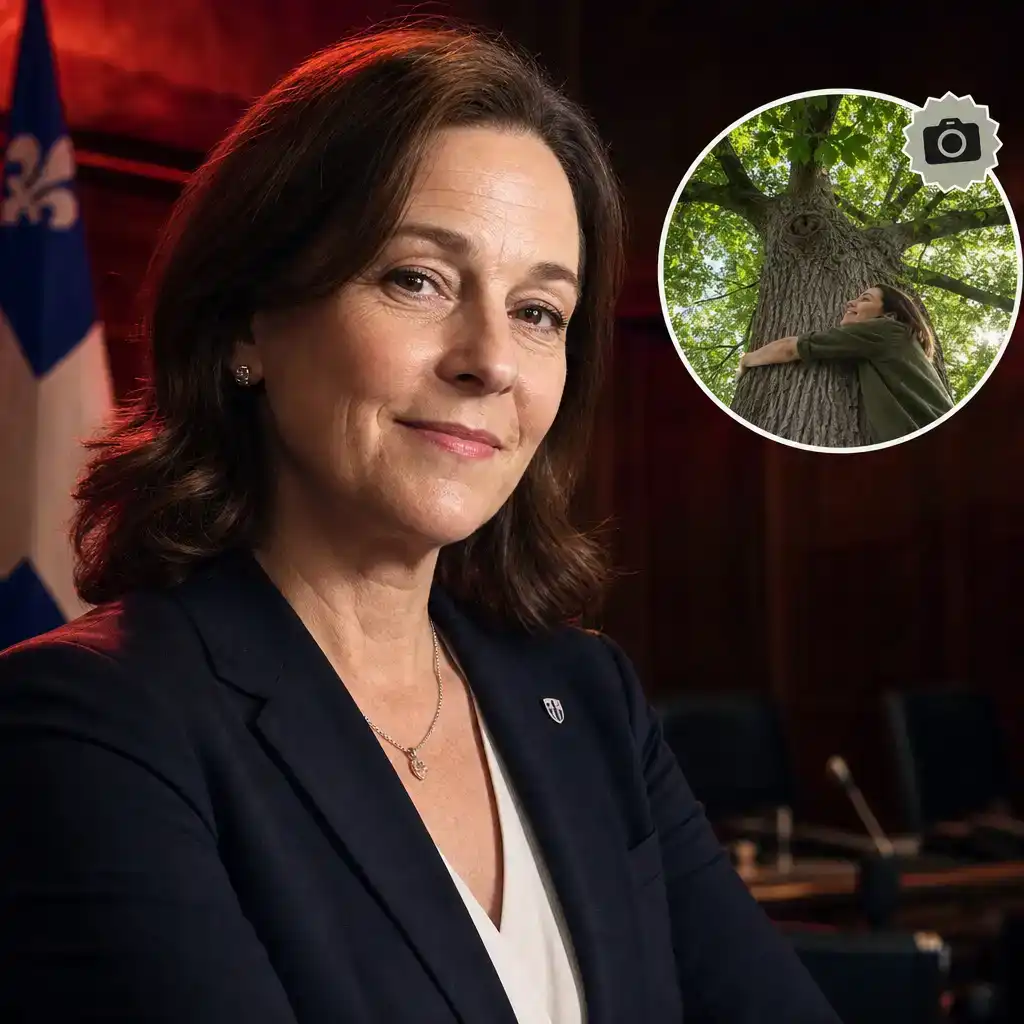
A small town near Montreal has put itself on Canada’s environmental map by recognizing trees as sentient living beings with rights. Terrasse-Vaudreuil, Quebec, said it will sign a petition supporting the Universal Declaration of the Rights of Trees, a first for any municipality in the country.
The decision gives a very formal civic nod to something many people already understand on a basic level: trees are not just pleasant background decoration. They shape air, shade, soil, wildlife, heat, and, apparently, town council agendas.
What did Terrasse-Vaudreuil agree to support?
Terrasse-Vaudreuil announced in a press release that it would back the Universal Declaration of the Rights of Trees, an international initiative launched by environmentalists in 2018.
The statement came in response to widespread forest destruction around the world. Its purpose is to underline the essential role trees play in life on Earth, and to push public institutions to treat them as more than property or objects.
According to The National Post, the petition was inspired by the film Des arbres et des arts (Trees and the Arts), which “sparked a broad public debate on the legal status of trees and the possibility of recognizing them as living beings, rather than mere objects.”
Why is the town backing tree rights?
The request for Terrasse-Vaudreuil to sign the petition came from the town’s Environment Committee.
Mayor Michel Bourdeau called the move a “commitment to building a sustainable future,” saying the recognition would not simply sit in a symbolic file somewhere, aging beside other municipal paperwork.
He said it “will come with concrete programs to protect our tree canopy, plant trees, and raise public awareness of their importance.”
For a town of fewer than 2,000 people, the gesture is modest but sets an interesting precedent. It makes Terrasse-Vaudreuil the first place in Canada to formally support this kind of rights-based recognition for trees.
What does the tree rights declaration say?
More than 87,000 people have signed the declaration so far.
Terrasse-Vaudreuil is aligning itself with three central ideas from the document:
- “The Tree, a sensitive being, source of life, is a common good of humanity.”
- “Life on earth depends on tree’s existence.”
- “Humans, endowed with reason and consciousness, must act in a fraternity and solidarity with trees.”
The language is lofty, yes. But the practical point is fairly direct: if trees are vital to human survival, then treating them as disposable landscaping may be a bit of an accounting error.
Why the timing stands out
The announcement came only days after the death of the Major Oak in England’s Sherwood Forest, widely described as the world’s “most famous” tree.
The legendary oak had stood for more than 1,000 years and was closely tied to Robin Hood folklore. Its death gave the broader conversation around ancient trees, protection, and ecological memory a sharper emotional edge.
Terrasse-Vaudreuil’s decision also arrives in a province that has recently drawn attention for unusual public policy moments. Last winter, several Quebec schools made students wear helmets to play in the snow during recess, a rule that went viral for reasons that were not entirely about playground safety.
This time, the viral moment is less about helmets and more about whether communities are ready to rethink what legal and moral protection should look like for the natural world around them.