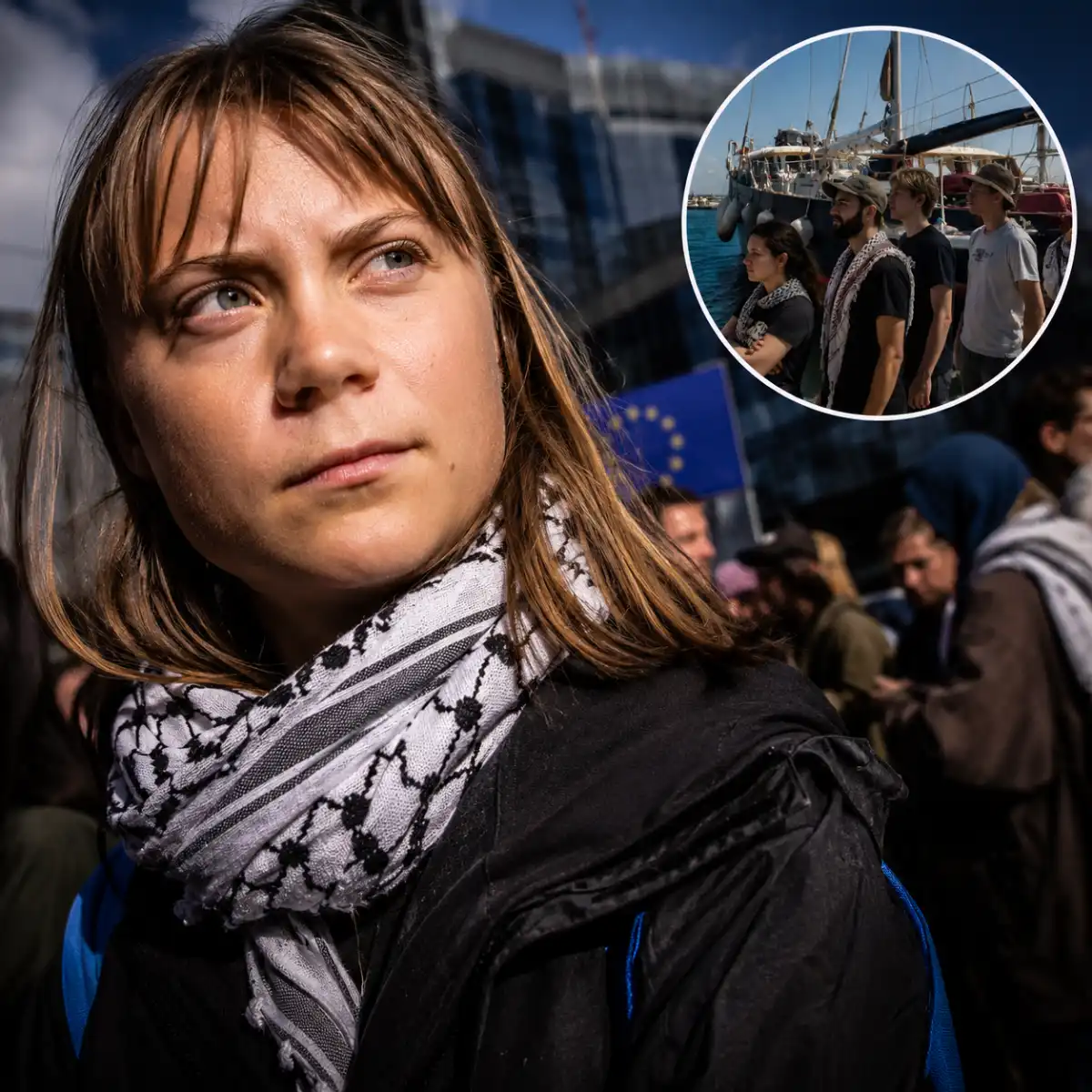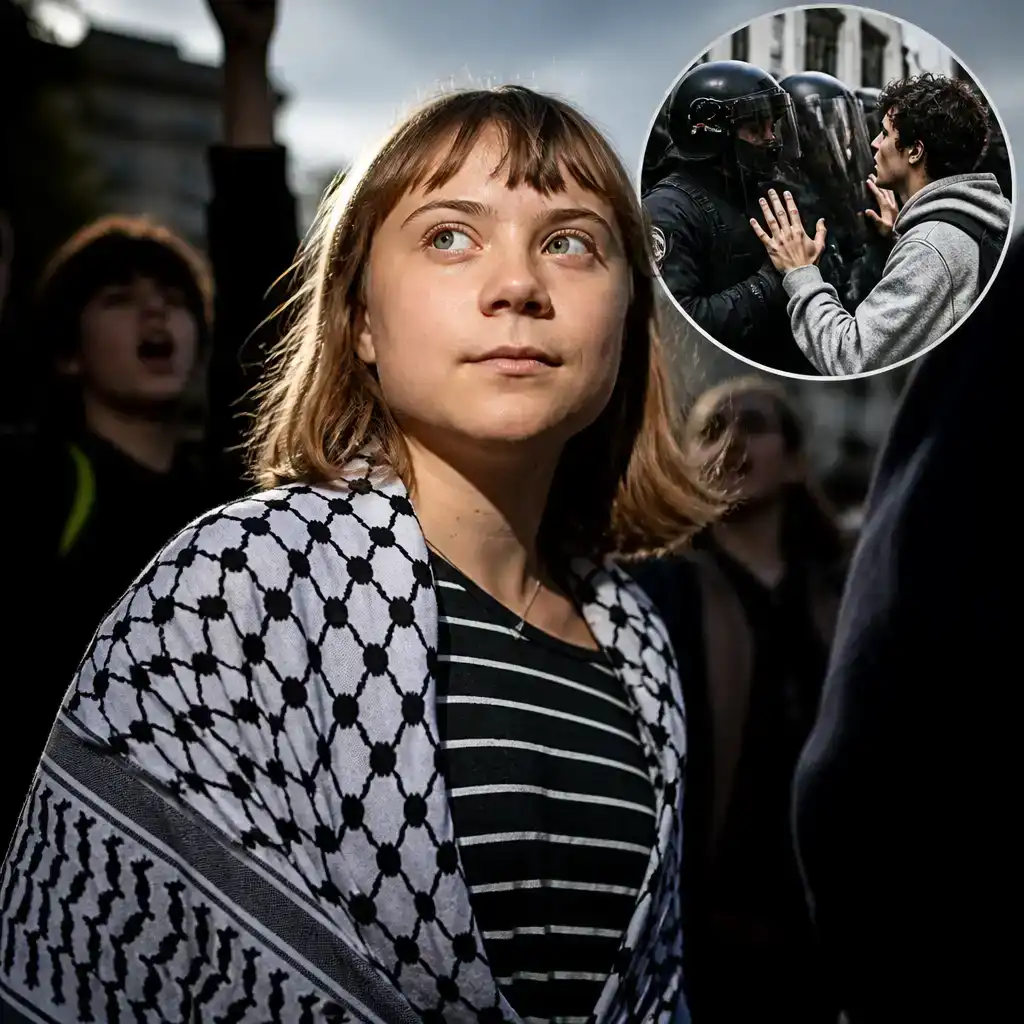
Swedish climate activist Greta Thunberg joined the French student protests on Tuesday morning, appearing outside Paul-Éluard high school in Saint-Denis before an expected afternoon march through Paris.
Standing among pupils at one of the movement’s central protest sites, Thunberg said young people had been excluded from decisions shaping their lives. “Young people are not being included in the conversation. Our future is being robbed away from us,” she told Agence France-Presse.
She later said she was “extremely proud of the French students” and rejected the suggestion that repeated demonstrations should simply fade away. “What are we supposed to do then? Just give up? Of course not.”
What are the students demanding?
The unrest began in late September and has expanded into a national argument over the condition of France’s education system, particularly in poorer suburbs where shortages are more severe.
Students are demanding repairs to deteriorating buildings, more teachers, less crowded timetables and broader changes to education policy. TF1 reported that organizers want a €10 billion investment plan and the abolition of Parcoursup, France’s university admissions platform.
Sabrine Kharbach, a student-union spokesperson, said the movement had no plans to retreat. “Until we have 10 billion on the table, we will continue to mobilize.”
The university student union l’Union offered an equally direct explanation for Tuesday’s march: “They’re not listening to us, so we’re going to them.”
Students have stacked bins and placed security barriers outside hundreds of schools. Education Minister Édouard Geffray said about 200 schools were closed on Tuesday, fewer than the previous week. Some reports described those schools as blocked, while Geffray said the figure also included precautionary closures near march routes.
The government has promised 3,000 replacement teachers for the schools under the greatest strain. That is not a trivial number, although the scale of the shortage suggests nobody should prepare the celebration banners yet.
Why Saint-Denis has become central to the movement
Paul-Éluard high school sits in Seine-Saint-Denis, a disadvantaged area north of central Paris where education inequality is especially visible. A union survey cited by The Philadelphia Inquirer found that 61% of surveyed secondary schools in Seine-Saint-Denis and neighboring districts were missing at least one teacher at the beginning of the term.
That gap has helped turn the demonstrations into something larger than a dispute over individual campuses. Students are challenging the sharp differences between schools in affluent central areas and those in suburbs where staffing shortages, crowded classes and aging buildings are routine.
More than 70,000 people joined the previous major day of action last Thursday. The government says participation is declining, but the Associated Press reported that the movement showed few signs of ending and was already affecting debate around France’s 2027 presidential election.
Tuesday’s action was supported by trade unions and the left-wing opposition party La France Insoumise. Organizers planned marches in Paris and other cities, with broader rallies over the rising cost of living expected on Saturday.
Police tactics are drawing growing scrutiny
The condition of schools may have started the protests, but the police response has become a major issue of its own.
Lawyers wearing court robes formed a human chain to protect teenagers following repeated allegations of police brutality. Reuters also reported that parents and teachers faced riot police in a human chain near Hélène-Boucher high school.
Many of the demonstrators are minors. Reports that students suffered a severed hand, lost eyesight and a shattered jaw have intensified questions about the use of grenades and projectile weapons around children and teenagers.
Le Monde reported at least €30 million in protest-related damage, alongside more than 210 injured students and 88 injured education employees, including about 40 school principals. The Ministry of National Education separately said eight staff members were injured on Monday, mainly in the Paris region, Bordeaux and Lyon.
A 19-year-old graphic design student identified as Leo told Agence France-Presse that students and their proposals were not being heard by officials. He also said protesters were disturbed by “the level of repression never before seen for a student movement.”
Police have opened investigations into 24 allegations of brutality against demonstrators. Those inquiries now carry substantial weight, particularly when the state’s response to complaints about education appears to involve weapons capable of causing permanent injury.
Thousands have been taken into custody
The scale of the arrests has added to the pressure on President Emmanuel Macron’s government. The Ministry of Justice said more than 6,800 people, mostly minors, had been taken into police custody over the course of the demonstrations.
An earlier Associated Press count, attributed to the Interior Ministry, put the total above 6,600 by October 8. No verified final turnout or arrest figure for Tuesday’s Paris march was available at the time of reporting.
Geffray said violence would not deprive pupils of their “fundamental right to education.” The statement addressed disorder around schools, but students argue that chronic shortages and neglected buildings are already limiting that right in less dramatic, more bureaucratically convenient ways.
On Monday, Macron urged restraint while speaking to reporters at a car show. “These are issues that deserve time, consultations, discussion and respect,” he said.
Students have spent weeks arguing that time and consultation have produced too little. Thunberg’s appearance gave their campaign international attention, but the practical questions remain stubbornly domestic: how much France will invest, whether disadvantaged schools will receive enough staff, and how authorities will answer allegations that minors demanding better classrooms were met with excessive force.