Spoilers follow for the Season 3 finale of House of the Dragon.
Rhaenyra Targaryen’s declaration that she is “The Prince That Was Promised” sounds like a major change to Game of Thrones lore. It certainly ends any hope of keeping the prophecy within a discreet Targaryen family meeting. But the line works better as evidence of Rhaenyra’s growing messianism than as proof that one speech rewrote two centuries of Westerosi history.
By the finale, Rhaenyra, played by Emma D’Arcy, has become increasingly frustrated and isolated. The castle she conquered at the start of Season 3 now functions more like a prison, complete with political rivals, hidden enemies and unhappy commoners. At least the accommodation is impressive.
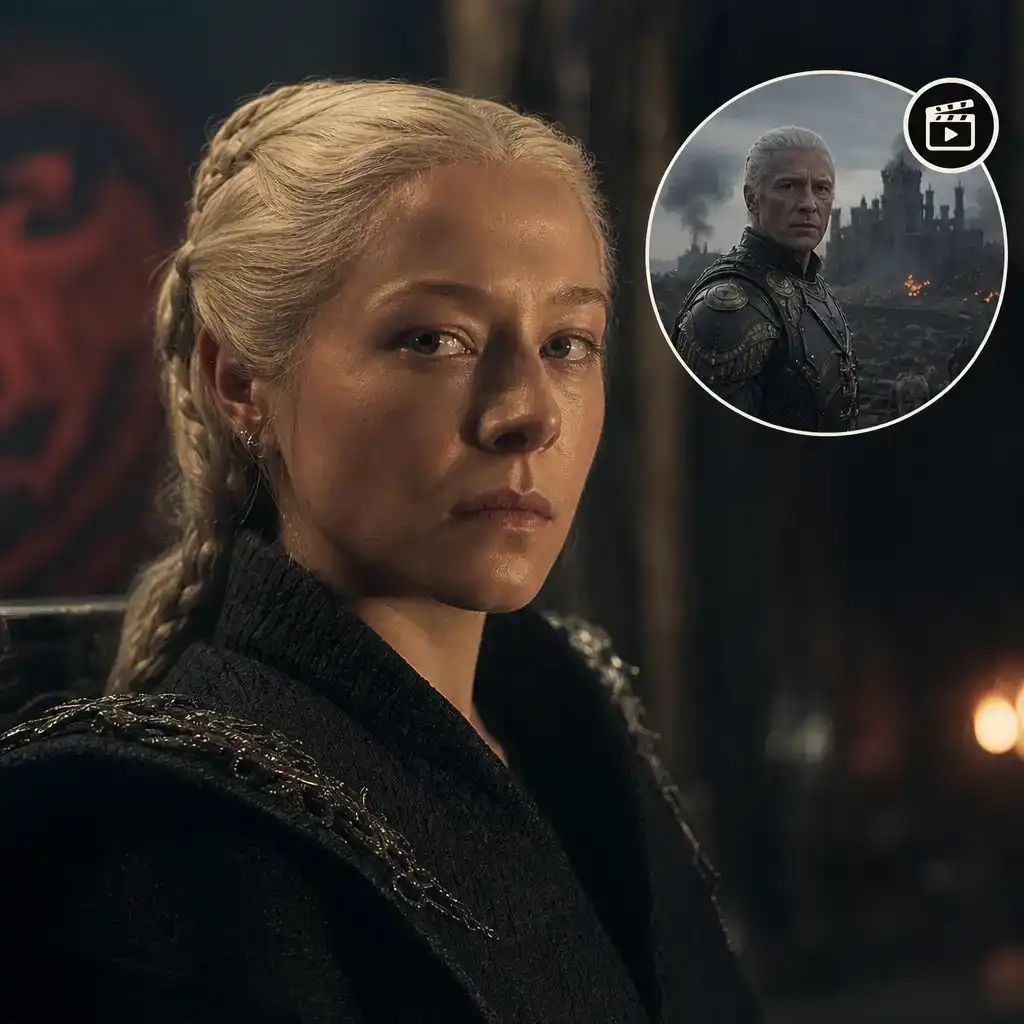
When the conflict finally reaches its breaking point, Rhaenyra dresses for war and tells her assembled soldiers: “I am The Prince That Was Promised!”
Why Rhaenyra believes the prophecy is about her
House of the Dragon introduced the idea that Aegon the Conqueror foresaw a future threat from the North. According to the series, he believed someone from his bloodline would eventually unite Westeros against the White Walkers. Knowledge of that vision, called Aegon’s Song of Ice and Fire, was then passed privately from Targaryen ruler to chosen heir.
King Viserys I Targaryen shared the secret with Rhaenyra when he named her as his successor. She later disclosed it privately to her son Jacaerys Velaryon in Season 2, as noted by The Washington Post. Daemon Targaryen has also received a prophetic vision reinforcing Rhaenyra’s apparent role, while Alicent Hightower heard part of the language during Viserys’s confused final moments.
So the finale is not the first time the information has escaped the strict king-to-heir route. Jacaerys, Daemon and Alicent already knew at least some of it. What changes is the audience. Rhaenyra is no longer discussing inherited responsibility behind closed doors. She is publicly claiming divine significance in front of soldiers.
That is a substantial political shift, even if the troops have no idea what the title means.
Does the speech make the Targaryen secret public?
Technically, yes. Practically, the result is much less certain.
The phrase “Prince That Was Promised” is not common knowledge in King’s Landing. The broader Azor Ahai tradition is better known in Essos, while maesters studying old Valyrian writings may also have encountered related material. Most people in Westeros, however, would not hear Rhaenyra’s announcement and immediately understand that she was talking about an apocalyptic war against an undead army.
Her soldiers might preserve and repeat the phrase. It could spread as battlefield gossip, royal propaganda or an unusually grand claim from a ruler under pressure. But the finale does not show that happening, and no clarification from HBO or the show’s creators has established that Rhaenyra’s words remain in circulation for the next 200 years.
There is also the inconvenient matter of who gets to write history. A defeated claimant’s declaration could be ignored, suppressed by later Green rulers or dismissed by maesters and chroniclers. Fire & Blood, the fictional history on which the series is based, repeatedly reminds readers that surviving accounts are selective, contradictory and politically useful. Public knowledge in one room does not automatically become permanent historical memory.
Why this is not necessarily a Game of Thrones retcon
Characters in the Game of Thrones era had other ways to learn about the promised savior without relying on a story handed down from Rhaenyra’s army.
Maester Aemon and Prince Rhaegar Targaryen knew of the tradition through scholarship and correspondence. Melisandre approached it through the Essosi prophecy of Azor Ahai. Those established routes do not require anyone at Rhaenyra’s speech to remember her exact words, explain them correctly or pass them through two centuries of wars, dynastic collapse and questionable record-keeping.
The show’s version of the prophecy is itself an adaptation choice. Co-creator Ryan Condal previously said Aegon’s prophetic dream came from George R.R. Martin. However, the formal mechanism of each king privately telling an heir is an expansion created for television and does not appear in Fire & Blood.
That means the finale is developing lore the series already added, rather than clearly overturning a settled explanation from Game of Thrones. Official merchandise also displayed the line “I am the prince that was promised” months before the episode aired, according to Winter Is Coming, so it was not especially quiet from a production standpoint.
The line matters more for Rhaenyra than the lore
Before the season, Emma D’Arcy said Rhaenyra believes “hers is a holy war” and that she possesses “a divine mandate to rule.” Condal similarly described the storyline as exploring what happens when a ruler with six dragons begins “believing their own press.”
Those comments frame the proclamation as character development. Rhaenyra has moved from believing she inherited a duty to believing she personally fulfils the prophecy. The distinction is small in wording and enormous in political consequences.
For viewers who know Game of Thrones, the moment carries obvious tragic irony. The eventual defeat of the White Walkers cannot be credited neatly to Rhaenyra, and readers of Fire & Blood already know her campaign will not produce the glorious destiny she imagines. Her certainty therefore reads less like revelation and more like a warning about a ruler who has started treating disagreement as opposition to fate itself.
The public speech may still influence how later generations understand the prophecy. For now, though, the stronger conclusion is not that House of the Dragon has rewritten the whole plot of Game of Thrones. It is that Rhaenyra has found a theological justification for her war, and she has dragons available to enforce it.
House of the Dragon is streaming on HBO Max.