He writes:
“We cannot be satisfied with merely calling for the moralization of machines — the so-called 'alignment' of AI with human values — without also having the courage to insist on a further condition: the possibility of openly discussing the ethical frameworks involved and subjecting them to shared standards of social justice,”
The point is blunt: “alignment” sounds reassuring until someone asks who gets to define the values being aligned.
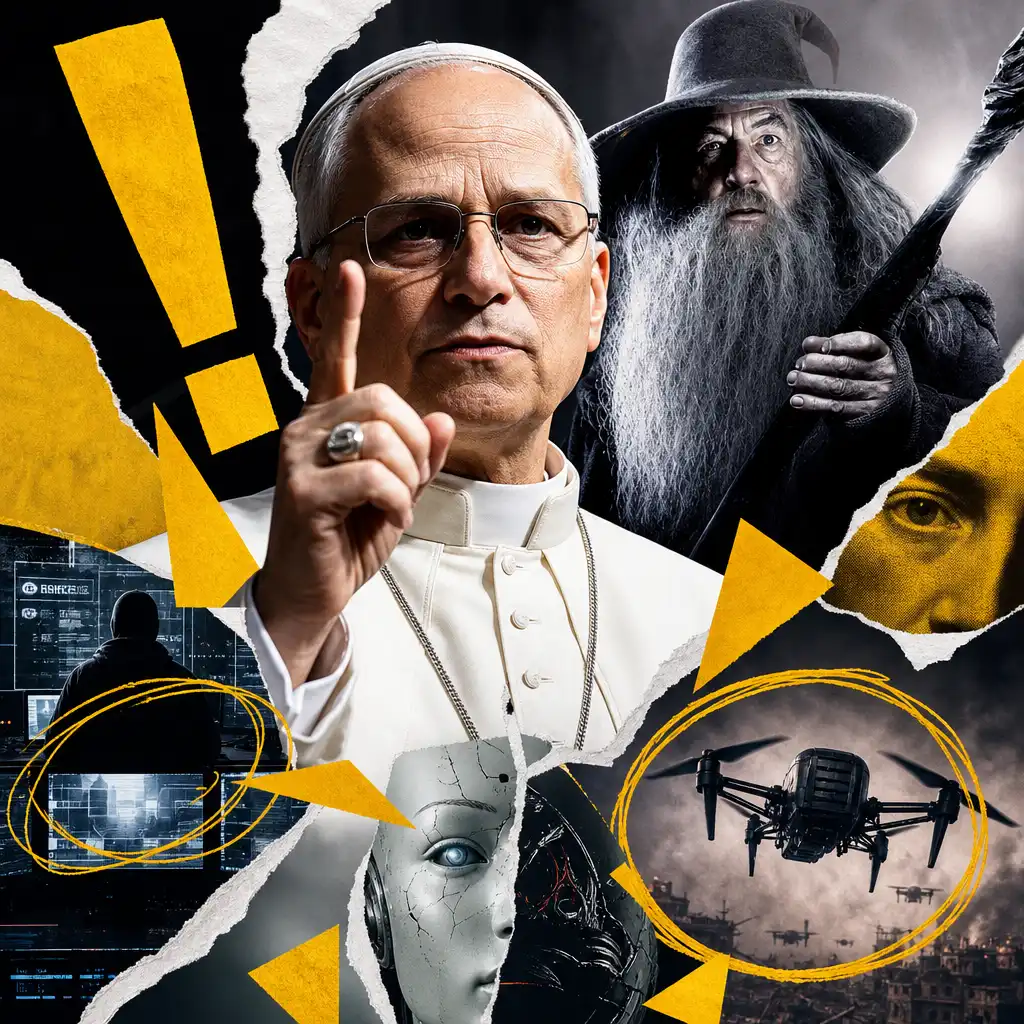
The Gandalf quote inside Magnifica Humanitas
In a section titled “We can all do our part,” Leo reaches for J.R.R. Tolkien, the Catholic author behind The Lord of the Rings, to underline the limits and duties of human responsibility.
He quotes:
The twentieth-century Catholic author J.R.R. Tolkien, in the words of a protagonist in one of his novels, described our responsibility in this way: “It is not our part to master all the tides of the world, but to do what is in us for the succour of those years wherein we are set, uprooting the evil in the fields that we know, so that those who live after may have clean earth to till.”
The line comes from The Lord of the Rings: The Return of the King. Gandalf says it at the gates of Minas Tirith while addressing the lords of the allied forces. At that point in the story, Denethor and Théoden are dead, Faramir is recovering in the Houses of Healing, and Aragorn is among those listening.
The fuller passage reads:
“Other evils there are that may come; for Sauron is himself but a servant or emissary. Yet it is not our part to master all the tides of the world, but to do what is in us for the succour of those years wherein we are set, uprooting the evil in the fields that we know, so that those who live after may have clean earth to till. What weather they shall have is not ours to rule.”
What Leo says happens if a few people control AI
Leo’s argument goes beyond the familiar warning that machines should reflect human values. He says that if the public is shut out of that debate, the result will not be neutral technology. It will be someone else’s moral framework, operating behind the interface.
He continues:
“Otherwise, those who control AI will impose their own moral vision, which will become the invisible infrastructure of these systems. A more moral AI is not enough if that morality is determined by a few. What is needed is a more active political involvement that is capable of slowing things down when everything is accelerating, and of protecting the opportunities for communities still to be able to participate and ask questions.”
That is the heart of the document’s case: speed is not automatically progress, especially when the people most affected by a technology are the last ones invited into the room.
Did anyone in tech hear the message?
At least one major AI figure was present when the text was presented at a Vatican event on Monday. Chris Olah, a co-founder of Anthropic, attended the event. Anthropic produces the Claude AI tools and is one of the best-known companies in the generative AI race.
Whether that translates into action is another matter. AI has become central to western economic strategy, tech industry investment, and corporate optimism, three forces not generally famous for gently tapping the brakes.
Still, the Vatican’s intervention places the debate in unusually stark terms. Leo is not asking only whether AI can be useful or profitable. He is asking who governs it, who benefits from it, and who carries the risk when decisions become automated.
Peter Jackson sees AI differently
The Tolkien connection also arrives as The Lord of the Rings remains active in film culture. Peter Jackson, who directed The Lord of the Rings trilogy and The Hobbit films, recently dismissed worries about AI’s effect on filmmaking.
“I don’t dislike it at all. I mean, to me, it’s just a special effect,” Jackson said this month.
His work in Middle-earth is also set to continue with next year’s film The Hunt for Gollum.
So the same fantasy world is now being used in two very different conversations: one about technology as another tool for artists, and one about technology as a test of political restraint. Gandalf, one suspects, would have preferred a quieter week.