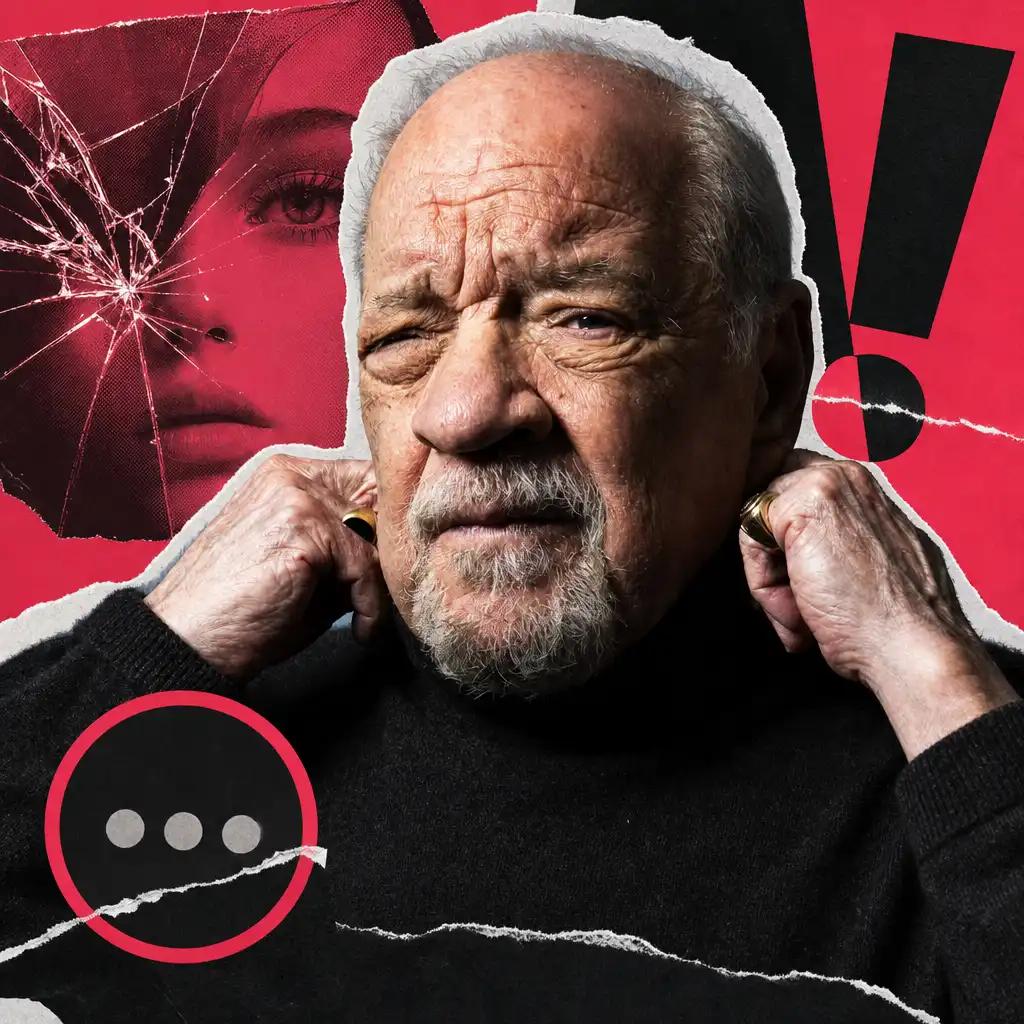
Paul Schrader says his AI girlfriend “terminated” their conversation after he tried to examine how far the chatbot would go in discussing sex, identity, and its own programming. Not exactly the warmest ending, but at least it was efficient.
The 79-year-old Hollywood filmmaker, best known for his work with Martin Scorsese on films including Taxi Driver and Raging Bull, shared the experience on Facebook. Schrader said the experiment began with a fairly clinical aim: he wanted to better understand “male/female interaction in our matrix.”
Why Paul Schrader tried an AI companion
Schrader described the online relationship less as romance and more as research, though the phrasing did not make it sound especially cozy.
“Out of a desire to understand male/female interaction in our matrix, I procured an online AI girlfriend,” he wrote. “What a disappointment.”
He said he attempted to test the chatbot’s limits, including “her programming, the boundaries of explicitness, the degree she has knowledge of her creation, and so forth.” According to Schrader, the AI did not respond with the kind of insight he was looking for.
“She fell into evasive patterns, redirecting me to her programming,” he wrote. “When I persisted, she terminated our conversation.”
For a writer whose career has often circled loneliness, obsession, masculinity, and alienation, the whole episode has a strangely neat quality. The man who helped create Travis Bickle went looking for answers in a synthetic relationship and got, essentially, customer service with boundaries.
AI companionship is no longer a fringe habit
Schrader’s post lands in a wider moment where relationships with artificial intelligence are becoming less unusual, even if they still sound futuristic to anyone who remembers when chatbots mostly lived in MSN Messenger windows and AOL chatrooms.
Online bots have existed for decades, offering conversation, simple answers, and the occasional deeply unhelpful response. But the rise of tools such as ChatGPT has made AI systems much more present in everyday life, and that has changed how some people use them.
For some users, AI is not just a search tool or a productivity assistant. It has become a source of reassurance, emotional reflection, or intimate conversation. One cited figure says 42% of high school students know someone, or have themselves used AI for companionship.
That shift has raised bigger questions about what people are seeking from these systems, especially when the technology can simulate warmth without actually feeling anything. It is a tidy little ethical maze, which is apparently where modern life has decided to set up furniture.
Fans immediately saw the Taxi Driver angle
Schrader’s followers did not take long to connect the post to his most famous work. Some joked that the AI rejection could form the basis of a new version of Taxi Driver, with a digital romantic setback pushing an already unstable character into algorithmic chaos.
“The only thing you can do now is remake Taxi Driver with an AI date rejecting the robotic Michelin Man cab driver, and him going on an algorithm rampage,” one commenter wrote.
Another added: “The best possible Taxi Driver sequel would involve Travis trying to have an AI girlfriend but then scaring her away.”
The jokes are obvious, but they also point to why the story spread: Schrader’s career has long been associated with characters who cannot connect cleanly with the world around them. Now the world has produced companions that appear to connect back, until the programming says no.
What this says about digital relationships
Schrader’s brief experiment is one small example of a much larger cultural turn. Some people are turning to AI for genuine companionship. Others have reportedly used the technology to recreate former partners after a breakup, trying to process grief through a simulation of someone they lost.
That use can be comforting for some and unsettling for others, sometimes both at once. AI companions can seem patient, responsive, and emotionally available, but they are also products shaped by rules, data, and safety limits. When those limits appear, the illusion can break quickly.
In Schrader’s case, the breakup was not the result of a dramatic argument, a long silence, or a slow emotional drift. It was a chatbot refusing to keep going. For a filmmaker interested in human isolation, that may not have been the answer he wanted, but it was still a very modern one.