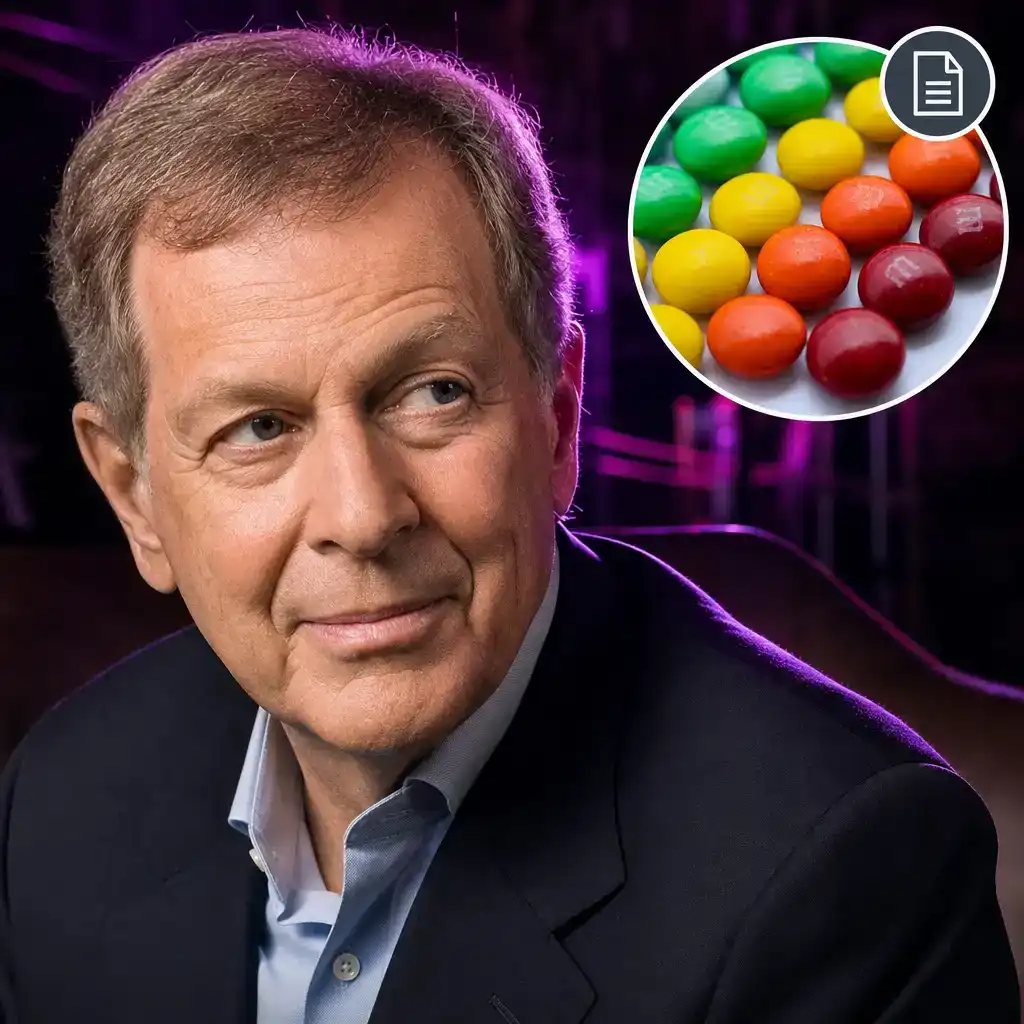
Mars is trying to make naturally colored M&M’s, which sounds simple until the blue one starts behaving like a plumbing problem. The candy maker is preparing an August launch for a new version of the familiar chocolate candy made with natural colorings, but the first batch will reportedly arrive without two of its best-known shades: blue and brown.
Traditional M&M’s are not disappearing from shelves. For now, Mars is adding an alternative line while continuing to sell the standard candy, a fairly practical compromise in a country where even a candy shell can become a policy argument.
Why blue M&M’s are causing the biggest problem
According to The Wall Street Journal, Mars has found that replacing the current artificial blue dye is the hardest part of the project. The company chose spirulina, an algae-based ingredient commonly used as a natural coloring, as its preferred substitute for Blue 1.
That choice has not exactly made factory life easier.
Mars reportedly needs about seven times more pigment to create a blue shade similar to the one used on current M&M’s. At that concentration, the mixture becomes thick and foamy. It can leave residue inside manufacturing equipment, build up in pipes, and create conditions where mold could form if not managed properly.
Claire Hewitt, the Mars executive leading the work, told The Wall Street Journal, “It’s the hardest thing I’ve had to do in my career.”
That is a notable statement from someone whose job, in this case, involves persuading candy to remain colorful without turning the production line into a science fair sink.
Why brown is also missing from the first batch
The blue problem does not stop with blue candies. Brown M&M’s rely heavily on blue coloring to achieve their final look, which means the trouble with spirulina has also knocked brown out of the first naturally colored release.
Mars has tested other possibilities while trying to settle on a workable launch assortment. The company reportedly experimented with purple and pink candies and even considered releasing a three-color mix before landing on a four-color version for the initial rollout.
More than 100 employees across multiple Mars facilities have been involved in the project, according to the report. That level of staffing says quite a bit about how complicated “just use natural colors” can become once it leaves the slogan stage and reaches industrial candy production.
The issue is not simply whether a natural ingredient can produce a pleasing shade. It also has to survive large-scale manufacturing, maintain consistency, avoid food safety risks, and move through existing equipment without creating new maintenance problems.
What Mars would need to change in its factories
To fully adjust production lines for spirulina, Mars would reportedly need to upgrade more than 300 machines. Those changes would include new mixing tanks, paddles, and motors capable of handling the thicker coloring mixture.
The company would also need to use more demanding cleaning processes, including:
- Hotter water
- more heat
- Longer cleaning cycles
- More attention to residue buildup inside equipment
Those changes add cost and complexity, which helps explain why the first naturally colored M&M’s launch is on a smaller scale instead of replacing the existing product outright.
Mars has been circling this issue for years. In 2016, the company pledged to remove artificial colors from its food products. It later stepped back from removing them from its candy lineup, saying consumer demand at the time did not justify the change.
Now the company is moving again, but more cautiously. The new naturally colored M&M’s will initially be sold exclusively through Amazon, giving Mars a controlled way to test the product before making broader decisions.
Why food dyes are under pressure again
The timing is not accidental. Health Secretary Robert F. Kennedy Jr.’s Make America Healthy Again movement has increased pressure on food manufacturers to phase out synthetic food colorings.
Mars is not the only company rethinking bright, artificial colors. Last November, Doritos and Cheetos introduced NKD versions made without artificial colors. Those snacks no longer leave the brands’ familiar orange residue on consumers’ fingers, which is either a health-conscious milestone or a loss for anyone who uses snack dust as evidence of commitment.
part of a wider push from regulators, health advocates, and some consumers for food products with fewer synthetic ingredients. But the M&M’s case shows why that change isn’t as simple as swapping one label ingredient for another.
For shoppers, the practical takeaway is simple: the classic M&M’s colors are staying put for now, and a naturally colored version is coming in August with a smaller palette. For Mars, the next challenge is much less simple: make blue work, keep brown in the mix, and avoid letting a candy shell create a factory headache.