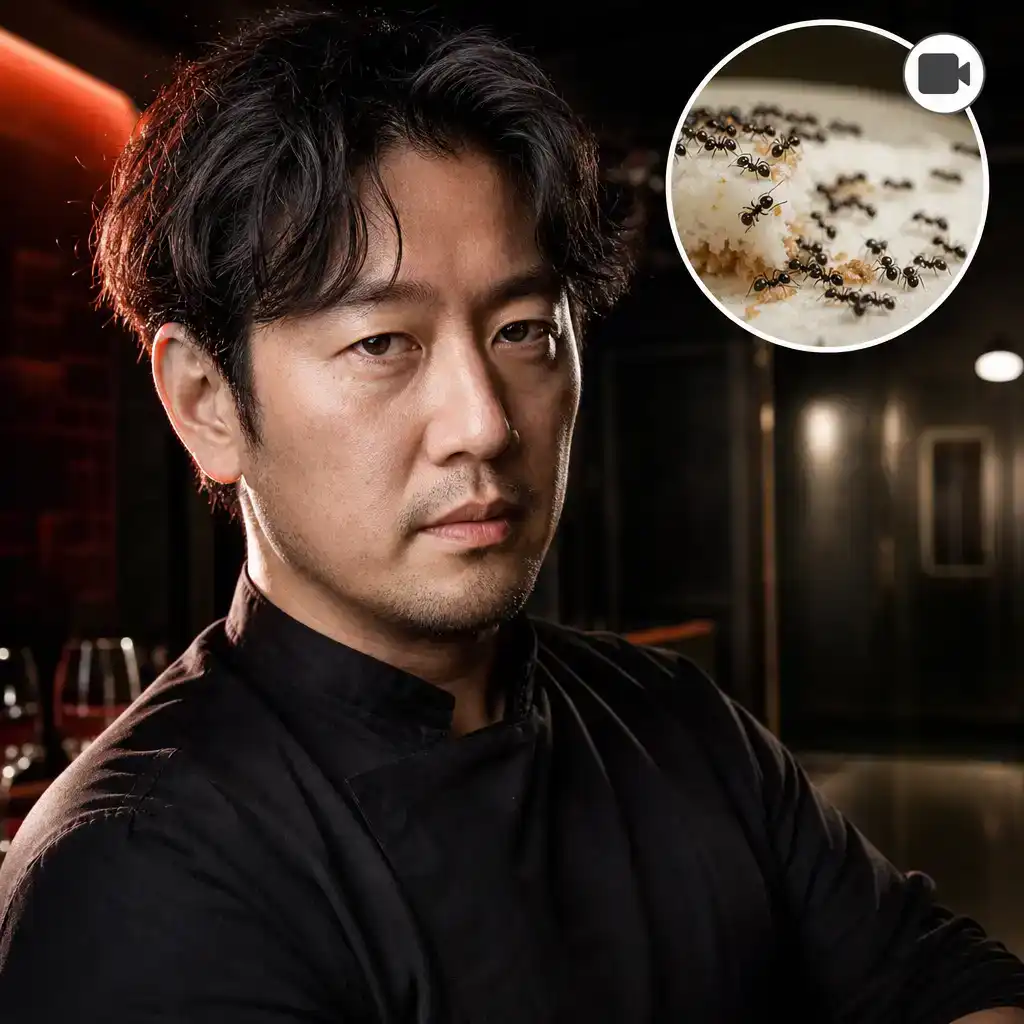
South Korean prosecutors are seeking a one-year jail sentence for the owner of a two-Michelin-starred restaurant accused of serving ants as a dessert garnish, according to local media reports. They also asked the court to fine the restaurant 20 million Korean won, about $13,510 or £10,100.
The case is not about whether ants can be fashionable, photogenic, or plausibly described as “earthy.” It is about whether they are legally approved for human consumption in South Korea. At present, they are not.
What prosecutors say was served
The restaurant owner admitted that ants had been served, but argued they appeared only in a “small part” of a 15-course menu. According to the defence, the insects were used as a topping for sorbets, and diners were told they could choose non-ant alternatives.
Investigators estimated that about 49,000 ants were used across several dishes over four years. Prosecutors said the ants were imported from the United States and Thailand, according to local reporting.
Court documents did not name the restaurant or its owner. South Korea has 10 restaurants with two Michelin stars, all of them in Seoul.
How authorities found the ant dishes
The case came to light after officials from the Ministry of Food and Drug Safety reviewed online diner posts. Those reviews reportedly included photographs of dishes sprinkled with ants, which is a useful reminder that the internet is not only a marketing department. It can also be evidence.
Health authorities later found that the ants used by the restaurant “contained up to 55 times more heavy metals than typical edible insects,” The Chosun Daily reported.
South Korean rules allow only certain insects to be sold as food. The approved list includes 10 species, among them grasshoppers, locusts, and two-spotted crickets. Ants are not on that list.
Why the legal approval matters
South Korean authorities assess several factors before approving insects as food, including:
- food safety risks
- toxicity
- nutritional value
- whether the species can be bred and processed hygienically
That regulatory process sits at the centre of the case. The owner’s argument that ants are used in restaurants overseas may be relevant to culinary practice, but it does not place ants on South Korea’s approved food list.
In his defence, the owner said only 60% of diners chose to try the ants. The rest, he said, were served alternatives such as fermented vinegar and edible flowers. He also pointed to restaurants in Australia, Denmark, and the United Kingdom that use ants as ingredients.
What a Michelin rating does, and does not, decide
The Michelin Guide awards restaurants up to three stars based on criteria including ingredient quality, flavour, technique, the chef’s personality, and consistency.
Two stars indicate “excellent cooking” and a restaurant “worth a detour,” according to Michelin’s criteria. That rating, however, is not a food-safety licence and does not override national rules on what can legally be served.
The court is expected to deliver its verdict on 2 September.
Ants are eaten, and in some places highly valued, in several Asian, African, and Latin American food traditions. Weaver ants and their eggs are used in Thai and Cambodian cooking, while queen ants are prized in Colombia. The legal question in Seoul is more specific: whether this restaurant served an unapproved ingredient under South Korean food law.