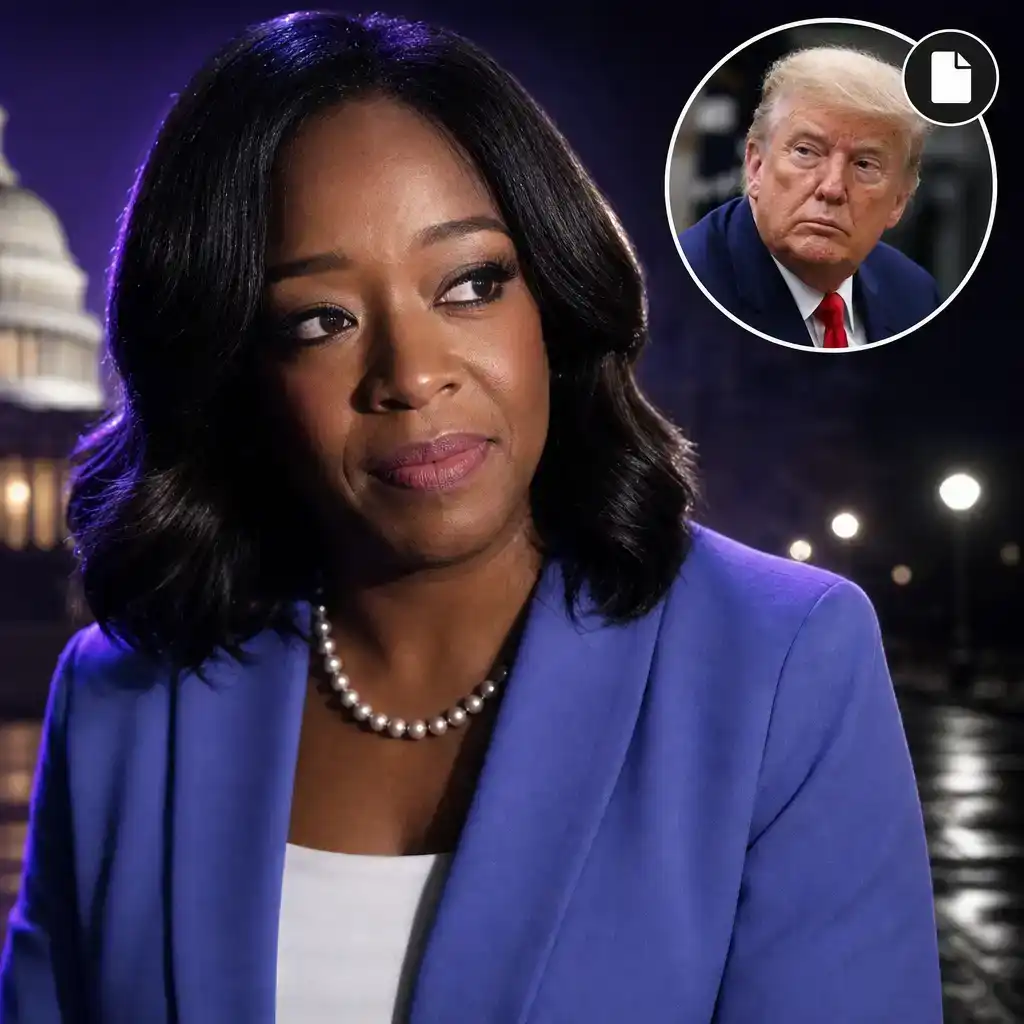
Janeese Lewis George is now the clear favorite to become the next DC mayor after building a large lead in Tuesday’s Democratic primary and watching her main rival, Kenyan McDuffie, concede on Thursday.
In Washington, DC, that is close to decisive. The city votes overwhelmingly Democratic, and there is no Republican candidate in the mayoral race. Independent and third-party candidates can still run in November, but the primary result has put Lewis George on the glide path to the mayor’s office.
Why the primary result matters so much
Lewis George, a council member and former prosecutor, ran as the candidate most willing to confront President Donald Trump over federal pressure on the district. She had support from labor groups, which still matter in a city where organized backing can move votes without much theatrical smoke.
Her platform included drawing harder lines with the Trump administration, especially on immigration enforcement. One of her clearest promises was to end cooperation between local police and Immigration and Customs Enforcement agents.
If she wins in November, Lewis George would become the first member of the Democratic Socialists of America to lead Washington, DC. The organization also includes New York City Mayor Zohran Mamdani and Congressmember Alexandria Ocasio-Cortez.
McDuffie, a former council member, positioned himself differently. He drew support from parts of the DC business community and presented himself as a moderate, broadly closer in style to current Mayor Muriel Bowser.
How Trump shaped the race
Trump did not exactly hide his preference. He suggested he might “take back Washington and run it on the federal basis” if Lewis George became mayor.
That threat landed in a city where the federal government already has unusual leverage. Washington, DC, is not a state. Because Washington, DC, is not a state, Congress and the White House have more influence over its local affairs than they do in any state capital. Convenient, if one enjoys constitutional gray areas as a management tool.
A 1973 law gave DC limited self-government, known as home rule. Under that system, residents elect a mayor, council members and neighborhood commissioners to run day-to-day local government.
The arrangement is partial by design. DC residents can choose local leaders, but Congress can still interfere with district laws and funding. That is why statehood has remained a long-running demand among local advocates. The district has more than 700,000 residents, and both Lewis George and McDuffie support statehood.
What Lewis George says she would do
Lewis George has framed the mayor’s job as requiring direct resistance to federal intervention, not careful accommodation. That marks a contrast with Bowser, who has criticized Trump at times while also cooperating with his administration when she judged it necessary.
Ahead of Tuesday’s vote, Lewis George argued that caution would not protect the district.
“We are not going to get ICE off our streets or protect Home Rule by fearing this President,” she said.
She also described Trump’s threats as bigger than a local political fight.
“Threatening DC because you do not like how our residents vote is an attack on democracy itself. The people of DC elect the Mayor of DC. And they want someone who will stand up to Trump,” she said.
The operating logic of her campaign was straightforward: if federal officials intend to push harder, the city needs a mayor prepared to push back harder. Whether that produces better leverage or a larger confrontation is the question voters appear ready to test.
Why DC’s powers are still contested
Trump has repeatedly threatened to expand federal control over the district since returning to office in January.
His administration briefly federalized the city’s police department in August of last year, citing a crime emergency. It also stepped up federal immigration enforcement in the district and deployed the National Guard as part of what it called a “beautification” project.
Those moves turned local governance into a central issue in the mayoral race. For Lewis George, they reinforced the case for a sharper boundary between DC officials and the federal government. For McDuffie and his supporters, the argument was that a more moderate approach could better manage the risks of confrontation.
With McDuffie now out of the way, Lewis George’s approach is likely to get the next test. The November general election still has to happen, because democracy remains fond of paperwork. But in practical terms, Washington’s next mayoral direction became much clearer this week.