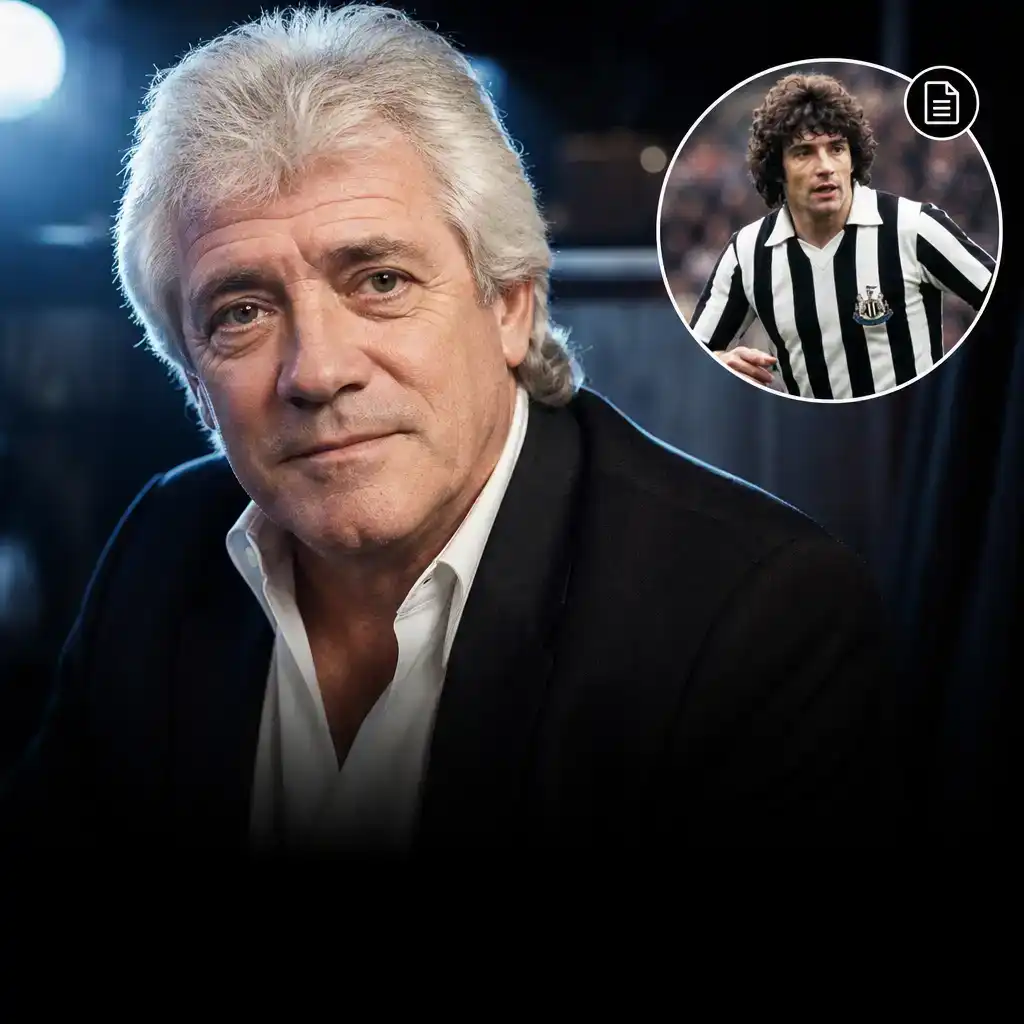
Kevin Keegan dies aged 75, seven weeks after publicly revealing he had been diagnosed with stage four cancer, his family has confirmed. The former England captain and manager was one of the defining figures of English football, first as a high-energy forward with a ridiculous honours list, then as a manager whose teams rarely treated caution as a core value.
His family said Keegan was “surrounded by his wife and daughters in his final moments”.
“Kevin, a double Ballon d'Or winner, was a much loved husband, father and grandfather,” the statement said.
“The family would like to thank Kevin's incredible medical team for all their support. This is a hugely difficult time and they are requesting space and privacy.”
What was Kevin Keegan’s illness?
Keegan revealed in June that he had stage four cancer, the most advanced stage of the disease, meaning it had spread to other parts of the body.
His family had first disclosed in January that he was receiving treatment after going to hospital for “further evaluation of ongoing abdominal symptoms”.
The announcement of his death came after a short period in which supporters across English football had been aware of the seriousness of his condition. For fans who grew up with Keegan as a player, manager, pundit presence or full-volume touchline figure, it was a reminder that football’s most vivid characters do not stay frozen in archive footage forever, however much the internet tries.
How did Newcastle United and Liverpool respond?
Newcastle United, the club where Keegan became both a playing hero and later the man behind one of the Premier League’s most memorable teams, described him as “one of the most iconic, influential and deeply loved figures in our club's history”.
The club added: “Kevin was more than a legendary footballer and manager. He was the beating heart of Newcastle United for generations of supporters.
“Kevin's impact will not be measured by appearances or results. It will live on in the memories he created with club and country, the dreams he inspired wherever he went, and the generations of supporters around the world who fell in love with football because of him.”
Liverpool, where Keegan played from 1971 to 1977, said his “indomitable spirit and remarkable contribution left a permanent mark on our history and his legacy will live on”.
England and Manchester City also sent condolences to the Keegan family. City credited their former manager with helping establish the club as a Premier League side.
Alan Shearer, who played under Keegan for Newcastle and England, wrote on social media: “My Hero. My manager. My friend. Sleep easy Boss.” Short, direct, and probably more affecting than any committee-approved tribute could hope to be.
What did Kevin Keegan win as a player?
Keegan’s playing career took him through Scunthorpe United, Liverpool, Hamburg, Southampton and Newcastle United. It was at Liverpool where he built much of his reputation as one of the best forwards of his generation.
During six years at Anfield, he won:
- Three league titles
- The European Cup
- Two Uefa Cups
- The FA Cup
After leaving Liverpool, Keegan joined Hamburg and helped the German club win the Bundesliga. He also won the Ballon d'Or in consecutive years, in 1978 and 1979, making him one of only four English players to have received the award.
For England, he scored 21 goals in 63 appearances between 1972 and 1982. He captained the national side and later returned to the setup as manager, because apparently being a national football obsession once was not enough.
Why is he so closely linked with Newcastle?
Keegan’s place in Newcastle United history is unusually large, even by the standards of a club that tends to remember its heroes loudly.
As a player, he helped lift the club and its support. As manager, he reshaped its modern identity. He guided Newcastle to promotion to the Premier League in the 1992-93 season, then built the team widely known as “The Entertainers”.
That side challenged for the Premier League title in 1995-96 and finished second. It did not win the league, which is still mentioned with the kind of emotional force usually reserved for constitutional crises, but it became one of the era’s most fondly remembered teams.
Keegan’s influence at Newcastle lasted long after his first spell in charge. When Eddie Howe became head coach in 2021, he contacted Keegan to understand the club and the mentality required to succeed there. That says plenty. It is one thing to have a statue-era legacy. It is another to remain a practical phone call for the person actually doing the job.
Where else did Kevin Keegan manage?
After transforming Newcastle, Keegan managed Fulham and then England. He took charge of the national team in February 1999 and led them to Euro 2000.
His England tenure ended in October 2000 after a World Cup qualifying defeat by Germany at Wembley, when he resigned. It was a bleakly neat piece of football symbolism, because England, Wembley and Germany rarely combine to produce a calm evening.
Keegan later managed Manchester City from 2001 to 2005, leading the club during an important period before its modern era of wealth and trophies. He returned to Newcastle for a second managerial spell in 2008, lasting eight months.
Across his career, Keegan was rarely a background figure. He was a star forward, a double Ballon d'Or winner, an England captain, a national team manager and, at Newcastle, the face of an entire football mood. His record belongs in the statistics. His real footprint is in how strongly supporters still talk about him.