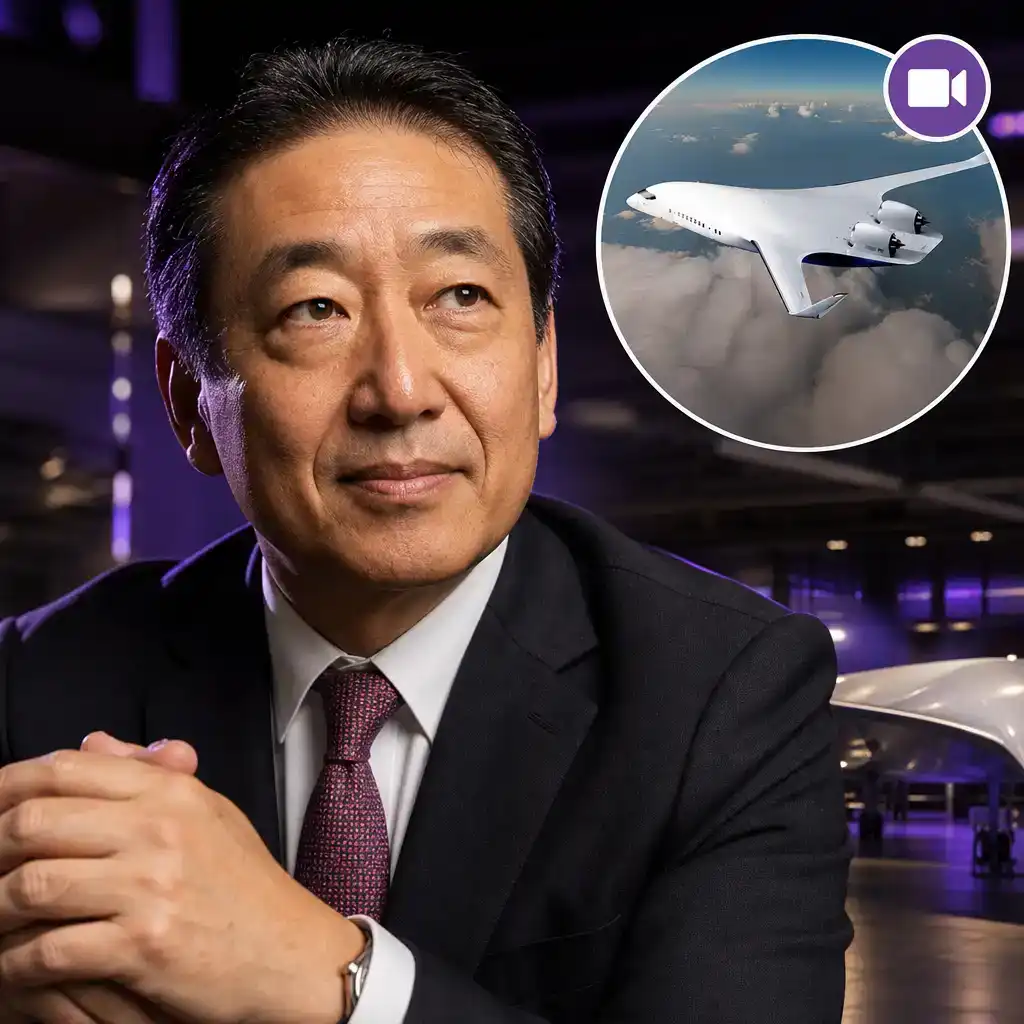
Japan Airlines is putting real money and operating experience behind a passenger jet that looks less like today’s tube-and-wings aircraft and more like a prop from a very expensive science-fiction film. The airline announced on July 21 that it is partnering with US manufacturer JetZero on the Z4, a midsize aircraft built around a blended wing body design.
The pitch is not just visual drama. Japan Airlines says the aircraft could use 30% to 50% less fuel than commercial planes now in service, while carrying about 250 passengers on long-haul routes.
What makes the JetZero Z4 different?
Most passenger jets use a familiar layout: a cylindrical fuselage with wings attached on either side. The Z4 is designed to merge the body and wings into one wider, integrated structure.
That blended wing body design is meant to reduce drag and improve efficiency, which is where the promised fuel savings come in. It also gives the aircraft its striking look. If airports in the early 2030s start to resemble concept art, this will be part of the reason.
Japan Airlines has released an image showing how the Z4 could appear when it launches, though the airline has not yet shared details about the cabin layout, seat configuration, or how much personal space passengers might actually get. A futuristic silhouette is nice. Legroom, as ever, remains the less glamorous question.
How far could the new aircraft fly?
Japan Airlines says the Z4 is designed to carry around 250 passengers and fly about 5,750 miles, or 9,260 kilometers, on a single trip.
That range would make it capable of operating long-haul services, including routes between Tokyo and the US West Coast. In practical terms, passengers traveling between Japan and cities such as Los Angeles, San Francisco, or Seattle could eventually see this aircraft on those kinds of flights if development stays on track.
The plane is expected to debut in the early 2030s, so this is not a next-summer booking option. It is, however, a signal that major airlines are looking beyond incremental tweaks to existing aircraft designs as they try to reduce emissions and operating costs.
Why Japan Airlines is backing the design
Japan Airlines framed the partnership as part of its broader sustainability strategy, including its goal of reaching net-zero emissions by 2050.
“Collaborating with JetZero on the Z4 aligns perfectly with our commitment to sustainable innovation and net-zero emissions by 2050,” said Takao Suzuki, Executive Officer, Corporate Strategy at Japan Airlines.
“By integrating our operational expertise into the Z4’s development, we look forward to contributing to a new era of efficient air travel.”
For JetZero, airline input is important because a radical-looking aircraft still has to function in the deeply practical world of schedules, maintenance, gates, baggage handling, boarding times, and passengers who would very much like not to feel like test subjects.
Will airports need to change for it?
JetZero says it is designing the Z4 to use existing airport infrastructure, which would avoid the need for major airport renovations or modifications.
That detail matters. New aircraft concepts can look exciting in renderings, but airlines and airports are rarely eager to rebuild their operations around one plane. If the Z4 can fit into current airport systems while offering lower fuel burn, it becomes a much more realistic proposition.
The company also says the aircraft’s layout could improve boarding and create a more efficient operating experience for airlines. Japan Airlines has not yet detailed exactly how that would work for passengers, but the wider body shape could open up different cabin and boarding possibilities.
Japan’s aviation year has had range
The JetZero announcement is not the only eye-catching aircraft news connected to Japan this year. In May, The Pokémon Company revealed new Red & Green-themed planes to mark the franchise’s 30th anniversary.
Those aircraft were built for nostalgia. The Z4 aims at the next generation of long-haul flying, with lower fuel consumption and a design that challenges what passengers expect a jet to look like.
Whether travelers will eventually love flying in a blended wing body plane will depend on the details Japan Airlines has not shown yet: cabin comfort, boarding flow, noise, service, and space. But the direction is clear enough. The future of air travel may arrive looking unusually flat, wide, and expensive to park.