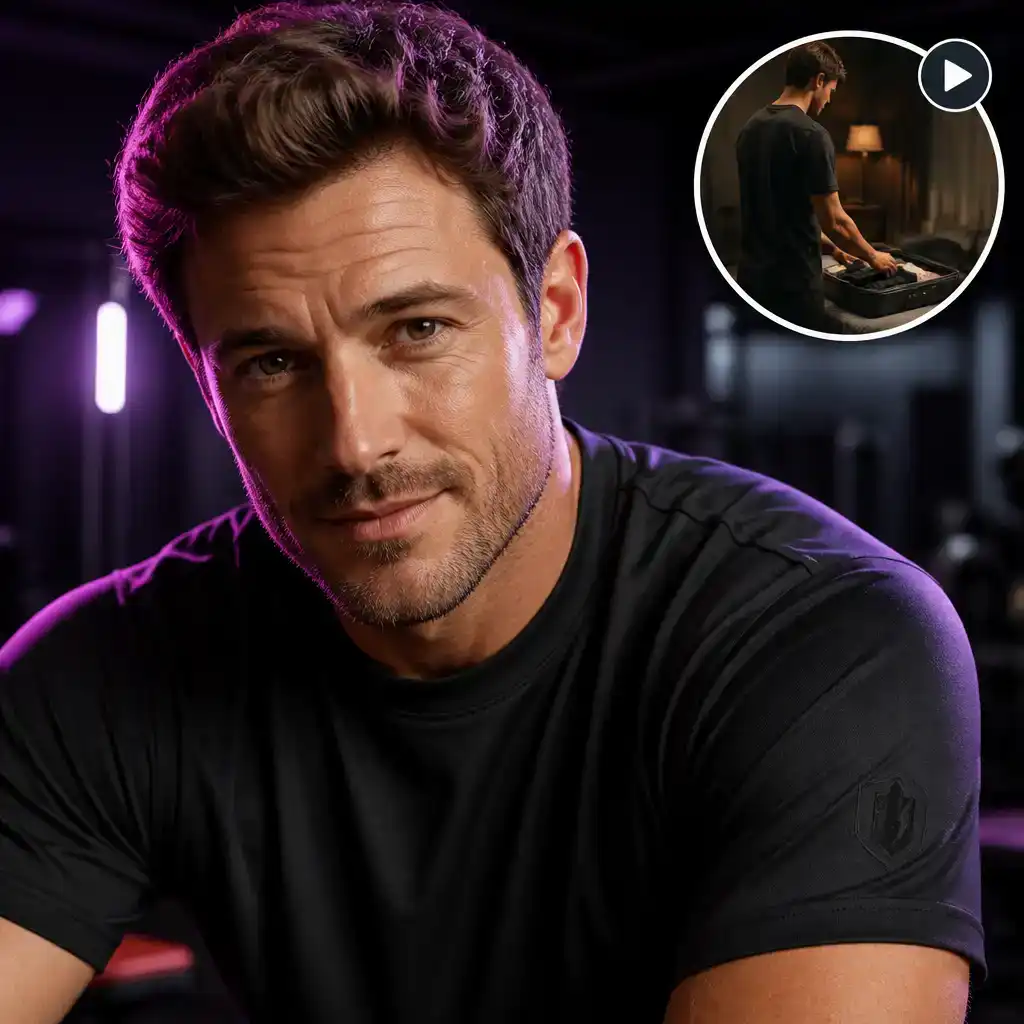
For travelers, gym regulars and anyone tired of feeding a washing machine, the HercShirt V5.0 offers an appealing promise: wear the same T-shirt for more than 30 days without it developing an odor. The important word is odor. It may still collect dirt, stains and whatever else daily life contributes.
American clothing brand HercLéon is crowdfunding the fifth version of its travel-focused shirt, with the premium Max model priced at $79. Less expensive versions begin at $39 and are designed for shorter periods between washes.
How is the shirt supposed to control odor?
HercLéon says seven odor-control elements are incorporated directly into the Max shirt's fabric rather than applied as a surface coating that could wear away. Five have been identified:
- Copper
- Silver
- Zinc
- Gold
- Volcanic ash
The other two remain proprietary. According to the company, copper and silver act against bacteria associated with odor, while zinc targets compounds produced during heavier sweating. Volcanic ash is intended to manage moisture and absorb outside smells, including smoke and food.
The campaign divides the shirts into three-, 14- and 30-day odor-control tiers. Its promotional material describes the Max version as machine washable, suitable for exercise and long trips, and capable of remaining smell-free through at least 30 days of continuous use.
Founder Wen Muenyi said the project began with a straightforward question: “Why do shirts smell so fast and do they have to?” HercLéon says it spent nearly a decade pursuing the answer across five product generations, using feedback from more than 10,000 customers in over 100 countries. Laundry, apparently, now has a research-and-development division.
Has the 30-day claim been independently tested?
Not yet, at least not publicly. No independent laboratory test of the V5.0's headline claim was found, and the new shirt has not shipped. The available coverage largely repeats HercLéon's campaign materials rather than verifying performance over a full month.
There is some limited evidence involving earlier HercLéon clothing. A July 23 Visionswell review found an older shirt comfortable and odor-free after three consecutive days, though the review used affiliate links and stopped well short of 30 days. Its verdict was that the garments were “not magical, just functional.”
A Reddit user who wore earlier HercLéon garments for about a month also broadly supported their odor resistance. However, the tester noticed a faint residual smell after airing the shirt and reported weaker results from the company's socks. These personal trials offer useful context, but they do not establish that the V5.0 Max will work as advertised for every wearer, climate or activity level.
HercLéon says “30 days is just the number we're comfortable printing” and claims one customer wore an earlier version for roughly 100 days without odor problems. That remains a company-reported anecdote, not controlled evidence.
Odor resistance is not the same as cleanliness
The shirt's promise does not cover visible grime, stains, pathogens or general hygiene. If it becomes dirty, it still needs washing, even if it passes a smell check. That distinction matters because reducing odor can make clothing seem cleaner without demonstrating that it actually is.
Scientific research does support the use of silver in antimicrobial and odor-resistant textiles, but effectiveness depends on how the metal is incorporated into the material. HercLéon has not disclosed the quantities used in the V5.0 or said whether its silver is nanosilver.
There is also an environmental trade-off. Fewer laundry cycles could reduce water and energy use, particularly for travelers trying to pack lightly. But an Environmental Science & Technology study found that a single wash released anywhere from less than 1% to 45% of embedded silver from different fabrics. A 2025 scientific review concluded that direct health risks from nanosilver textiles appear comparatively low, while release into the environment during laundering remains a concern.
Without details about HercLéon's metals or independent testing of the finished shirt, it is not possible to calculate where this particular product falls in that balance.
What about the claim involving women's sense of smell?
HercLéon also says the shirt was designed to satisfy women's supposedly more sensitive noses. The campaign points to research finding that women had around 3.4 million more neurons in the brain's olfactory bulb than men.
The figures come from a postmortem study involving only 18 people. Women in that sample averaged 6.9 million olfactory-bulb neurons, compared with 3.5 million for men. Crucially, the study's authors said it was difficult to determine what those anatomical differences meant for actual smell perception.
A broader meta-analysis found that women held only a slight overall advantage in olfactory ability. In other words, the campaign's framing is more confident than the underlying science. Individual noses, regardless of sex, may reach different conclusions about whether a month-old shirt is ready for another day.
When will backers receive the shirts?
At the reported campaign snapshot, HercLéon had raised more than $268,000 from over 1,700 backers, far above its original $3,333 target. Campaign tracker Kicktraq said the project met that goal within 10 minutes of launching.
The crowdfunding campaign is scheduled to close on August 19, 2026, with the first deliveries projected for November 2026. Matte black is the initial color, and additional dark shades are planned. Trustpilot reviews of earlier HercLéon products include praise for the clothing alongside complaints about delivery delays, useful context for anyone considering a pledge.
For now, the V5.0 remains an ambitious travel shirt rather than a proven monthlong replacement for laundry. Its appeal is easy to understand: fewer clothes to pack, fewer washes and less concern about offending nearby passengers. Whether it can deliver that result for 30 continuous days will become clearer only after the finished shirts reach customers and face testing beyond the campaign page.