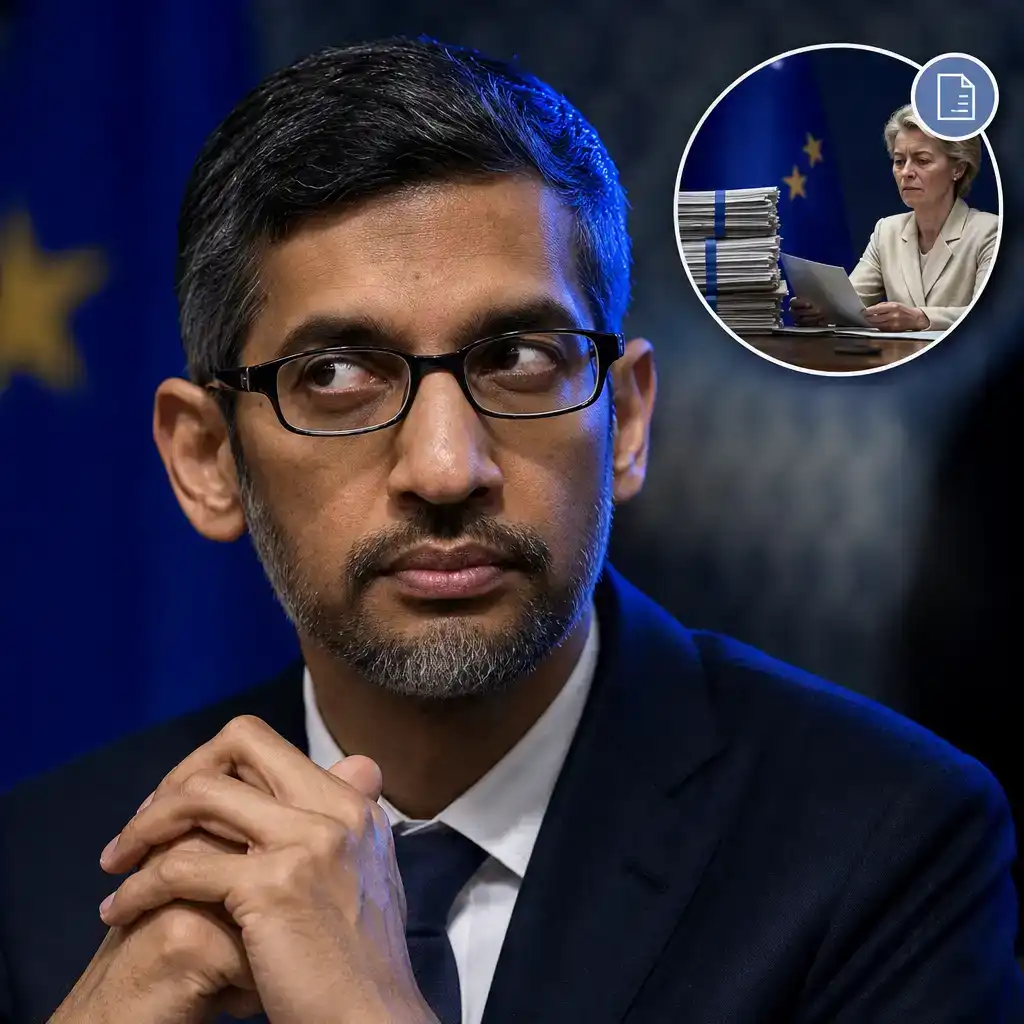
Google’s EU antitrust fine now totals €890 million, or roughly $1 billion, after regulators found that the company favored its own services in Search and restricted how Android developers could direct customers to cheaper payment options.
The European Commission announced the two penalties on July 23, more than two years after opening investigations under the Digital Markets Act. The combined sanction is the largest issued under the law so far.
The money gets attention, naturally. But the more immediate issue for consumers and developers is what Google must change within 60 days, and whether those changes will make comparison shopping and outside payment offers easier to find.
Why did the European Commission fine Google?
The Commission split the penalty between two violations:
- €460 million for Google Search, where regulators said the company gave more prominent treatment to its own comparison services.
- €430 million for Google Play, where rules limited developers’ ability to steer users toward alternative payment systems and offers.
The Search decision covers Google services involving Shopping, Hotels and Flights. Euractiv reported that transport and sports results were also included.
Under the ruling, Google must treat competing services in a “fair and non-discriminatory manner.” That could affect where third-party comparison sites appear and how prominently Google displays its own specialized products.
For Play, the company must let Android developers promote offers both inside and outside the store. Reuters reported that Google continued charging fees regulators considered excessive, even after revising some developer terms and restrictions.
For users, this is less abstract than most competition cases sound. It could determine whether a hotel, subscription or digital purchase appears at its best available price, rather than the price shown inside a platform that also takes a cut.
What changes has Google already made?
Google has tested several European Search redesigns while trying to satisfy the Digital Markets Act. Those changes included removing the Google Flights widget for European Union users and giving more space to links from third-party comparison websites.
The company has not presented this as an enjoyable exercise. In May, Google told Reuters that its compliance changes represented “the biggest downgrade in the product’s history,” creating what it called a “second-rate experience for Europeans to the benefit of a few self-interested complainants.”
Google global affairs president Kent Walker said the latest enforcement “continues to hurt everyday products.” He argued that the required changes remove useful real-time pricing and availability information from Search while weakening protections against scams and malicious links on Android.
The company has long maintained that tighter control over Play Store payments and app distribution helps protect users. In an earlier public response, it said the DMA was forcing it to remove legitimate security safeguards.
Regulators have acknowledged some movement. The Commission described Google’s revised Play terms as “good progress towards compliance.” Reuters later reported that talks between the two sides were “constructive” and that significant progress could help Google avoid daily penalties. No appeal had been announced in the reports available on July 23.
What happens if Google misses the deadline?
Google has 60 days to bring its policies into line with the decision. If the Commission decides the company still has not complied, it can impose recurring penalty payments.
The public enforcement timeline shows that the Commission opened the investigations on March 25, 2024, then issued preliminary findings on March 19, 2025. Google received time to respond and propose changes before the final penalties arrived.
The maximum fine for violating the Digital Markets Act is 10 percent of a company’s worldwide annual revenue. Alphabet reported about $400 billion in revenue for 2025, placing its theoretical maximum near $40 billion. Against that ceiling, €890 million is restrained by regulatory standards, which are not known for making numbers feel small.
Still, the decision surpasses the previous DMA penalties. In April 2025, the Commission fined Apple €500 million and Meta €200 million.
Alphabet was designated a gatekeeper for Google Search and Google Play in September 2023. Around 60 percent of European mobile users have an Android device, according to a Commission case summary, giving the Play rules broad practical reach.
How does this fit Google’s wider legal record?
This is not Google’s first European penalty over favoring its own products. In 2017, the Commission fined the company €2.42 billion for giving its comparison-shopping service an unlawful advantage over competitors.
Other major cases have followed. Europe’s top court upheld an approximately €4.1 billion Android antitrust fine in July 2026, while Google received a €2.95 billion European ad-tech penalty in September 2025, according to Axios.
The company is also under pressure in the United States. Fortnite publisher Epic Games successfully challenged Google’s Play Store practices, resulting in requirements that include allowing rival Android app stores inside Google Play.
The European case also arrives amid wider tension between Brussels and Washington. The Associated Press, Reuters and Euronews connected the enforcement action to Trump administration threats of retaliatory tariffs and pressure from members of Congress who argue that European digital rules unfairly target American companies.
European officials reject that framing. Teresa Ribera, the Commission’s executive vice-president for clean, just and competitive transition, said: “The best products should succeed because they’re better, not because they’re owned by the company running the search engine.”
She added that consumers should be able to learn from developers where the best offers are available, “even when the app store owner does not get a cut.”
That is the central test now. The fine may be the headline number, but the lasting effect will come from whether Google’s redesigns give people more meaningful choices without making Search and Android less useful or less secure.