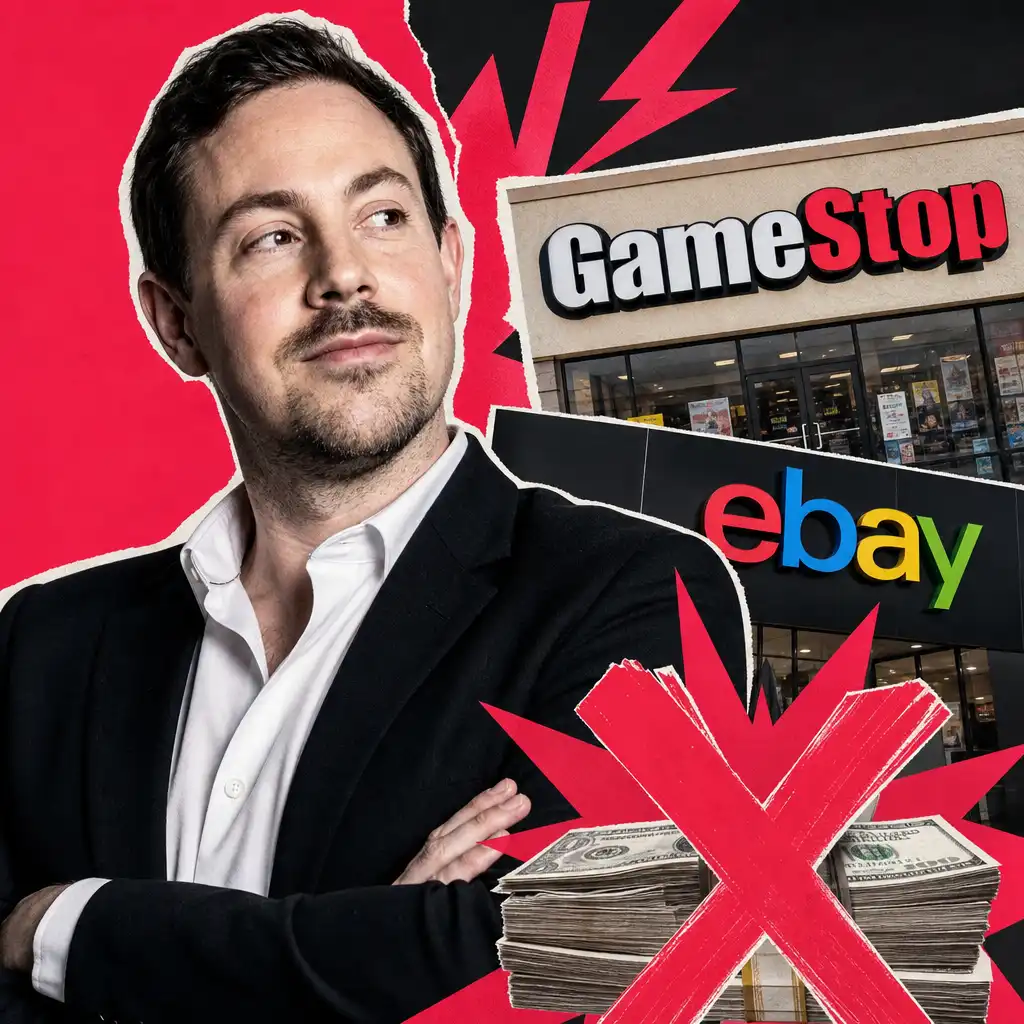
eBay has rejected the GameStop eBay takeover bid, shutting down Ryan Cohen’s proposed $56 billion deal and making clear it does not see the offer as a serious path forward.
According to Reuters, eBay chairman Paul Pressler told GameStop that the company had no interest in pursuing the proposal. His assessment was not exactly wrapped in gift paper.
“We have concluded that your proposal is neither credible nor attractive,” Pressler said.
The reaction was sharp, but not especially surprising. GameStop is currently valued at about $12 billion, while eBay is worth nearly four times that amount. A much smaller company trying to swallow a far larger one was always going to invite questions, especially when the financing details arrived looking rather thin.
Why eBay dismissed the $56 billion offer
GameStop’s proposal was led by chief executive Ryan Cohen and would have used a mix of cash and stock to fund the acquisition. That structure is common enough in large deals, but analysts quickly questioned how GameStop could realistically finance a takeover of this size.
Those concerns did not ease after Cohen appeared on CNBC to discuss the offer. Asked directly how GameStop planned to pay for the transaction, he reportedly answered only with “cash and stock,” without offering further specifics. That is technically an answer, in the same way “food and water” is a restaurant concept.
For eBay, the issue appears to be both scale and certainty. A $56 billion proposal sounds substantial on paper, but the board has to judge whether the buyer can actually close the deal, protect shareholder value, and make the combined business stronger. Pressler’s statement suggests eBay’s leadership did not believe GameStop cleared that bar.
Ryan Cohen’s plan to challenge Amazon
Cohen’s pitch centered on building a larger e-commerce competitor to Amazon by combining eBay’s marketplace with GameStop’s physical footprint. GameStop has around 600 stores in the United States, and Cohen argued that network could support eBay’s online business.
He also claimed he could improve eBay’s profitability by applying the aggressive cost-cutting approach GameStop has used in recent years. That strategy has become a major part of Cohen’s leadership style, though it has also raised questions about how much growth can be created by cutting expenses alone.
The emotional stakes here are different from a typical corporate bid. GameStop remains closely watched by retail investors after its meme-stock surge, and Cohen has long been treated by some shareholders as a turnaround figure. A move this large tests whether that faith can stretch from fixing a specialty retailer to absorbing one of the internet’s best-known marketplaces.
Investors are already split on the move
The proposal has divided GameStop investors. Michael Burry, the investor known for predicting the 2008 housing market crash and later portrayed in The Big Short, reportedly sold his GameStop stake after the offer surfaced.
Burry warned that the deal could weigh GameStop down with debt and dilute existing shareholders. Those are not abstract concerns. A cash-and-stock takeover of a larger company can leave shareholders owning a smaller piece of a riskier business, particularly if the buyer has to take on major financing to get the deal done.
Reuters also reported that Cohen may still try to take the offer directly to eBay shareholders through a special meeting, a move that would turn the rejected bid into a possible hostile takeover attempt.
For now, eBay is publicly standing by its current direction, while GameStop’s ambitions have run into a very clear answer: not interested.