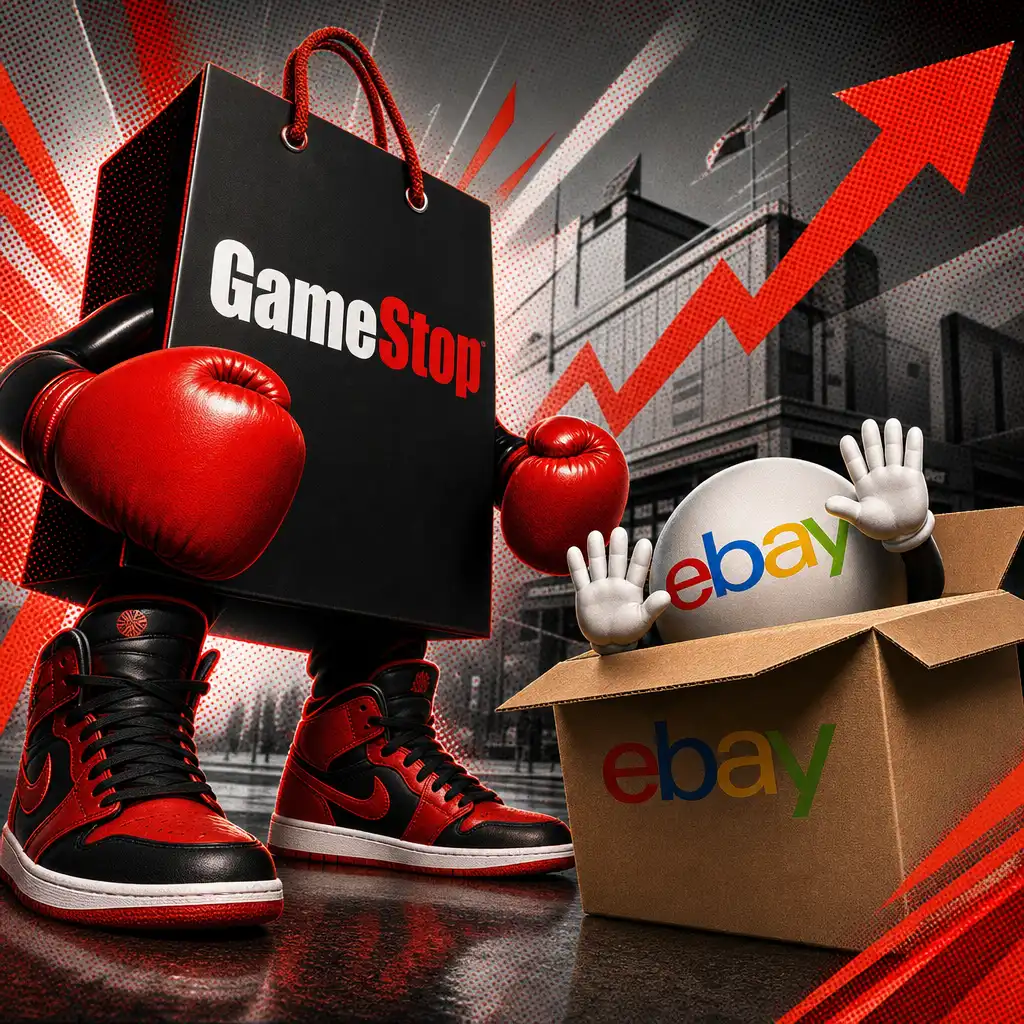
GameStop is reportedly circling eBay, and if you collect Pokémon cards, Magic cards, retro consoles, or used games, this is not just another boardroom rumor to scroll past.
According to a May 1 report from The Wall Street Journal, GameStop has been quietly buying shares in eBay and is preparing a possible offer to acquire the publicly traded marketplace. No proposed price has been reported, but eBay’s market value is currently around $46 billion. GameStop, by comparison, is valued at roughly $12 billion.
That is not a small bite. That is a company trying to swallow something several sizes larger, with collectors potentially stuck with the bill.
Why the deal would matter beyond Wall Street
For most shoppers, eBay is a sprawling online marketplace for everything from furniture to car parts. For collectors, it is something more specific and more fragile: one of the main places to buy, sell, price-check, and authenticate secondhand goods.
That includes:
- Pokémon Trading Card Game singles, sealed products, and graded cards
- Magic: The Gathering cards and other trading card game inventory
- Retro games, cartridges, discs, and hardware
- Used consoles such as the PlayStation 2 and older Nintendo systems
- Hard-to-find accessories, manuals, and preservation-focused items
GameStop already has a significant footprint in games and collectibles. If it owned eBay too, the company would have unusual influence over how a huge portion of the secondhand gaming and trading card market operates.
For collectors, that raises obvious concerns about pricing, availability, seller rules, fees, authentication systems, and the general health of a market that depends on many independent buyers and sellers rather than one dominant gatekeeper.
The money behind the rumor
The reported move also lines up with another Wall Street Journal report from earlier in 2026 about GameStop CEO Ryan Cohen’s ambitions. That report said Cohen was pursuing a major deal that could help push GameStop’s market value above $100 billion and potentially deliver him a $35 billion payday.
An eBay acquisition would certainly qualify as major. It would also likely require heavy borrowing or complex financing, given the gap between the two companies’ current market values.
That is where the risk becomes more than theoretical. Big acquisitions often bring debt, restructuring, cost-cutting, and pressure to prove the deal was worth it. Customers rarely experience that as a charming upgrade.
Recent gaming mergers offer a warning
The games industry has already had a clear example of how disruptive large acquisitions can be.
Microsoft completed its acquisition of Activision Blizzard in 2023. Within months, Microsoft Gaming cut around 1,900 jobs. More layoffs followed in 2024 and 2025. In February 2026, Xbox’s CEO was replaced.
The point is not that every acquisition follows the exact same script. It is that massive deals tend to change companies quickly, and not always in ways that benefit employees, customers, or niche communities. The current Xbox business looks very different from the one that existed before the Activision Blizzard deal closed.
A combined GameStop and eBay would almost certainly face similar pressure to reshape itself fast.
Collectors could feel it first
The danger for Pokémon TCG and retro game buyers is not just that GameStop might raise prices overnight. The more serious issue is control.
If one company had a major retail presence in gaming and collectibles while also owning one of the most important secondhand marketplaces, it could shape the flow of products in ways that smaller sellers and buyers cannot easily avoid.
Prices for Pokémon and Magic cards are already high across both GameStop and eBay. A merger could make short-term pricing even messier, especially if the new combined company changed seller fees, promoted its own inventory, adjusted authentication policies, or altered search visibility.
Longer term, the stakes are bigger. If a heavily leveraged GameStop-eBay combination struggled, collectors, retro enthusiasts, and preservationists could lose or see damage to one of the key digital storefronts they rely on.
That matters because eBay is not just a shop. For many hobbyists, it is a pricing archive, a discovery tool, a liquidity engine, and a practical way to keep older media circulating.
What happens next
The reported offer could arrive before the end of May. If GameStop’s initial approach fails, The Wall Street Journal reported that the company could try to take the proposal directly to eBay shareholders.
For now, this remains a reported plan, not a completed deal. But the basic concern is already clear: a GameStop takeover of eBay would concentrate too much power over games and collectibles in one place.
For Pokémon card collectors, retro game buyers, and anyone who depends on the secondhand market staying open and competitive, that is a very bad trade.