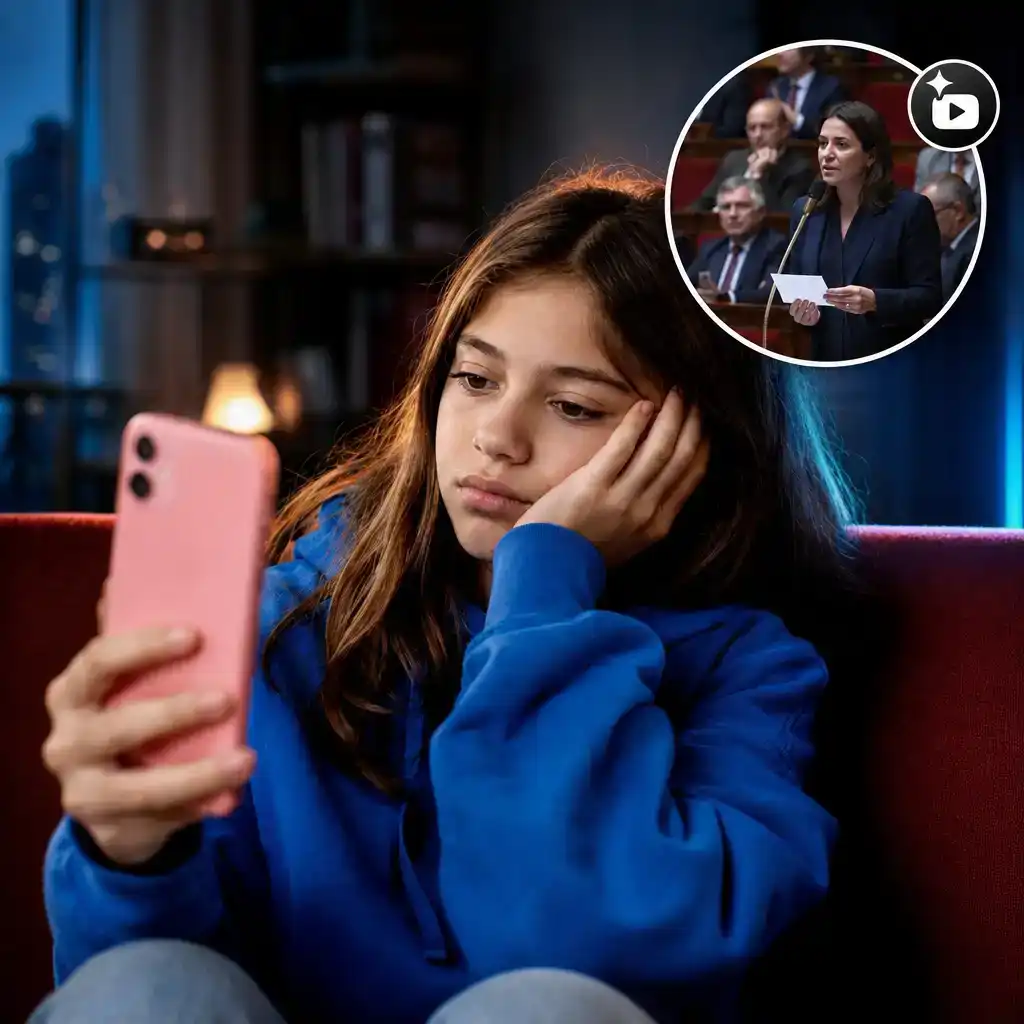
France has approved a nationwide social media ban for children under 15, becoming the first European Union country to pass a blanket age restriction on platforms such as TikTok, Instagram, Facebook, and Snapchat. For parents tired of negotiating with an algorithm at bedtime, the state has now entered the conversation.
Both chambers of the French Parliament approved the legislation on Tuesday, July 21. The measure is scheduled to take effect on September 1, 2026, just as the next school year begins, which is exactly the kind of timing lawmakers tend to call practical and teenagers tend to call personal.
What the new French law will change
Under the new rules, children under 15 will no longer be allowed to create new accounts on covered social media platforms once the law comes into force.
The law covers services classified as online social networks. The French Senate has previously named several major platforms in that category, including:
- TikTok
- Snapchat
The law also gives platforms a follow-up deadline. After September 1, 2026, companies will have four additional months to close accounts belonging to users under 15 that were created before the ban took effect.
Educational and scientific directories, online encyclopedias, and platforms used to develop or share open-source educational projects are exempt. In other words, the law is aimed at social networking, not every website that may contain a teenager and a login page.
Why Emmanuel Macron pushed for the ban
French President Emmanuel Macron strongly supported the measure and urged lawmakers to pass it before the beginning of the next school year.
After the vote, Macron described the decision as a European first and a protective step for young people.
“France is leading the way in Europe in protecting our children and our teenagers,” he said.
The political message is not hard to read. European governments have been under pressure to address concerns about children’s mental health, online addiction, cyberbullying, and the power of recommendation algorithms. France is now moving from concern to enforcement, though the hard part may be proving that enforcement can work without creating a new set of privacy problems.
Schools will see stricter phone rules too
The legislation does more than restrict social media accounts. It also expands limits on mobile phone use in French schools.
Phones were already restricted in elementary and middle schools. The new law extends those rules to high schools beginning with the 2026-2027 academic year.
That matters because the policy is not only about what children do at home. It also targets the school day, where phones can turn a classroom into a very small branch office of the internet. For teachers, the change could make it easier to keep students focused. For students, it will likely feel like one more adult decision made about their pockets.
The enforcement problem is still unresolved
The biggest unanswered question is how platforms can reliably identify users who are under 15.
Critics have warned that enforcing the ban may require intrusive age checks. That could mean more personal data being collected from young people and families, which is not exactly a privacy victory if handled poorly.
A possible review by France’s Constitutional Council could also delay the planned September 1 implementation.
So while the law has passed Parliament, the machinery behind it is not yet fully visible. Platforms will need to explain how they plan to verify age, remove underage accounts, and comply with the rules without creating systems that raise fresh concerns.
France joins a wider global shift
France is not acting in isolation. Australia became the first country in the world to introduce a national social media ban for children under 16.
Other countries, including Spain, Denmark, Greece, and the United Kingdom, have also considered or announced similar age restrictions.
That growing list shows how quickly child safety online has moved from panel discussion to legislation. The shared problem is clear enough: children are spending more of their lives on platforms designed for attention, not childhood development. The shared solution is much messier.
France has now chosen one of the strongest options available: a national age bar backed by legal duties for platforms. Whether it becomes a model for Europe or a cautionary tale about enforcement will depend on what happens after the vote, when the policy leaves Parliament and meets millions of phones.