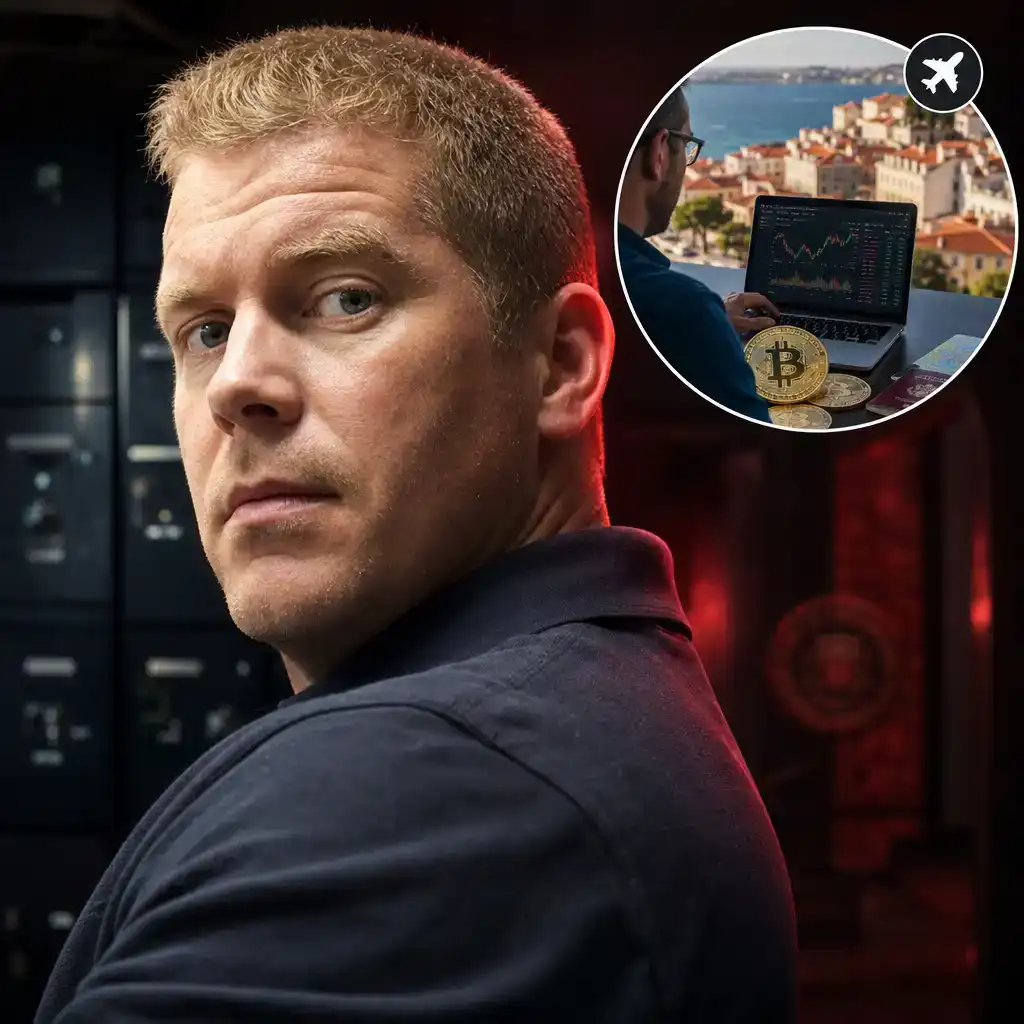
A former FBI agent accused of crypto theft allegedly used bureau systems to take control of cryptocurrency tied to federal investigations, then searched ChatGPT for advice on investing roughly $1 million and becoming a European resident. Court records say Patrick Steven Yaroch eventually approached a Justice Department employee and confessed, saying the “shame [was] eating him up inside.”
The distinction matters: Yaroch allegedly admitted the conduct to investigators, but he has not been reported as pleading guilty. As of August 4, 2026, no later plea, indictment or court ruling had been found, and the allegations remain unproven.
What investigators say Patrick Yaroch did
According to a criminal complaint filed in the Eastern District of Virginia, Yaroch accessed FBI systems to obtain credentials for digital wallets associated with other investigations. He allegedly used those credentials to make between 10 and 12 unauthorized transfers into wallets under his control.
NBC News identified Yaroch as a 37-year-old resident of Ashburn, Virginia. He joined the FBI in 2017, held a Top Secret security clearance and worked as a supervisory special agent in the bureau’s Counterintelligence and Espionage Division.
The alleged conduct began in late 2024 or early 2025 after Yaroch encountered the accounts while assigned to Boston, NBC reported. He later moved to FBI headquarters.
The affidavit says Yaroch told a Justice Department employee that frustration with the bureau’s limited ability to act against a foreign target contributed to his decisions. NBC reported, citing two people familiar with the investigation, that the unnamed “adversarial nation” in the case was Russia.
That context raises the stakes beyond the dollar figure. An agent trusted with sensitive counterintelligence information allegedly exploited recovery credentials connected to a Russia-linked target. It is the sort of insider-security problem federal agencies build extensive controls to prevent, with decidedly imperfect results here.
How the alleged confession unfolded
On July 28, Yaroch contacted a Justice Department employee through Signal and said he had made “very poor decisions related to cryptocurrency wallets,” according to the complaint. The two met the following day, when Yaroch allegedly described accessing FBI systems and transferring cryptocurrency into his own accounts.
He said he did not know exactly how much was involved because the transferred assets had been combined with his personal holdings. In a separate account, he estimated the wallet’s value at approximately $1 million.
CNN reported that the FBI fired Yaroch and that he was arrested in late July. The criminal complaint became public on August 3. The bureau declined to provide CNN with a detailed comment beyond confirming that it was cooperating with the investigation.
Investigators later obtained a warrant to search Yaroch’s phone. That search produced conversations with ChatGPT about managing a large amount of money and leaving the United States. The chatbot apparently became part financial adviser, part relocation consultant and, rather less helpfully for Yaroch, part digital evidence file.
What Yaroch asked ChatGPT
One prompt quoted in the complaint asked: “If I had a million dollars, how would you suggest investing it/spending it to maximize profit and return?”
Several days later, Yaroch allegedly asked: “If you had a bucket of money (around $1 million) and you wanted to leave the USA and become a resident or citizen of an EU country, what would you do?”
Those searches do not prove an intention to flee by themselves. People ask chatbots hypothetical questions all the time, often with no plan to follow through. But NBC reported that investigators found evidence Yaroch had moved beyond casual online research.
According to the network, he had arranged representation with Portuguese tax authorities and bought TAP Air Portugal tickets for himself, his wife and their child. The family was scheduled to depart on September 3.
The paperwork and airline reservations provide more substantial evidence of possible relocation planning than the prompts alone. They also add a human complication to the case: the alleged preparations involved not only Yaroch but his immediate family, whose role or knowledge has not been established in the reporting.
How much money was recovered
NBC reported that investigators recovered approximately $925,426 into government-controlled cryptocurrency wallets. Another $165,582 in US dollars reportedly remained at the Kraken exchange because fiat currency could not be transferred into a crypto wallet.
The figures do not produce a simple total for the alleged theft. Yaroch reportedly told investigators that the assets had been mixed with his personal funds, and cryptocurrency values can change substantially. The complaint therefore describes the amount as approximately or nearly $1 million rather than presenting a final accounting.
The case also highlights a basic security question for agencies handling seized or monitored digital assets: who can access wallet keys and seed phrases, and what controls detect when an authorized employee uses them for an unauthorized purpose? Cryptocurrency transfers may be traceable on a blockchain, but possession of the recovery credentials can still give an insider direct control of the funds.
What charges does Yaroch face
Yaroch has been charged by criminal complaint with:
- Interstate transportation of stolen goods, securities and monies
- Receipt of stolen goods, securities and monies
A complaint allows prosecutors to bring an initial criminal case, but it is not a conviction and does not carry the same procedural status as a guilty plea. No defense attorney was listed in the available reporting.
For now, the case rests on the government’s allegations, Yaroch’s reported statements, records of the transfers and evidence recovered from his phone. The ChatGPT exchanges are the most attention-grabbing detail, but the deeper issue is institutional trust: a counterintelligence supervisor allegedly used privileged access to take assets from an active federal investigation, then made concrete preparations that could have placed him outside the country.