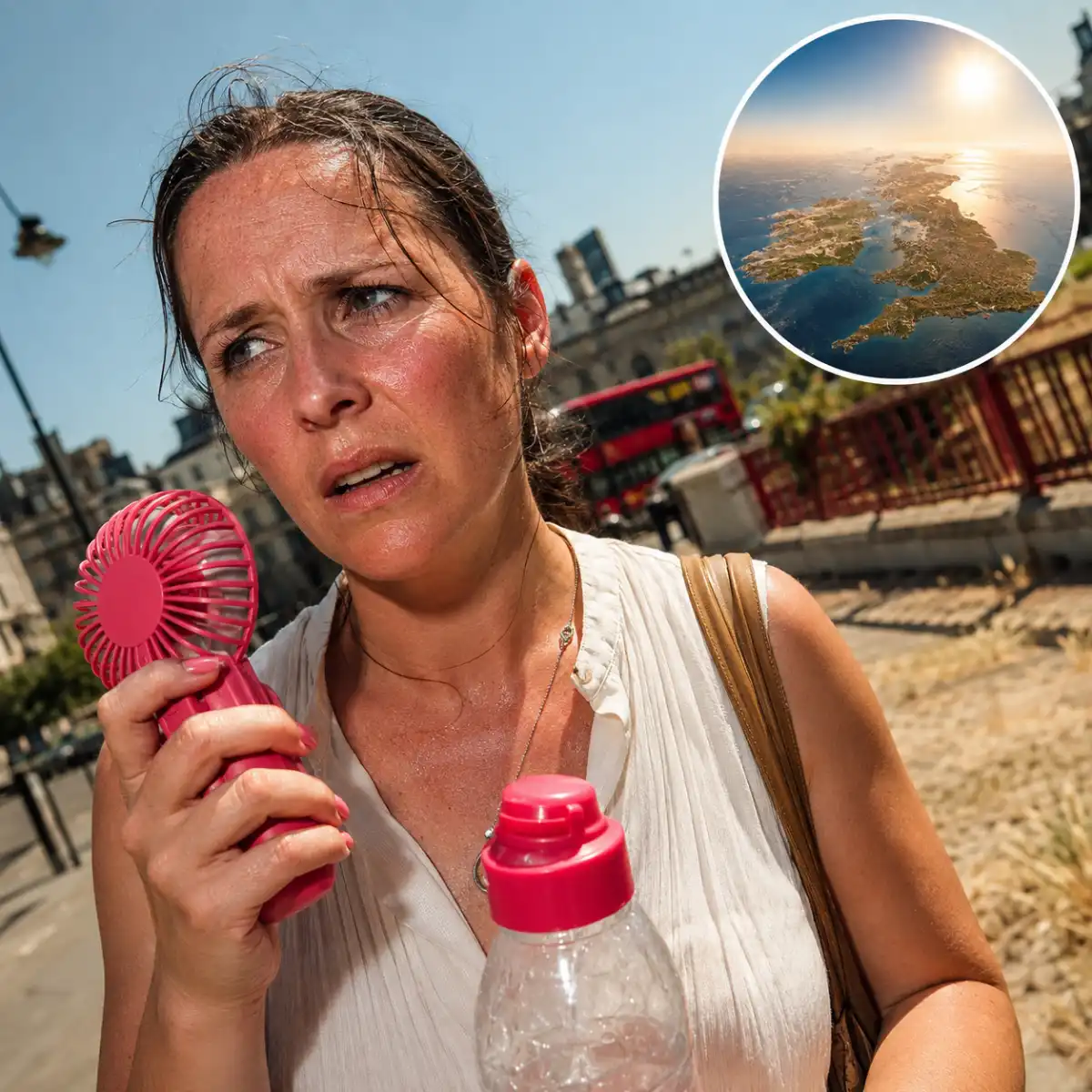
A fifth UK heatwave is likely to develop next week, with forecast models showing temperatures potentially reaching 35C in central and south-east England. Heat-health alerts have already come into force, but the highest temperatures and any new records remain forecasts for now. Apparently, four major hot spells were not enough for one summer.
Temperatures are expected to rise above average on Saturday, reaching the mid- to high 20s across most of England and Wales. Scotland and Northern Ireland should remain cooler at around 17C to 21C, with more cloud, some rain and blustery winds.
By Sunday and into next week, a broader area is forecast to become significantly hotter. The warm conditions are expected to persist well into the week, giving many locations enough time to meet the formal heatwave criteria.
What qualifies as a UK heatwave?
The Met Office does not declare a heatwave based on one national temperature. Instead, each county has a local threshold ranging from 25C to 28C. A weather station must meet or exceed its threshold for at least three consecutive days.
That means some places can officially enter a heatwave while others do not, even during the same spell of weather. If enough stations cross their local thresholds next week, this would become the fifth widespread heatwave of 2026.
The UK Health Security Agency has introduced heat-health alerts as the latest hot period approaches. Those alerts are separate from the Met Office heatwave definition and focus on possible effects on health and care services.
Repeated hot spells can place cumulative pressure on hospitals, ambulance crews, care homes, outdoor workers and people living in homes that retain heat. Ambulance executive Helen Vine has warned that recent extreme temperatures demonstrated how quickly patients could become seriously ill.
For context, the UK Health Security Agency estimated that England recorded 1,504 heat-associated deaths across five hot-weather episodes during summer 2025.
Which temperature records are under threat?
The forecast follows an already exceptional run of heat in 2026. For the first time, the UK recorded temperatures of at least 35C during May, June and July in the same year.
May’s provisional national record was 35.1C at Kew Gardens. June then reached a provisional 37.7C at Lingwood in Norfolk. By July 10, the country had also experienced eight days above 34C, surpassing the previous annual record shared by 1976 and 2020.
Met Office science manager Amy Doherty said the milestones showed “just how notable this year has been for UK temperatures.”
The latest forecast suggests August could become the fourth consecutive month to reach 35C, although that has not yet happened. Forecast models can shift, particularly when estimating the exact location and peak of the most intense heat.
There is also uncertainty around another possible record. The original forecast count put 2026 at 33 days above 30C, one short of the 34-day record set in 1995. However, The Guardian reported on July 27 that the UK had already registered more 30C days than in any previous year. The difference may involve datasets, counting methods or later revisions, and requires clarification from the Met Office.
Why the dry weather makes this heat more serious
The heat is arriving after an unusually sunny and dry July. The month was reported as the sunniest July on record for the UK and the driest July recorded in England and Wales.
Provisional Met Office figures reported by The Guardian showed that southern England had received only 1% of its average July rainfall by July 27. England overall had received 5%, while the UK-wide figure was 20%.
That combination of high temperatures and limited rainfall increases pressure on:
- Farms and crops
- Parks and other dry public spaces
- Reservoirs and water supplies
- Fire and rescue services
- Wildlife and vulnerable habitats
The concern is not simply another unusually hot afternoon. Repeated heatwaves allow strain to accumulate across public services, infrastructure and households, while dry land increases the risk that fires spread quickly.
Climate scientist Friederike Otto of Imperial College London has also cautioned against calling this the “new normal.” She said that description is misleading because temperatures will continue rising while fossil fuels are burned.
Whether 35C is reached or not, the broader picture is already clear: 2026 has produced an extraordinary sequence of UK heat records, and the next hot spell is arriving when people, services and the landscape have had little time to recover.