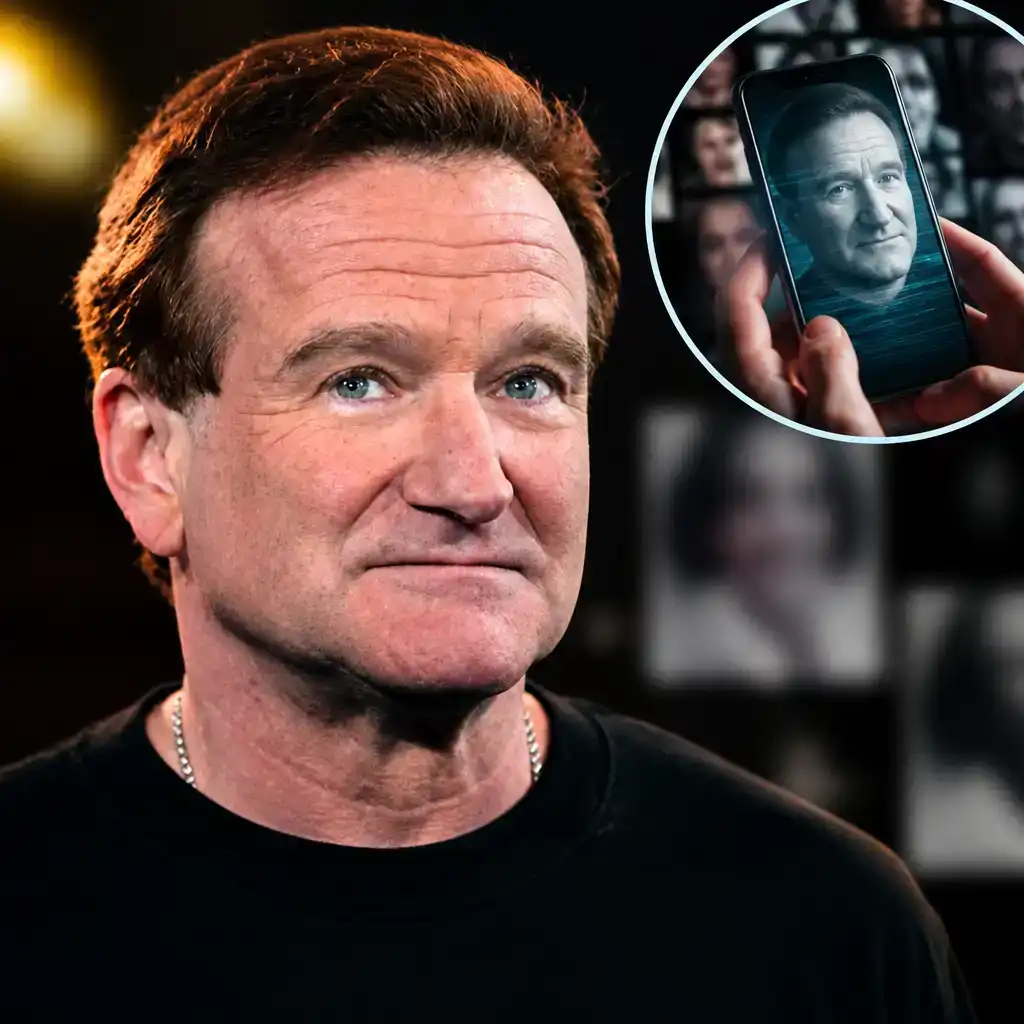
AI misuse of Robin Williams has prompted the late actor and comedian’s three children to reactivate his long-dormant Instagram account, turning a memorial page into something more practical: a family-controlled record of what is real.
Zak Williams, 43, Zelda Williams, 37, and Cody Williams, 34, relaunched the account on Monday, August 17. It had remained unchanged since their father’s death on August 11, 2014, and had about 347,000 followers when the siblings took control.
The family said the page would share authentic stories, photographs, videos and memories during the year Williams would have turned 75.
“As technology evolves, we want this to be a safe, trusted place where the stories, photos, videos, and memories shared reflect his legacy with authenticity, warmth, and care,” they wrote.
That makes the account more than a tribute. It is also an authentication archive, giving fans a reliable source as synthetic voices and fabricated videos become increasingly easy to produce and considerably less easy to avoid.
Why the family brought the account back
In a post announcing the revival, the siblings said they were grateful that new audiences continued to discover their father’s work while longtime fans celebrated the joy he brought them.
“This is our way of sharing his unique talent and humor with the world, including the moments that made us and so many of you laugh, as we remember our Dad’s extraordinary life and work,” they said. “He continues to inspire us and delight people all over the world.”
Zelda later acknowledged that seeing the account suddenly active again might have unsettled some followers.
“I’m sorry if anyone found Dad’s old page posting again to be triggering. Believe me, I know it’s a little strange,” she wrote in an Instagram story.
She said creating a home for genuine photographs and clips was “one of the best ways we’ve now found to fight back against rampant AI abuse of his voice and likeness on here.”
As of August 19, the family had not announced any agreement with Instagram owner Meta to remove impersonations, nor had Meta disclosed a specific enforcement plan. The page can establish what is authentic, but it cannot make every deepfake disappear. Technology has not yet developed a convenient button marked “please stop fabricating dead relatives.”
Zelda Williams has warned fans before
The relaunch follows repeated objections from Zelda to AI-generated versions of her father. In October 2025, she asked people to stop sending her synthetic videos featuring him.
“Stop believing I wanna see it or that I’ll understand, I don’t and I won’t,” she wrote. Addressing both trolls and supposedly well-meaning fans, she added: “If you’ve got any decency, just stop doing this to him and to me, to everyone even, full stop.”
She also described AI recreations of his voice as “disturbing.” At best, she said, they were “a poor facsimile of greater people.” At worst, they became “a horrendous Frankensteinian monster” assembled from the weakest parts of the entertainment industry rather than its creative strengths.
Not everyone connected to Williams’ work has taken the same position. Matthew Lawrence, who played his son in Mrs. Doubtfire, told Deadline in July 2025 that he would “love” to use AI for a project involving Williams’ voice, provided the family approved.
“I would love to do something really special with his voice,” Lawrence said, calling it iconic for a generation. That qualification matters. Family consent is precisely what most unauthorized replicas lack.
Williams’ estate imposed unusually strict limits
The family is not relying only on public appeals. Robin Williams arranged unusually restrictive protections for his identity before his death.
CBS News and the Bar Association of San Francisco reported that he transferred his publicity rights to a trust and prohibited commercial exploitation of his name, image, likeness and related identity rights for 25 years after his death. That restriction runs through August 2039.
California law provides another possible route. Under California Civil Code Section 3344.1, unauthorized digital replicas of deceased personalities can expose creators or distributors to liability of at least $10,000, or actual damages when those are higher. The law includes exceptions, so it is not a universal ban on every parody, commentary clip or fan-made image.
Those protections are substantial on paper. Enforcement is less tidy. Synthetic material can spread across multiple accounts and services before an estate identifies it, and noncommercial posts may raise different legal questions from advertisements or paid productions. A strongly drafted estate plan does not automatically moderate the internet, an omission the internet appears content to exploit.
The revived account therefore fills a separate role. Rather than replacing legal action, it gives audiences a visible reference point maintained by the people authorized to protect Williams’ legacy.
Meta has already faced pressure over AI likenesses
The dispute arrives while entertainment unions and talent agencies are pushing technology companies to obtain explicit permission before using a person’s face, voice or creative work.
Variety reported that Meta withdrew an Instagram feature in July 2026 that allowed AI-generated images to reference public accounts. The company acted after objections from the Screen Actors Guild-American Federation of Television and Radio Artists and Creative Artists Agency.
Creative Artists Agency said a person’s likeness, voice and work should not be used without “clear, documented consent.” Meta acknowledged that the feature “missed the mark,” a restrained description for a product that immediately alarmed the people whose identities it could reproduce.
Williams’ family is also far from alone. Axios previously reported that Kelly Carlin-McCall, daughter of comedian George Carlin, received daily emails about AI depictions of her father. Celebrity estates increasingly face the same burden: identifying replicas, explaining that the family did not approve them and asking platforms to act after the material has already circulated.
For Zak, Zelda and Cody, reopening their father’s account creates a trusted source without pretending it solves the larger problem. Fans now have a place to find real performances and family-approved memories. The fake versions will still require reporting, legal pressure and platform enforcement, none of which is quite as effortless as generating them.