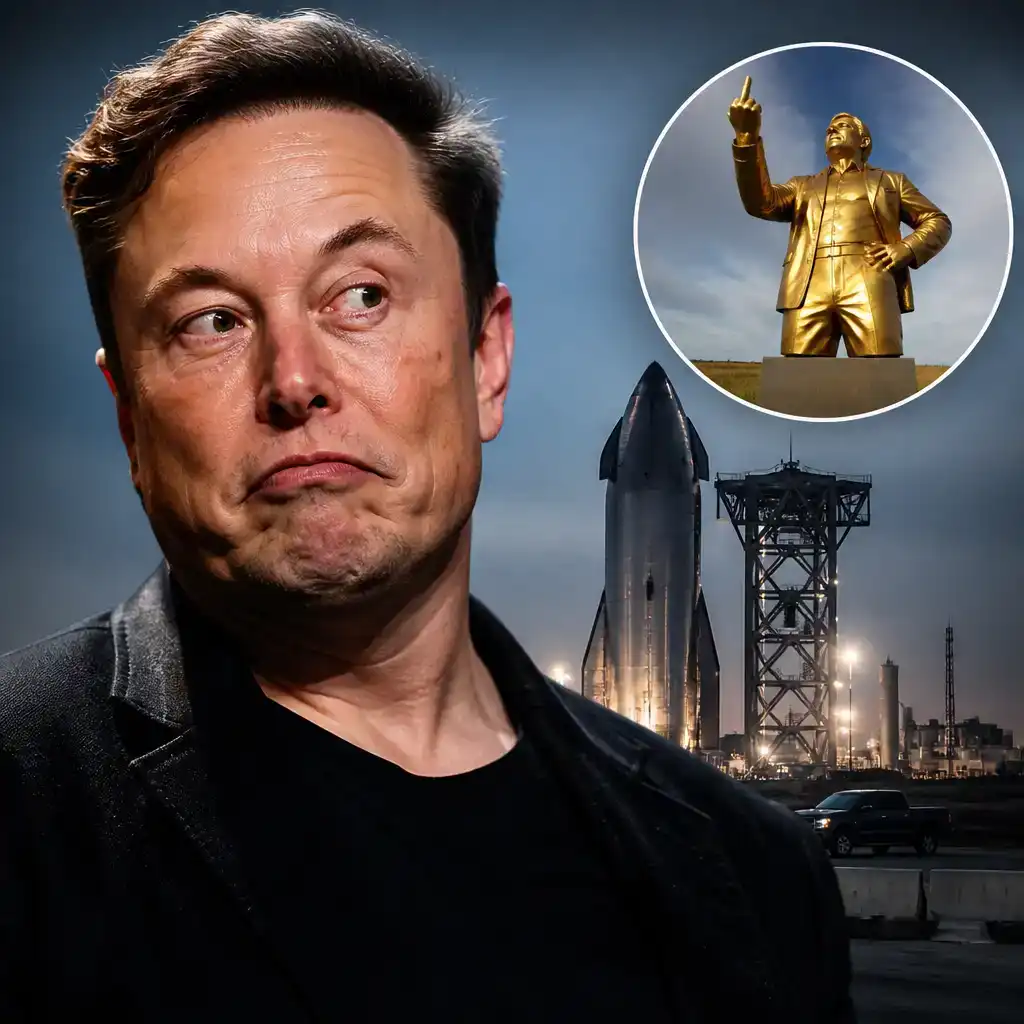
Cards Against Humanity wants supporters to pay $10 to help design an Elon Musk monument on its South Texas property, transforming a settled trespass lawsuit into a fresh test for the new SpaceX-centered City of Starbase. The insult is obvious. The more interesting question is whether municipal officials will approve hostile protest art on land now surrounded by a city closely tied to the billionaire it targets.
The Chicago company announced the “Official Elon Musk is a Sad Little Bitch with No Friends Monument Design Committee” in mid-August 2026. Members can submit ideas, vote on options and join an online community devoted to deciding what, exactly, should rise from the disputed parcel.
So far, the committee has a name, a fee and a target. As of August 17, Cards Against Humanity had disclosed no final design, construction schedule, permit application or total budget. Elon Musk, SpaceX and Starbase officials had not publicly responded. Apparently, even monuments assembled by committee require slightly more planning than a provocative landing page.
How did Cards Against Humanity acquire the land?
The property entered the company’s collection of political stunts in 2017. Cards Against Humanity asked 150,000 customers to contribute $15 each as part of a campaign intended to complicate President Donald Trump’s proposed border wall.
Those contributions totaled $2.25 million, although the promotion covered more than the land purchase. The company acquired a parcel in Cameron County near the U.S.-Mexico border, slightly more than three miles from SpaceX’s Boca Chica launch facility, according to its later legal complaint.
SpaceX’s presence expanded rapidly around the site as it developed Starship, its enormous reusable launch system. Cards Against Humanity alleged that the rocket company eventually began treating the vacant parcel as if ownership were a minor administrative detail.
In a 2024 lawsuit, the game maker sought $15 million and accused SpaceX of using the land for construction materials, gravel and debris for at least six months. The complaint said workers had cleared vegetation, compacted soil and stored equipment there without permission.
Satellite imagery reviewed by Bellingcat suggested activity may have continued for more than a year. The investigative outlet stressed that it found no evidence SpaceX knowingly trespassed. That qualification is less dramatic than the campaign’s claim that Musk personally “illegally defiled” the property, but it is also what the reporting actually established.
What happened to the SpaceX trespass lawsuit?
Cards Against Humanity and SpaceX settled the case in 2025 before a scheduled jury trial. Texas court records confirmed the agreement, but its terms remained confidential.
The game company said SpaceX admitted during discovery that it had trespassed. The Associated Press and TechCrunch reported that equipment was removed from the site, while SpaceX did not answer requests for comment about the settlement or the alleged admission.
Cards Against Humanity had suggested that a successful lawsuit could produce payments of up to $100 for each original campaign participant. That did not happen. The company said it settled because taking the case to trial was likely to cost more than it could recover. Backers instead received an Elon Musk-themed card pack, which is not legal compensation in any conventional sense but does fit the brand.
The new monument proposal allows the company to continue the dispute without returning to court. It also turns the protest into a commercial program. Participation costs $10, and Cards Against Humanity says it will direct 10% of profits from certain new expansions sold through its own store toward the project.
No completion commitment or monument budget has been published. Supporters are therefore paying to join a design process, not buying a guaranteed piece of public art. The distinction may become important if the proposal encounters permits, zoning rules or the ordinary complications of building anything larger than a sign.
Can Starbase block a monument aimed at Musk?
That is the practical issue now hanging over the campaign. Cards Against Humanity says its land is surrounded by Starbase and argues that, as a Texas property owner, it can build on the parcel. Property rights, however, tend to become more complicated once city codes, engineering standards and permit offices enter the conversation.
Starbase officially became a Texas municipality after a May 3, 2025, incorporation vote. The result was 212 votes in favor and six against among a small electorate that included many SpaceX employees. The city covers roughly 1.5 square miles and has more than 500 full-time residents, including company workers and their families.
Supporters said incorporation would help the community oversee roads, utilities, zoning and other local services as the population grew. SpaceX had already handled several such functions in practice. Formal city status gave those arrangements a municipal structure, because apparently operating a rocket complex was not enough paperwork.
Critics described Starbase as a company town where SpaceX and Musk-aligned officials could gain broad influence over land use and public access. A permit request for art explicitly designed to ridicule Musk could now provide an unusually clear measure of how independently the city applies its rules.
No filing has surfaced, so Starbase has not yet had to make that decision. A rejection would raise questions about viewpoint and municipal power. Approval would place a permanent protest inside the civic landscape built around SpaceX.
Why are roads and beach access part of the dispute?
Concerns about local authority extend well beyond one privately owned parcel. On June 23, 2025, the Starbase City Commission unanimously approved SpaceX requests to restrict access to four roads using controlled-access devices:
- Esperon Street
- LBJ Boulevard
- Memes Street
- Saint Jude Street
Commissioner Jordan Buss described the restrictions as safety and security measures for residents. Members of the public questioned whether a municipality should limit travel on public roads in ways that primarily benefit the company dominating the city.
Boca Chica Beach and Boca Chica State Park have also closed during launches, engine tests and the movement of large equipment. Opponents worry Starbase could gain greater control over those closures. Attorney Marisa Perales, speaking in a separate beach-access dispute, told The Texas Tribune that Texas had effectively handed Boca Chica Beach to SpaceX as a “blast zone.”
Texas Attorney General Ken Paxton defended the restrictions, arguing that closures are necessary to maintain a safe and operational launch site. The competing positions capture the wider conflict: SpaceX says rockets require controlled space, while residents and activists say public land does not become private simply because the machinery is very large.
The monument campaign places Cards Against Humanity squarely inside that argument. Its parcel is private property, but any construction there could force Starbase to show how it balances landowner rights against the priorities of its defining corporate resident.
How has Starship changed the surrounding area?
Starbase serves as a manufacturing and launch center for SpaceX’s Starship program, which supports work connected to NASA and the Department of Defense. The city presents itself as a community tied to the company’s long-term plans for Mars.
Closer to Earth, the program has brought recurring concerns about noise, vibration, debris, road access and environmental effects. In 2025, the Federal Aviation Administration authorized a license allowing up to 25 Starship and Super Heavy orbital launches annually, along with as many as 25 landings each for Starship and the Super Heavy booster.
In May 2026, 80 South Texas plaintiffs sued SpaceX in federal court over alleged property damage. They said sonic booms, vibrations and noise from 11 rocket tests conducted between April 2023 and October 2025 harmed homes in Laguna Vista, Port Isabel and South Padre Island.
The plaintiffs requested a jury trial and damages. At the time of The Texas Tribune’s report, SpaceX had not responded in court, and the complaint did not specify the damage claimed for each individual home.
That lawsuit gives the Cards Against Humanity project a broader context. The proposed structure is a deliberately comic response, but the pressure surrounding Starbase is not fictional. Nearby residents, environmental advocates, property owners and public-access campaigners are all asking variations of the same question: how much disruption should accompany the expansion of a nationally important private space program?
Is the proposal protest art or product marketing?
It is comfortably both. Cards Against Humanity has spent years combining political campaigns with sales promotions, and this project follows the same model. The company gets a continuing protest against Musk, participants get voting rights and themed community access, and new expansion sales help fund whatever eventually gets built.
The site’s language says the monument should make Musk wonder whether he is “a sad little bitch with no friends.” No published concept yet explains how that message will translate into stone, metal or another material capable of surviving the South Texas coast.
The proposed work would also join an area increasingly surrounded by SpaceX symbolism. French brothers associated with Atelier Missor have separately promoted plans for a large titanium statue of Prometheus at Starbase. Their studio describes its mission as creating gigantic titanium figures representing technological civilization. One proposal celebrates heroic ambition; the other plans to insult the man financing much of it. Public art rarely receives such convenient thematic zoning.
For now, the Cards Against Humanity project remains a paid design committee rather than a construction project. Its real significance may depend less on the winning design than on what happens next. If the company applies to build, Starbase will face an awkward but useful civic test: whether a municipality shaped around SpaceX will make room for a neighboring landowner determined to mock it.