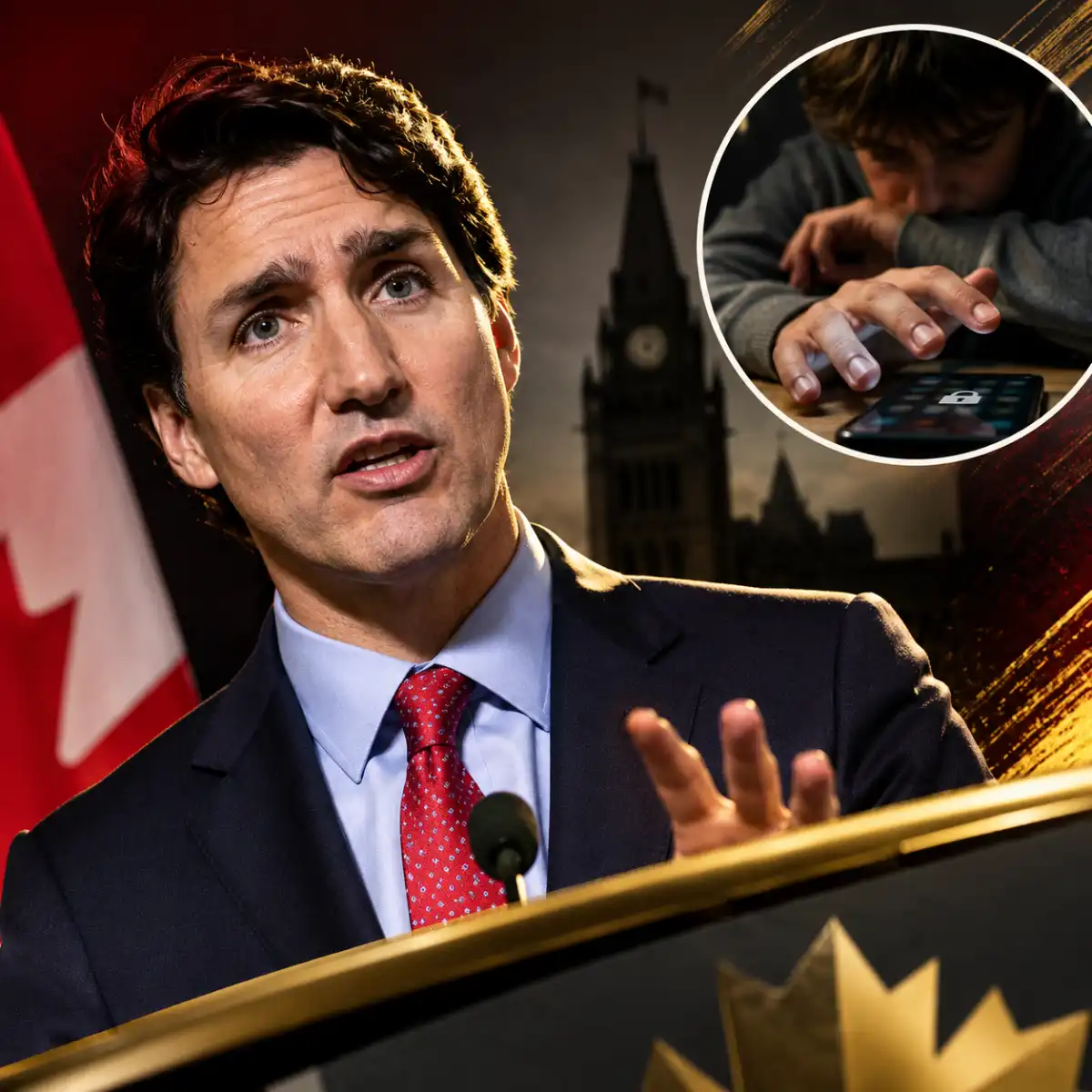
Canada’s Liberal government is trying to draw a harder line around children and major online platforms, introducing legislation that would create a Canada social media ban for users under 16 unless companies can prove they meet new safety standards.
The proposed Safe Social Media Act is being pitched as a child-protection measure at a time when governments are under pressure to show they are doing something about online harms. The difficult part, as other countries have already discovered, is that “doing something” often means asking the internet to check everyone’s age, which is where the policy begins to look less tidy.
What the Safe Social Media Act would do
Under the bill, social media companies would have to stop children under 16 from creating or keeping accounts unless the platforms can show they comply with new safety requirements.
The legislation would also create a new enforcement body, the Digital Safety Commission of Canada, to oversee the rules and issue penalties. Companies that fail to comply could face fines of up to 3% of global revenue or $10 million CAD, depending on the violation.
The bill does not stop at age limits. It also targets seven categories of harmful content, including material that:
- Encourages self-harm
- Incites violence
- Promotes hatred
- Involves non-consensual intimate images
For some types of content, platforms would be required to remove posts within 24 hours. That timetable is meant to give the rules teeth, though it also raises the usual question of who decides what must come down, how quickly, and with what appeal process.
The proposal also covers AI chatbots
The government is also targeting AI chatbots, including “public-facing conversational chatbots that can mimic human-like relationships.” That wording reflects growing concern about products that are not just answering homework questions, but simulating companionship, advice, and emotional support.
Children would not be banned from using chatbots outright. Culture Minister Marc Miller said the technology can still have a role in education, which is a reasonable distinction and also the part where regulators will need very sharp pencils.
The bill appears to separate social media accounts from AI tools, treating platforms built around public interaction differently from chatbots that may be used in schools or learning settings. Still, the inclusion of chatbots signals that Ottawa is looking beyond feeds and likes, toward a wider digital environment where young users can form attachments to systems designed to feel human.
That is what makes the policy personal: young people are not just scrolling past content. They are using online spaces to talk, learn, flirt, seek help, waste time, and feel less alone. Any rule that cuts access has to reckon with both the harm it prevents and the support it may interrupt.
Privacy experts warn age checks could spread
The immediate criticism in Canada is less about whether children should be safer online, a position with limited opposition, and more about how the government expects companies to verify age.
Michael Geist, a University of Ottawa law professor and digital policy expert, told the Toronto Sun that implementing the ban “raises enormous concerns.” He warned that the policy could make age-gating a normal feature of internet use, rather than an exception.
“While the government is likely to say this is a ‘temporary measure’ that the companies will be able to basically opt out of so long as they meet certain standards, that is years away,” Geist said. “Once you have built this infrastructure and collected a bunch of this data, there’s really no putting the toothpaste back in the tube.”
Geist said it is not difficult to imagine a Canadian internet where users must provide identification to access many websites. That is the main privacy concern: a child-safety rule aimed at a limited set of platforms could push companies toward broader ID collection, with all the obvious data risks right there beside it.
Critics point to Australia’s workaround problem
Jay Goldberg of the Consumer Choice Centre also criticized the proposal, arguing that a broad social media ban is the wrong answer and that Canadians should be worried about the privacy consequences.
Goldberg pointed to Australia, which introduced its own ban on under-16s using social media. He said five million accounts were deactivated, but studies suggest at least 20% of young people are already back on platforms by using tools such as VPNs.
“Teenagers can find workarounds to access social media, but overall bans can be extremely harmful for those who choose not to, as it disconnects them from support groups, group chats, and mechanisms for staying in touch with distant friends or loved ones,” Goldberg said.
That argument is likely to resonate with parents who have seen social platforms at their worst and still know they are woven into everyday teenage life. For some young users, group chats and online communities are not luxuries. They are where friendships, school coordination, identity support, and long-distance family contact happen.
The UK and Australia show the political risk
Canada is not moving in isolation. Governments in the United Kingdom and Australia have already faced backlash over age-check systems and underage access rules.
In the UK, age verification systems became controversial after Britain’s “most tattooed man” said one system told him to remove his face because it appeared to mistake his tattooed appearance for a mask. Gamers also found ways around UK checks by using Norman Reedus’ face from Death Stranding, which is not exactly the kind of biometric security case study anyone dreams of writing.
Australia’s ban has affected major platforms, including Kick, effectively blocking children from the streaming site in its own home country.
The Liberal government says its bill is designed to protect young people online. The harder debate now is whether age checks can actually do that without building a new layer of surveillance, creating uneven enforcement, and pushing determined teenagers toward workarounds that are already widely understood.
Canada is entering that argument with a serious proposal and a familiar problem: protecting children online is popular. Proving the cure will not create its own damage is the difficult part.