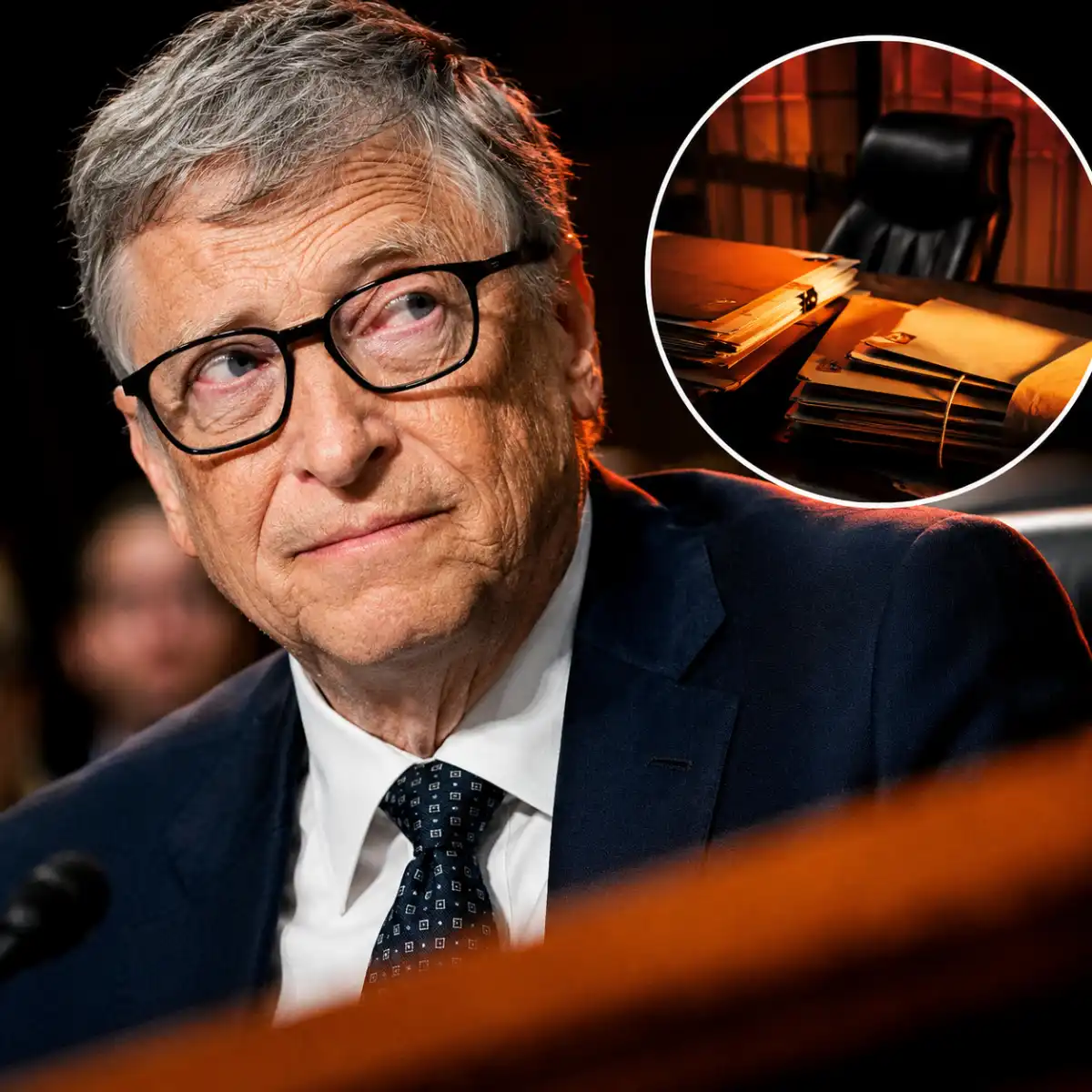
Bill Gates details Epstein extortion claim in newly surfaced testimony, saying Jeffrey Epstein tried to use information about Gates’ marital infidelity to push him back into contact after their relationship collapsed in 2014.
The Microsoft co-founder made the allegation in a closed-door opening statement to the House Oversight and Government Reform Committee on June 10. The statement was later transcribed on Gates’ website, giving the public another careful, uncomfortable look at a relationship he has had to explain for years.
How Gates says the Epstein relationship began
Gates said he was introduced to Epstein in 2011 by people he trusted through his professional and philanthropic work. According to Gates, Epstein presented himself as someone who could help raise large sums for global health efforts.
“Epstein claimed he could raise billions of dollars for global health from people for whom he provided tax and estate services,” Gates told the committee.
Gates said Epstein’s promise was why he kept meeting with him. His name has appeared in documents tied to Epstein, with the files describing a friendship that deepened after their introduction. Gates has long said those meetings were about philanthropy, not personal loyalty. Conveniently for everyone involved, philanthropy is often the room where rich people explain why they were in other rooms.
By 2014, Gates said, he had lost confidence in Epstein. Epstein talked up a “meaningful” group of possible donors, Gates said, but the money never came through.
“At that point, I concluded Epstein would never deliver on his promises,” Gates said. “I told him we would go no further and stopped communicating or meeting with him.”
What Gates alleges Epstein used against him
Gates, who was married to Melinda French Gates from 1994 until 2021, told lawmakers he had no contact with Epstein after 2014 and before Epstein’s later arrest. Gates said things changed indirectly when an employee leaving his private office went to Epstein for help with the separation.
“It was after this that I learned Epstein had become aware of sensitive information about my personal life, including the fact that I had been unfaithful in my marriage,” Gates said. “These affairs had nothing to do with my interactions with Epstein, but they were painful for my family.”
Gates alleged that Epstein then tried to use that information to pressure him into resuming contact.
“Based on what has been released in the files, Epstein was working to use information about my infidelities, in addition to many lies that he layered on top, to pressure me to re-engage with him,” Gates continued. “He was unsuccessful in this effort, but it shows some of the ways he tried to leverage his interactions with me to further his agenda.”
Gates also denied taking part in, or witnessing, any criminal conduct by Epstein.
Gates has already addressed the affairs publicly
The testimony follows earlier comments from Gates about infidelity during his 27-year marriage to French Gates. In a February town hall with Bill Gates Foundation employees, he acknowledged having affairs.
“I did have affairs,” Gates said at the time. “One with a Russian bridge player who met me at bridge events, and one with a Russian nuclear physicist whom I met through business activities.”
Those admissions gave more context to the allegations he presented to the committee: that Epstein was not tied to the affairs themselves, but allegedly tried to exploit knowledge of them later.
For Gates, the distinction is legally and publicly important. For his family, as he acknowledged, the damage was personal first. That is the part no committee transcript can make neat.
Melinda French Gates has refused to carry the burden
Melinda French Gates has also addressed her ex-husband’s connection to Epstein, making clear that the subject remains painful but is not hers to answer for.
“For me, it’s personally hard whenever those details come up because it brings back memories of some very, very painful times in my marriage,” she said on NPR’s Wild Card podcast in February. “Whatever questions remain, those questions are for those people and for even my ex-husband.”
French Gates, 61, added that she does not intend to speak on behalf of others.
“They need to answer to those things, not me,” she said.
Her response underscores the wider human cost beneath the political and legal scrutiny. Gates’ testimony is about Epstein’s alleged tactics and access to powerful people. But the fallout also sits inside a former marriage, a family, and years of public questions that have not exactly arrived gently.