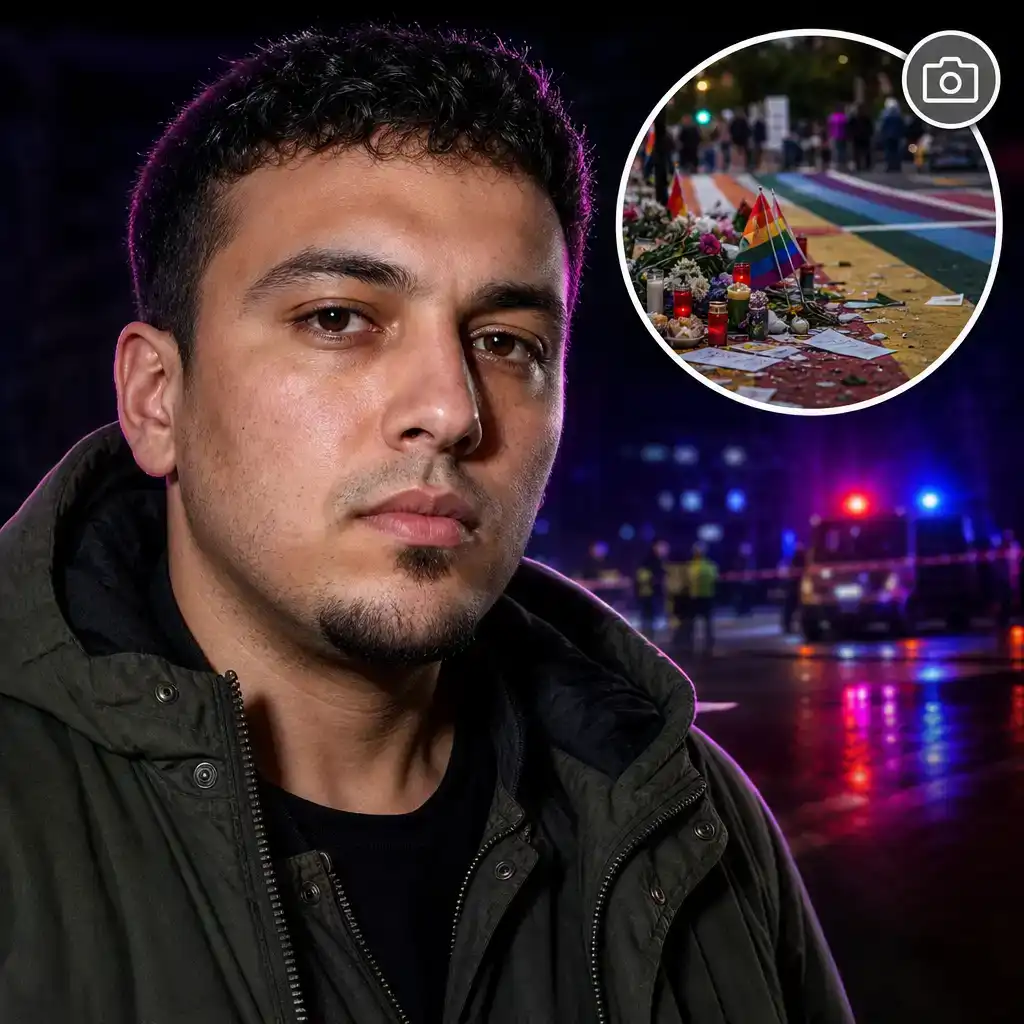
One woman was killed and at least 29 people were injured in the Berlin Pride attack, according to later official and media accounts, after a white van was driven into crowds near Tiergarten park shortly before 10pm on Saturday. The suspect, 21-year-old German citizen Abdul Ballout, was killed by police after a search lasting almost 24 hours.
The case has since moved beyond a city-level investigation. Germany’s federal prosecutor has taken control of the terrorism inquiry, a step generally reserved for alleged crimes considered a threat to national security. Investigators are examining whether Ballout had accomplices and whether knife injuries reported after the vehicle assault formed a separate second stage.
What happened near Tiergarten park?
Berlin police said people were struck on Ahornsteig, a long path crossing a largely wooded part of Tiergarten. The attack occurred as Christopher Street Day, Berlin’s major Pride celebration, was drawing to a close after bringing hundreds of thousands of people into the city.
Early casualty figures differed. The Associated Press initially reported 16 injured people, while later official and German media reports put the total at at least 29. German outlets reported on Sunday that none of the surviving victims remained in life-threatening condition.
Authorities said several people also suffered knife injuries after the van attack. Tagesschau reported that investigators had not yet established whether those wounds came from a distinct stabbing phase or were part of the same sequence of events. That distinction matters when reconstructing the attack and assessing whether anyone else was involved.
Police eventually found Ballout in an allotment complex in Spandau, a western Berlin borough. Officers shot him after he advanced towards them carrying a sharp weapon, according to reports from the Associated Press, Tagesschau and other outlets.
Interior Minister Alexander Dobrindt said the available evidence pointed to a suspected “Islamist terror attack,” although the full motive and planning remained under investigation.
Why was Abdul Ballout already known to authorities?
Ballout had a record involving violent crime, alleged radicalisation and an attempt to reach Islamic State members, according to Berlin prosecutors.
In May 2025, he travelled through Turkey to Lebanon with the intention of joining Islamic State in Syria, prosecutors said. While in Lebanon, he allegedly contacted several people whom he believed belonged to the extremist organisation.
Lebanese authorities arrested him in July 2025. He received a three-month prison sentence for inciting religious and sectarian conflict. When he returned to Germany in November, police arrested him at Berlin Brandenburg Airport and placed him in pre-trial detention.
In May 2026, a German court sentenced him under juvenile law to one year and 10 months for preparing a serious act of violence endangering the state and violating Germany’s ban on Islamic State activity. The court deferred its decision for six months and placed him under the supervision of a parole officer.
Ballout had also been ordered to attend deradicalisation counselling, according to reporting by NDR, WDR and Süddeutsche Zeitung. His earlier convictions included assault and robbery in 2022, and the theft of a victim’s headphones during a 2020 robbery.
Did supervision and deradicalisation measures fail?
The investigation will now have to examine how a person with known Islamic State ambitions, previous violent offences and a recent terrorism-related conviction was able to carry out the alleged attack while under supervision.
That question does not have a simple answer. An extremism counsellor described Ballout to Tagesspiegel as “very cautious, controlled and friendly.” Euronews reported, however, that counsellors doubted whether he was genuinely participating in the deradicalisation process.
Neither observation alone establishes what authorities could reasonably have predicted. Deradicalisation programmes depend partly on assessing intent, and outward compliance does not necessarily demonstrate a change in beliefs. Equally, a previous conviction does not automatically provide police with the legal basis for permanent detention or surveillance.
The federal prosecutor’s inquiry is expected to focus on Ballout’s contacts, preparation, movements and communications, as well as any warning signs missed during parole supervision or counselling. Investigators are also looking for possible accomplices. For now, officials have not announced evidence that another person helped carry out the attack.
Germany’s domestic intelligence agency estimated that approximately 28,280 Islamist extremists were present in the country in 2024. That broad figure covers different organisations, levels of involvement and degrees of risk, so it cannot by itself explain an individual attack. It does show the scale of the monitoring task facing security agencies.
How can Pride events remain open and secure?
The attack has also sharpened an existing security problem for Christopher Street Day organisers. Pride events are designed as open public gatherings, often spread across long routes with multiple access points. Tiergarten’s paths and wooded areas make that model particularly difficult to secure without turning a civic celebration into a controlled perimeter.
The threat is not limited to one form of extremism. Berlin parliament president Cornelia Seibeld said Germany recorded 2,377 anti-LGBTQ offences in 2025. The Berlin-based MANEO monitoring group separately documented more than 700 attacks or discrimination cases in the capital.
Andre Lehmann of the LSVD+ association told the Associated Press that the assault was political because it targeted people publicly asserting their rights. Ali Darwich, a gay Muslim police officer, said the attack touched “so many aspects of who I am.”
Christopher Street Day organisers urged the public not to reach premature conclusions while investigators establish the facts. That caution sits alongside a practical demand for stronger protection. Security planners must now consider vehicle barriers, surveillance and emergency access around Pride routes and adjoining parks, while preserving the openness that defines the event. It is not a neat operational balance, because security rarely offers those.
Christopher Street Day commemorates the 1969 uprising at New York City’s Stonewall Inn on Christopher Street, a foundational event in the modern LGBTQ rights movement.
What has Germany’s government said?
Chancellor Friedrich Merz visited the Tiergarten scene on Sunday before attending a church service for the victims. He pledged to “defend the freedom and openness of our lives” and said extremists had no place in German society.
Dobrindt announced a higher national threat level and said other German states were being briefed and advised to review security arrangements for major public events. He also said there was no continuing danger linked to the immediate incident.
Sunday’s planned Tiergarten clean-up and breakfast market were cancelled. Later, members of Berlin’s LGBTQ community gathered at the Brandenburg Gate for an impromptu vigil. Speakers condemned extremism while also criticising the government over reduced funding for queer organisations.
Armin Duenhoelter, a drag performer from Wolfsburg who was backstage at the main Pride stage when the attack occurred, told Agence France-Presse that he remained shocked but intended to return next year.
“We won’t let it beat us down,” he said.
The immediate manhunt is over, but the federal investigation now carries the larger burden: determining how the attack was organised, whether anyone assisted Ballout, and whether Germany’s existing sentencing, supervision and intervention systems provided warnings that were not acted upon.