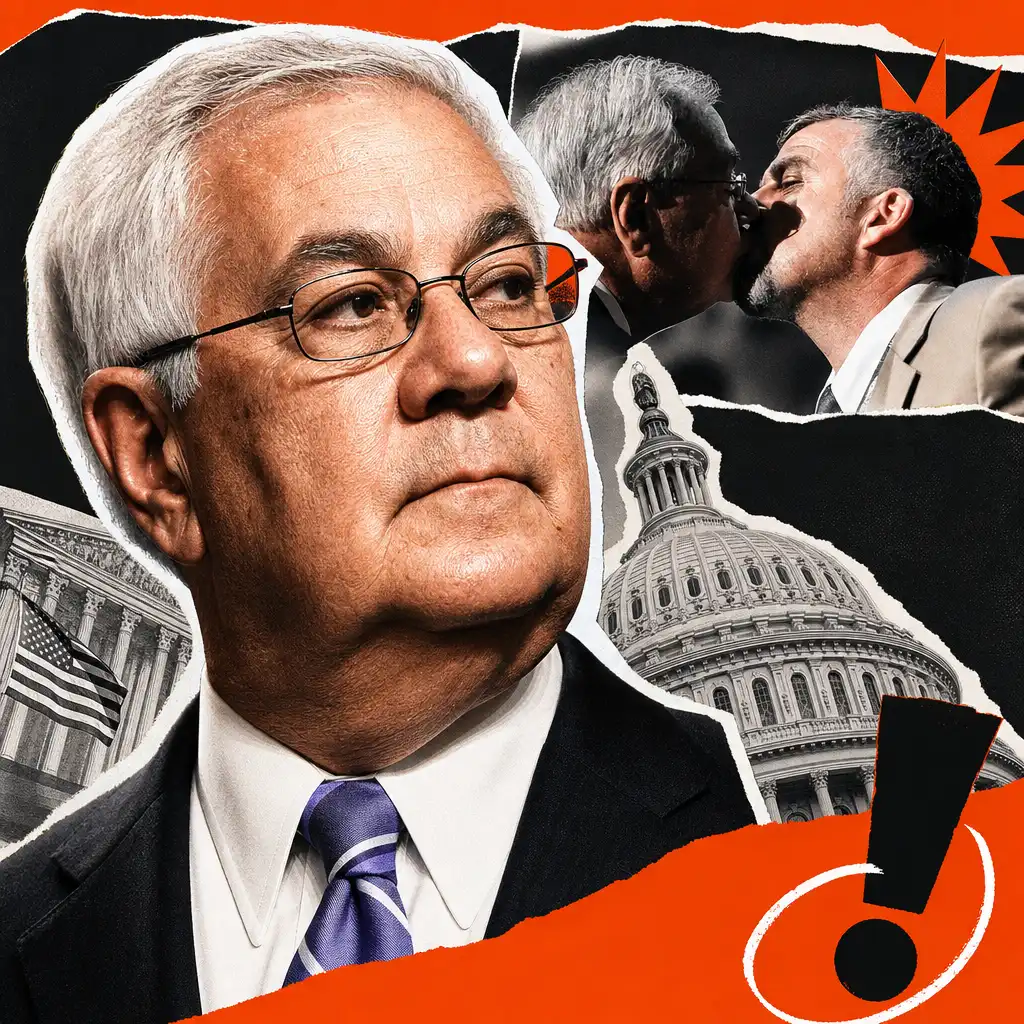
Barney Frank is dead at 86, closing a public life that made him one of the most visible gay elected officials in American politics and a central figure in financial reform after the 2008 crisis.
NBC News Boston reported that the former Massachusetts congressman died in hospice care at his home in Maine, where he lived with his husband, Jim Ready. Frank retired in 2013 after a 32-year political career.
How did Barney Frank make history in Congress?
Frank became the first sitting member of Congress to come out as gay, doing so in 1987, at a time when that disclosure carried serious political risk. He went on to be a forceful advocate for LGBTQ+ rights in Congress, helping make representation less theoretical and much more visible.
His personal life also marked another congressional first. In 2012, Frank married Jim Ready, becoming the first member of Congress to enter a same-sex marriage. It was a milestone with symbolic weight, but also a very human one: an elected official whose private life had once been treated as political ammunition was publicly living it without apology.
What did his family say?
Frank’s sister, Doris Breay, confirmed the loss in personal terms rather than political ones.
“He was, above all else, a wonderful brother. I was lucky to be his sister,” Breay told NBC10 Boston.
It is the kind of line that cuts through a long résumé. Public figures often become shorthand for votes, bills, and television clips. Families, inconveniently for tidy obituaries, remember the person who came home.
What else was Barney Frank known for?
Beyond his work on LGBTQ+ rights, Frank was widely known as a co-sponsor of the Dodd-Frank Wall Street Reform and Consumer Protection Act, passed in 2010 after the 2008 financial crisis and the government bailouts that followed.
The law was designed to strengthen oversight of the financial system and protect consumers after a collapse that shook households, banks, and markets across the country. Frank’s name became permanently attached to one of the major legislative responses to that era.
He leaves behind a political legacy shaped by two different kinds of visibility: the personal courage of coming out while serving in Congress, and the policy work of helping write rules after a national financial disaster. Both drew attention. One also helped make room for others to be seen.