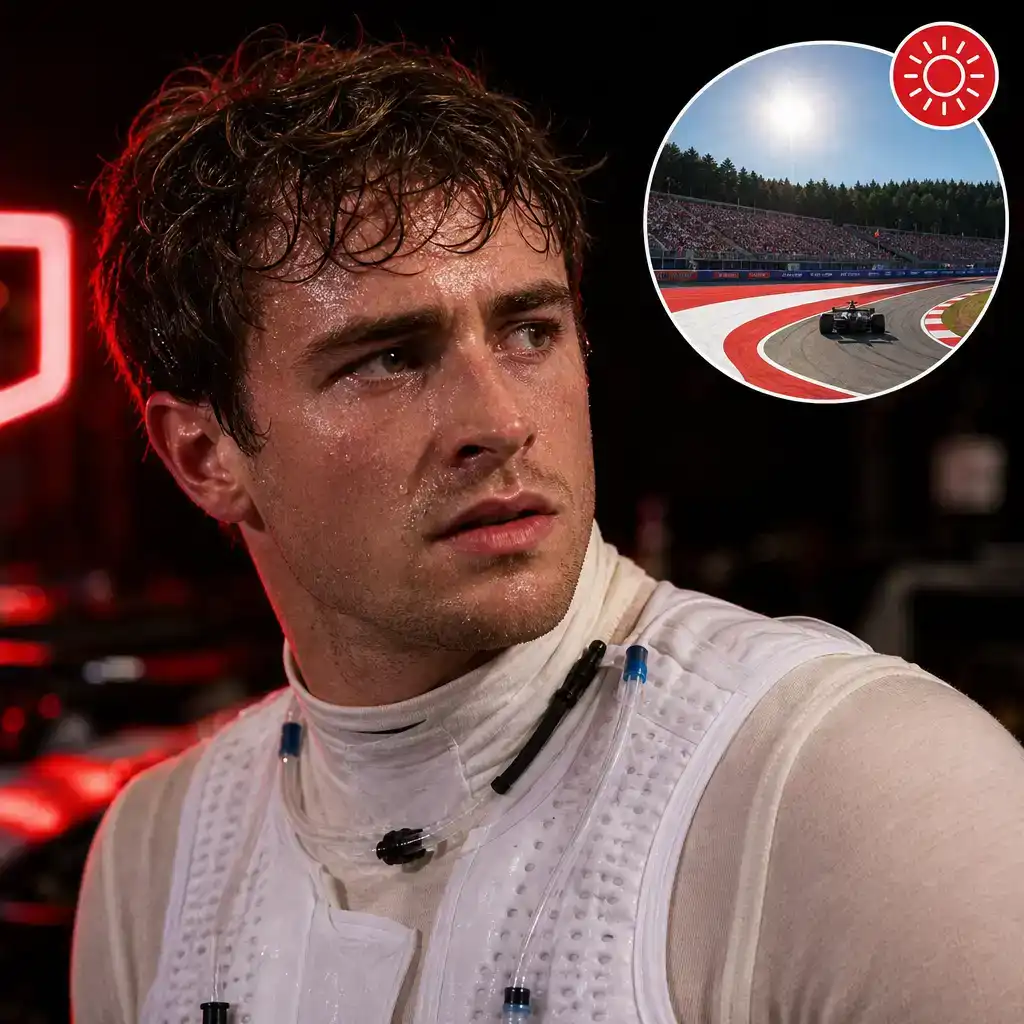
The Austrian GP heat-hazard race designation has arrived as Europe swelters through a heatwave that is setting record temperatures in several countries, including the UK. Formula 1 has used the label before, but Austria is the first event this year to be placed under it.
Why Formula 1 uses the heat-hazard label
The rule was introduced last year, when the Singapore and United States Grands Prix were run under the same designation. It exists for the obvious reason that racing a Formula 1 car in extreme heat is not exactly a spa treatment, unless the spa also requires fireproof underwear and 300 km/h concentration.
Cockpit temperatures can climb above 40C. Drivers are already wearing multiple layers of fireproof clothing, plus a balaclava and helmet, which makes overheating a serious concern rather than just an uncomfortable afternoon at work.
Why some drivers may still avoid the cooling kit
The heat-hazard status allows for extra cooling measures, but not every driver is eager to use the equipment. Some find the cooling kit uncomfortable, and there have also been problems with the coolant running out before the end of a grand prix.
When that happens, the liquid can rise to the temperature of the car itself, which is significantly hotter than the surrounding air. At that point, the helpful cooling system becomes rather less helpful, which is a polite way of describing a very bad trade-off.
For now, Austria becomes the first test of the rule this season, with driver safety once again sharing the bill with performance, comfort, and the weather doing its best to become part of the race strategy.