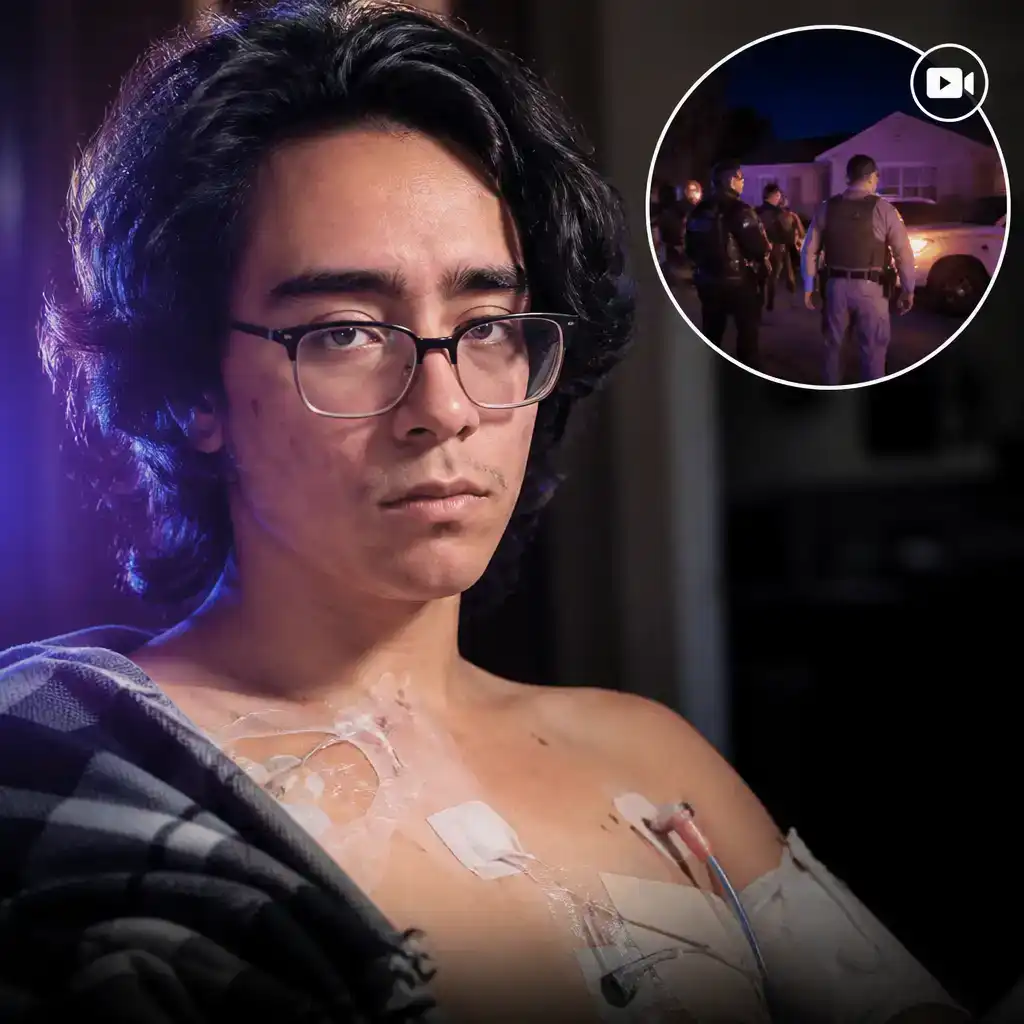
The Arizona swatting shooting that left Axeel Melendez paralyzed now sits at the center of a major legal claim and an uncomfortable question for law enforcement: What happens when someone warns police about a hoax, then officers respond as if that warning never existed?
Melendez, now 24, and his mother filed a notice of claim against Pima County and the Pima County Sheriff’s Department. Arizona’s Family reported that they are seeking a combined $320 million, although earlier coverage placed the demand at $176 million. The filing is a required step before suing a public entity in Arizona, not yet a lawsuit.
“I have had a lot taken from me,” Melendez told the Arizona Daily Star.
How an online gaming dispute became a police emergency
The chain of events began on April 8 while Melendez was playing the survival game Rust. According to the claim, another person on the server asked to inspect his computer to verify that he was not cheating.
Melendez agreed. Soon afterward, he began receiving alerts that several of his accounts were being accessed. The hackers allegedly obtained control of his email and private information, then demanded money.
They also allegedly threatened to report that Melendez had a bomb and to contact immigration authorities about his family, even though the family members are US citizens.
Recognizing the threat as a possible swatting attempt, Melendez called 911. Swatting involves making a false report of a serious and immediate crime, often involving weapons or hostages, to send armed officers to a target’s home.
Audio published by Arizona’s Family captured a dispatcher telling him, “But they can’t just call SWAT on you. That’s not how that works.”
“Nothing’s going to happen,” the dispatcher added.
Less than 48 hours later, something did.
What police were told before deputies opened fire
Someone impersonating Melendez contacted authorities and claimed his father had shot his sister. The notice of claim says the caller used an invalid out-of-state number, offered inconsistent details and placed the report through Tucson’s non-emergency 311 service.
The Pima Regional Critical Incident Team later determined that Melendez did not make the hoax call and that the episode was likely swatting, according to KOLD.
There were other warning signs. The Arizona Daily Star reported that a deputy said over the radio before arriving that the call might be a swatting attempt. Sgt. Aaron Cross, president of the department’s union, also said deputies can ordinarily review an address’s previous call history while traveling to a scene.
That history should have included Melendez’s warning to 911. His legal claim alleges that dispatchers and deputies failed to connect the earlier report with the supposed family shooting.
The case therefore reaches beyond one dispatcher’s reassurance. It raises a broader issue about whether emergency software and patrol procedures clearly flag homes belonging to known swatting targets, especially when officers are responding to reports designed to create panic.
Why the account of the shooting remains disputed
When deputies reached the home, they tried the doors and then broke Melendez’s bedroom window with a shovel. Melendez has said he believed intruders were entering and grabbed his mother’s lawfully owned handgun.
Deputies Santiago Casillas-Velazquez, then a three-year veteran, and Andres Vasquez, then a two-year veteran, encountered him with the weapon and opened fire. They fired eight rounds, striking Melendez twice. The bullets shattered his leg, broke ribs and damaged his spinal cord.
He was left paralyzed from the chest down with a T4 spinal cord injury.
Accounts differ on exactly how Melendez held or used the gun. An initial Police1 report said he pointed it at deputies. Arizona’s Family, citing body-camera footage and attorney Dev Sethi, reported that Melendez was hiding and did not point the weapon. KOLD said the footage does not make clear whether he fired.
Those differences are likely to matter in any lawsuit or official review. What is not disputed is that police arrived because of a fabricated report, Melendez had warned authorities that such a report was coming, and investigators later concluded he was not the caller.
What the claim says Pima County failed to do
Sethi said Melendez “did everything he was supposed to do” by contacting law enforcement before the attack. The claim accuses officials of negligence and reckless conduct, arguing that they failed to preserve, communicate or act on information that could have changed the response.
Pima County and the Sheriff’s Department have 60 days to respond to the notice. Under Arizona law, a claim is treated as denied if officials do not issue an earlier written denial within that period.
The Sheriff’s Department declined to comment because of pending litigation. Sheriff Chris Nanos said an internal review would follow the criminal investigation.
“Were policies followed? Do we need to adjust policies because we were wrong? I don’t know. We’ll see,” Nanos told the Arizona Daily Star.
Tucson police, working through the regional critical-incident team, were assigned to conduct the criminal investigation. No later public report identified or announced an arrest of the alleged swatter, and no subsequent lawsuit or formal county response was found in available reporting.
The size of the claim reflects more than the shooting itself. Paralysis from a spinal cord injury can bring lifelong medical, accessibility and caregiving needs, placing lasting financial and emotional pressure on both the injured person and family members.
Swatting has outgrown its reputation as an online prank
Melendez’s case is part of a much larger problem tied to gaming, livestreaming and online harassment. Targets have included an 81-year-old Minecraft streamer, the grandparents of a Twitch creator and Grand Theft Auto V actor Ned Luke. A man involved in swatting Luke was sentenced to four years in prison.
After creating a national tracking system, the Federal Bureau of Investigation recorded more than 300 swatting incidents from May through September 2023. The Associated Press reported in 2026 that the database had since logged thousands.
Retired FBI agent John Iannarelli told Arizona’s Family that responsibility begins with the person making the false report, but added that “law enforcement has to rise to the call and look at how crime is changing.”
That is the central issue in Melendez’s claim. The alleged attackers used stolen personal information and a false emergency report as weapons. Police were warned about the method in advance. The remaining question is whether the system was prepared to hear that warning when it mattered.