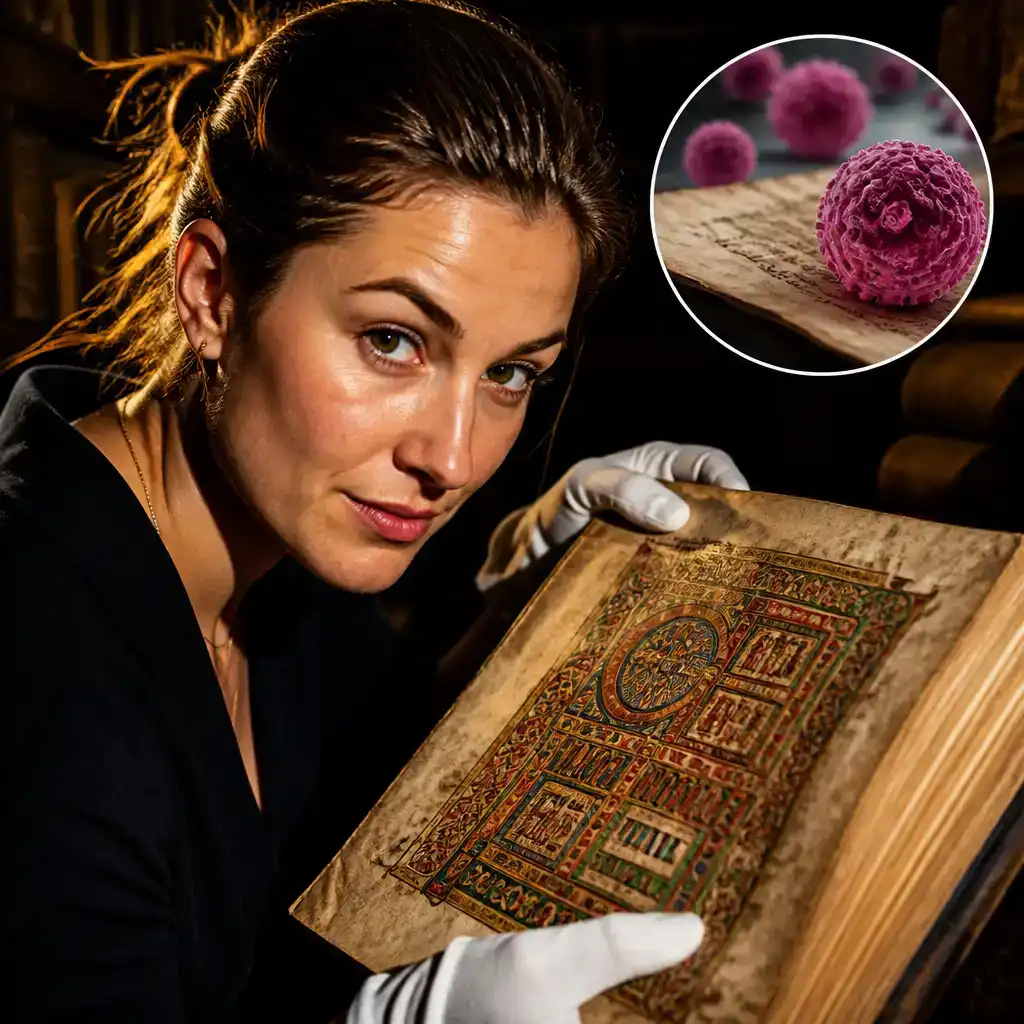
Scientists studying the 1,000-year-old York Gospels have found ancient disease DNA hidden in the manuscript’s parchment. The genetic traces came from sheeppox virus, an animal disease that can spread rapidly and prove deadly, particularly among young animals.
Anglo-Saxon scribes produced the Christian manuscript in Canterbury during the 10th century. It has since been preserved at York Minster, where its pages have survived long enough to become a record not only of religious writing but also of medieval animal health. Manuscripts, apparently, kept more than one kind of history.
How did sheeppox virus end up in the parchment?
A University College Dublin study detected traces of the virus in the animal skins used to make the York Gospels’ parchment. Sheeppox is not believed to infect humans, but it remains a serious threat to livestock.
The more surprising discovery concerned the skins themselves. Researchers found that the parchment came from calves or goats rather than sheep. That leaves two possible explanations: the virus may once have crossed between animal species, or the skins could have been contaminated while the parchment was being produced.
The evidence does not mean anyone reading the manuscript was at risk. Instead, the pages preserved fragments of viral genetic material for roughly a millennium, quietly waiting for modern researchers to arrive with the appropriate equipment and questions.
Why do researchers call it a biological time capsule?
University College Dublin described the York Gospels as a “biological time capsule” because its parchment retained evidence of a centuries-old pathogen. The discovery raises the possibility that other historic collections may also contain genetic records of animal disease outbreaks.
“It is possible that archives and libraries around the world also contain the genetic traces of disease outbreaks in animals in the past,” said lead author Louis L’Hôte.
Such material could help scientists reconstruct how livestock diseases developed and spread across centuries. Books made from animal skins may therefore preserve biological information that conventional historical records missed, since medieval scribes were not generally compiling veterinary surveillance reports.
What can the discovery reveal about sheeppox?
L’Hôte said ancient viral genomes can show how pathogens evolved and affected earlier societies. The evidence indicates that sheeppox has troubled Eurasian sheep herds for at least 3,500 years.
“These genomes help us understand how these pathogens evolved and how they affected past societies such as sheeppox virus, which we show has been affecting Eurasian sheep herds for at least three-and-a-half millennia,” L’Hôte said.
The disease remains a threat today. By comparing ancient genetic material with modern strains, researchers may gain a clearer picture of how the virus changed over time and identify information that could support efforts to eradicate it.
The York Gospels have long been valued as a rare surviving Anglo-Saxon manuscript. The new findings add another role: an accidental archive of livestock disease, preserved in plain sight between the covers.