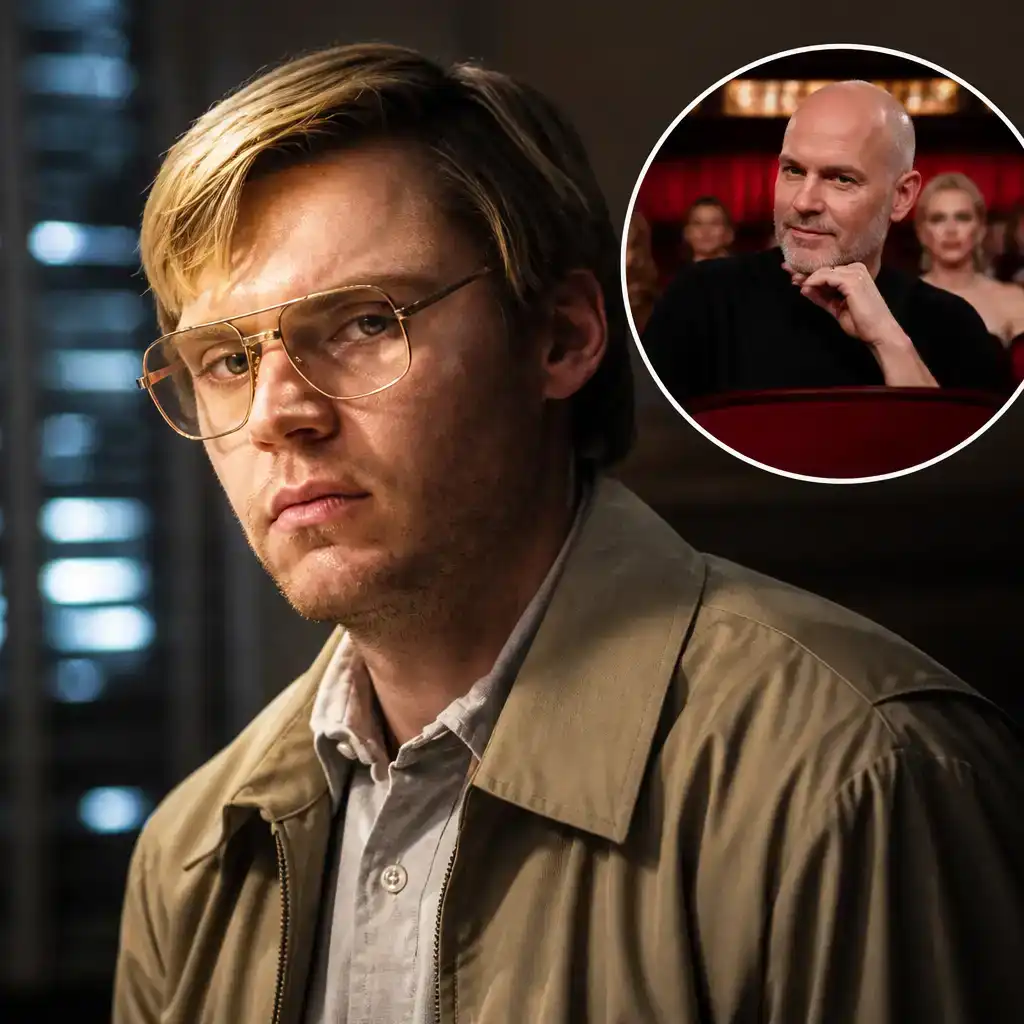
Warning: This article contains spoilers and references to murder and sexual violence.
The American Horror Story Dahmer scene in season 13 has drawn fierce criticism, with viewers accusing creator Ryan Murphy of using a real serial killer and his victims as material for a comedy bit.
The newly released season reunites a substantial collection of franchise regulars, including Sarah Paulson, Evan Peters, Angela Bassett, Kathy Bates, Emma Roberts, Billie Lourd, Gabourey Sidibe, Leslie Grossman and Jessica Lange. Several are reprising multiple roles from the show’s earlier seasons.
Jeffrey Dahmer, previously depicted in 2015’s American Horror Story: Hotel, has also returned. Unlike the fictional favourites, however, he was responsible for the murders of 17 men and boys. Unsurprisingly, his comeback has received a rather different welcome.
What happens in the controversial scene?
In the opening sequence of season 13’s sixth episode, Seth Gabel reprises his version of Dahmer from Hotel. Evan Peters appears as James Patrick March, the fictional hotel owner and murderer he played in the same season.
The two characters sit in the back of a Waymo taxi and discuss their “appetite” for killing. Dahmer is then shown browsing what appears to be a fictional dating app resembling Grindr, the platform primarily used by gay men.
During the exchange, Dahmer suggests that the app makes finding victims almost “too easy”. The scene appears to treat the conversation as dark comedy, which proved to be the central problem for many viewers. There is dark humour, and then there is placing a real murderer in a self-driving taxi for a dating-app joke. Some audiences found that distinction fairly easy to identify.
Dahmer murdered 17 men and boys between 1978 and 1991, many of whom were Black or from other ethnic minority backgrounds. His crimes included drugging victims, sexual violence, dismemberment and cannibalism. His youngest victim was 14.
Why are viewers condemning the episode?
One viewer on X argued that the sequence made light of genuine suffering and ignored the brutality of Dahmer’s crimes.
“Jeffrey Dahmer was a real person and serial killer who murdered 17 innocent men and boys,” they wrote, before describing his abuse of the victims and their bodies.
They continued: “He is not a fictional character or someone to use for a comedic bit. Ryan Murphy is a weirdo with no respect for the victims or their families. His obsession with real murderers and falsifying their stories while advertising it as factual is beyond unethical and disgusting. This is wrong and gross.”
Another critic focused on the relatives left behind, writing: “Seventeen real families get to watch their sons’ killer get a comedy bit.”
Not everyone agreed. One person defended the programme by arguing that audiences should separate fiction from reality: “That is actually an actor playing a fictional character inspired by Dahmer. I hope you can enjoy art without feeling this way someday.”
That defence did little to settle the broader question. The character may exist inside a fictional horror series, but the name, crimes and victims come from real life. The episode depends on viewers recognising that history while also asking them to accept it as entertainment.
Has Ryan Murphy faced similar criticism before?
This is not the first time a Ryan Murphy production has been accused of exploiting Dahmer’s crimes. Evan Peters played the killer in Netflix’s Monster: The Jeffrey Dahmer Story, which also faced criticism over its treatment of the victims and their families.
The Netflix drama prompted claims that the creators had humanised or even glorified serial killers by building sympathetic narratives around them and casting well-known, conventionally attractive actors.
Ian Brennan, who co-created Monster with Murphy, rejected that interpretation. He told Variety there was “a distinction” between presenting killers as human beings and inviting sympathy for them.
“We’re, if not humanizing, Homo sapiens-izing,” Brennan said. “What’s interesting is showing that these are human beings without trying to humanize them or make them sympathetic.”
Season 13’s taxi sequence has revived the same debate, only this time with an added dating-app gag. For critics, the issue is not whether a horror series can portray a real murderer. It is whether the suffering of his victims should become a punchline decades after their deaths.