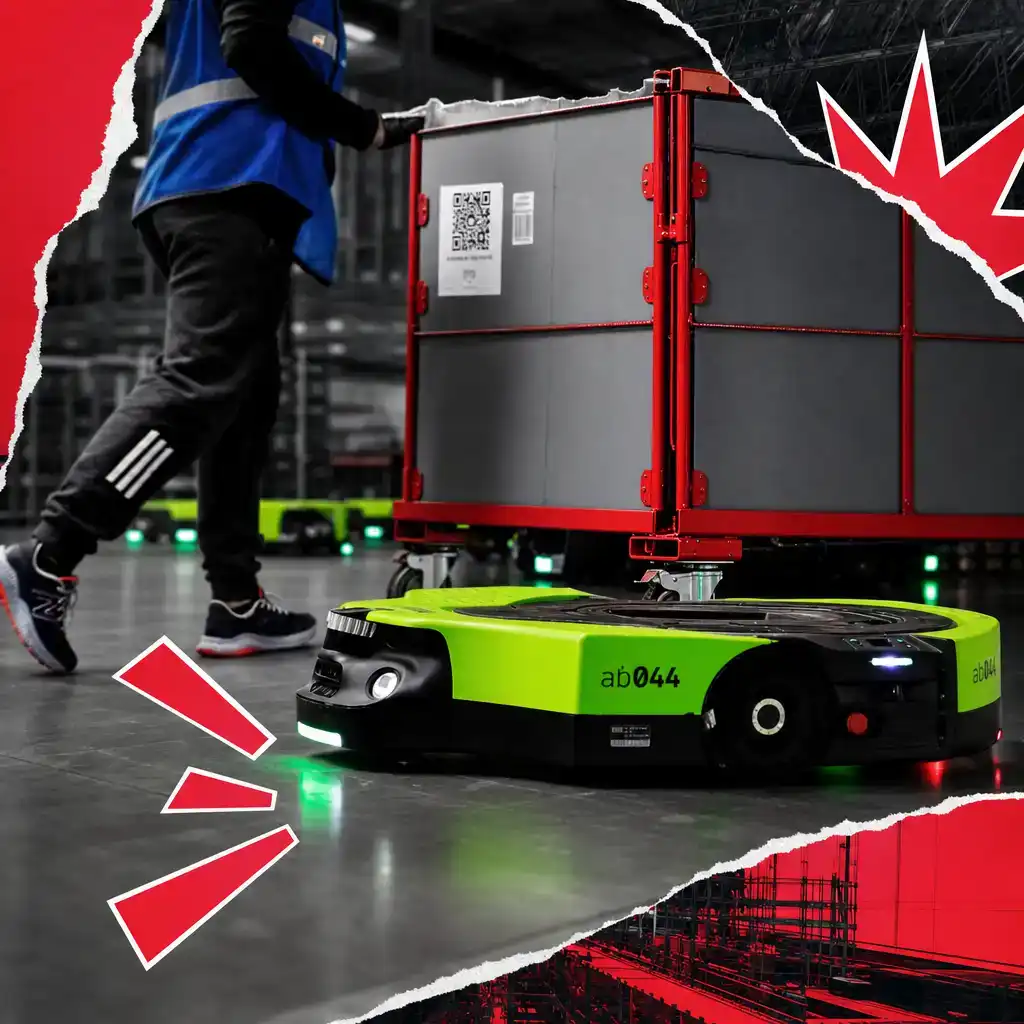
Amazon warehouse robot Proteus is getting a more conversational upgrade, which is either a useful workplace improvement or a sign that even machines now prefer clear instructions. Amazon says the next version of its fully autonomous warehouse robot will understand task requests in ordinary language, rather than relying on workers to direct it through specialized software.
The change matters because Proteus is not a novelty robot wandering around for morale. It is built to do physical warehouse work, especially heavy lifting and moving large carts through Amazon facilities.
What changes with Proteus?
Amazon says the AI-powered version of Proteus will let employees assign work much the way they would speak to another person on the floor. Previously, workers needed specialized software to guide the low, tortoise-like robots through tasks.
Scott Dresser, vice president of Amazon Robotics, described the shift as a move away from manual direction and toward a system that can decide how to complete a job once it understands the goal.
“You tell it what needs to be done. It figures out the priority, the route, the timing,” Dresser said.
That is the central upgrade: language instead of code, with the robot handling more of the planning once a worker gives the instruction.
Where Amazon says the robot will work
The current Proteus systems are limited to dock areas, according to Amazon. The next generation is designed to operate across a much wider part of the company’s logistics network.
“The new system can work anywhere items need to be moved,” Amazon said.
That could include several routine but physically demanding warehouse jobs:
- Transporting containers as they arrive at a site
- Moving containers between workstations
- Assisting employees across fulfillment centers
- Supporting work at delivery sites
Amazon says the upgraded system is now being piloted in its labs. The company plans to deploy it in Europe during the first half of 2027.
How Proteus fits into Amazon’s robotics plans
Proteus is one part of a larger automation roadmap inside Amazon’s logistics operation. The company has been steadily expanding its use of robotics across warehouses and delivery infrastructure, a change meant to move goods faster and reduce manual handling.
Alongside Proteus, Amazon says it plans to expand Vulcan, its touch-sensitive robot, to more sites. It also plans to broaden the use of a collaborative tote-handling system that was first piloted in Barcelona.
Both systems are expected to reach additional locations across Europe in the coming year.
The employment question behind the machines
Amazon’s robotics push lands in a workplace conversation that is not exactly subtle. The company says it is “creating new jobs alongside these technologies” and says it has hired hundreds of thousands of employees globally since introducing robotics into its operations.
Amazon also maintains that its robots are meant to support workers and speed up operations, not replace hundreds of thousands of people.
That reassurance is now part of almost every major automation announcement, because the practical benefits are easy to understand and the labor concerns are hard to ignore. A robot that can take spoken instructions may make warehouse work smoother for some employees. It also makes clear how quickly warehouse technology is moving from tools workers operate to systems workers increasingly supervise.