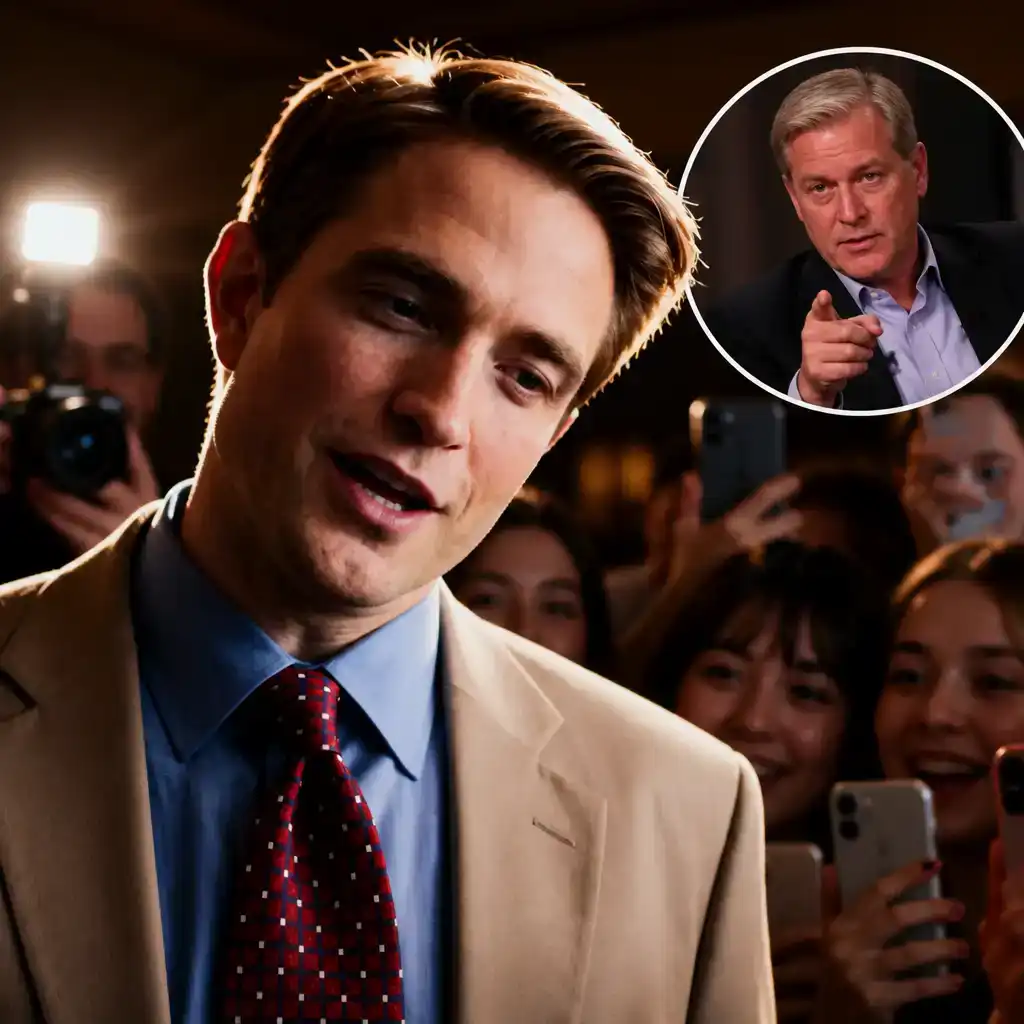
The Primetime box office hit arrived with $19.2 million from 2,863 North American cinemas, putting the Robert Pattinson thriller at the upper end of expectations. It finished fourth for the weekend, but with a production budget of only $15 million, A24 does not need superhero mathematics to see a likely theatrical profit.
The film trailed Disney’s Avengers: Endgame Encore with $26 million, Sony’s Resident Evil reboot with $23 million and Paramount’s new wilderness adventure The Heart of the Beast with $20 million. Still, its opening ranks as A24’s third biggest, behind Backrooms at $81.4 million and Alex Garland’s Civil War at $25.5 million. It also beat the $15.7 million debut of Josh Safdie and Timothée Chalamet’s Marty Supreme.
Directed by Lance Oppenheim, Primetime follows the production of To Catch a Predator and journalist Chris Hansen’s increasingly frantic efforts to confront suspected child predators through elaborate sting operations. Critics gave it an 87% score on Rotten Tomatoes, while opening-weekend audiences delivered a more cautious B grade through CinemaScore.
Given the deliberately disturbing subject matter, that response was hardly disastrous. David A. Gross, publisher of the FranchiseRe box office newsletter, called the audience grade good under the circumstances and offered the more important verdict: “This is a hit.” Five factors helped it get there.
Robert Pattinson gave the film genuine star power
Robert Pattinson has spent 2026 making a persuasive case that sleep is optional. He starred opposite Zendaya in A24’s dark relationship comedy-drama The Drama, appeared in Christopher Nolan’s summer blockbuster The Odyssey and is due in the science-fiction sequel Dune: Part III. He has also been filming The Batman: Part II in London.
Unlike those larger ensemble productions, Primetime depended heavily on Pattinson’s name. More than 75% of ticket buyers surveyed by PostTrak identified him as their main reason for attending. That is an unusually direct measure of star power, especially for a grim, adult-oriented film without a familiar franchise logo doing part of the work.
Pattinson also delivered that audience without an extravagant promotional campaign. He attended the Venice Film Festival premiere and completed several phone interviews, but there were no giant stunts, airborne advertisements or urgent attempts to dominate every social platform for three weeks. The film largely sold itself through reviews, discussion and Pattinson’s presence.
It is his second consecutive A24 success after The Drama, which opened to $14.3 million domestically earlier this year. For an actor who once spent years distancing himself from blockbuster heartthrob status, he has become rather effective at filling cinemas.
Why did Gen Z turn out for Primetime?
Opening-weekend attendance skewed sharply young, with 69% of the audience under 30. That is notable because To Catch a Predator aired from 2004 to 2007, when much of Gen Z was either very young or not yet watching investigative television for recreation.
The true-crime format helped bridge that gap. Younger audiences did not need personal nostalgia for Chris Hansen’s original programme to understand the appeal of an unsettling story about media, manipulation and morality. A24 also spent years building credibility with that demographic through distinctive films such as Lady Bird, Everything Everywhere All at Once and Marty Supreme.
Primetime is the studio’s second release this year to become a major event for younger moviegoers. The first, Backrooms, earned $400 million worldwide against a $10 million budget. Cinema owners, who have repeatedly worried that young people consider theatres obsolete, may now postpone the funeral arrangements.
Pattinson has jokingly claimed membership in Gen Z himself, despite being 40 and therefore firmly a Millennial. During a Vanity Fair lie detector segment, his Die My Love co-star Jennifer Lawrence suggested he believed he qualified because he cold-called people on FaceTime. Pattinson said his birth year “doesn’t matter.” Lawrence replied: “I believe that you believe you’re Gen Z.” The actual Gen Z audience apparently accepted the application.
Chris Hansen’s criticism doubled as publicity
A24 promoted Primetime with a campaign built heavily around social media, but Chris Hansen supplied some of its most effective publicity without appearing especially pleased about it.
Long before watching the finished film, Hansen publicly criticised Pattinson’s portrayal as “overly dramatic.” He stressed that the movie was not a literal account of his career and questioned the studio’s “motive” for dramatising the production of To Catch a Predator.
His opinion did not improve after a screening. Hansen described the film as “so bizarre” and “detached from reality,” generating another round of headlines. Those comments reached viewers already familiar with the original television series and introduced the movie to people who might otherwise have missed A24’s campaign.
The disagreement also gave audiences a clear reason to investigate for themselves. Was Pattinson’s performance an insightful interpretation, an excessive reinvention or both? That question is more useful to a theatrical release than polite silence. Hansen’s objections kept the film in entertainment coverage and created exactly the sort of debate that sends curious viewers to cinemas. Marketing departments usually have to pay for that level of attention.
Venice gave the thriller an early advantage
The Venice Film Festival does not guarantee commercial success. It has helped launch major winners including A Star Is Born, The Shape of Water and La La Land, while high-profile titles such as Joker: Folie à Deux and After the Hunt showed that a glamorous Italian premiere cannot solve every problem.
For Primetime, however, Venice worked as intended. The film received enthusiastic reviews and a seven-minute standing ovation at its premiere. With relatively few Hollywood-backed productions competing for attention at the festival, it became one of the main subjects of conversation on the Lido.
That reception gave A24 several weeks of positive word of mouth before the general release. Early acclaim also helped establish the film as more than a sensational reconstruction of a controversial television series. Viewers were being sold a serious, formally ambitious thriller from an emerging filmmaker, not merely Robert Pattinson wearing Chris Hansen’s suit.
The festival response mattered because Primetime was always a more difficult proposition than a conventional crowd-pleaser. Its subject is disturbing, its tone intentionally uncomfortable and its audience grade reflects that. Venice gave it prestige, visibility and a useful head start before ticket buyers had the chance to feel unsettled for themselves.
Lance Oppenheim became part of the story
Lance Oppenheim, 30, was already known for documentary projects including Some Kind of Heaven and HBO’s Ren Faire. Primetime marked his narrative feature debut and positioned him as a filmmaker capable of moving between documentary observation and scripted drama.
His profile rose further only days after the Venice launch. At the Telluride Film Festival, Oppenheim and comedian Nathan Fielder unveiled the previously secret documentary You Can See Everything, focused on Theranos founder Elizabeth Holmes.
The surprise announcement placed Oppenheim at the centre of two major festival conversations almost simultaneously. One project examined how television turned predator stings into mass entertainment; the other returned attention to one of the most heavily documented corporate fraud stories of recent years. Apparently one complicated media spectacle was not enough for the month.
The added attention brought more viewers toward Primetime and reinforced the sense that its director was becoming a significant new talent. Combined with Pattinson’s drawing power, A24’s young audience, Hansen’s complaints and strong festival reviews, Oppenheim’s sudden visibility helped turn a challenging $15 million production into a breakout theatrical success.