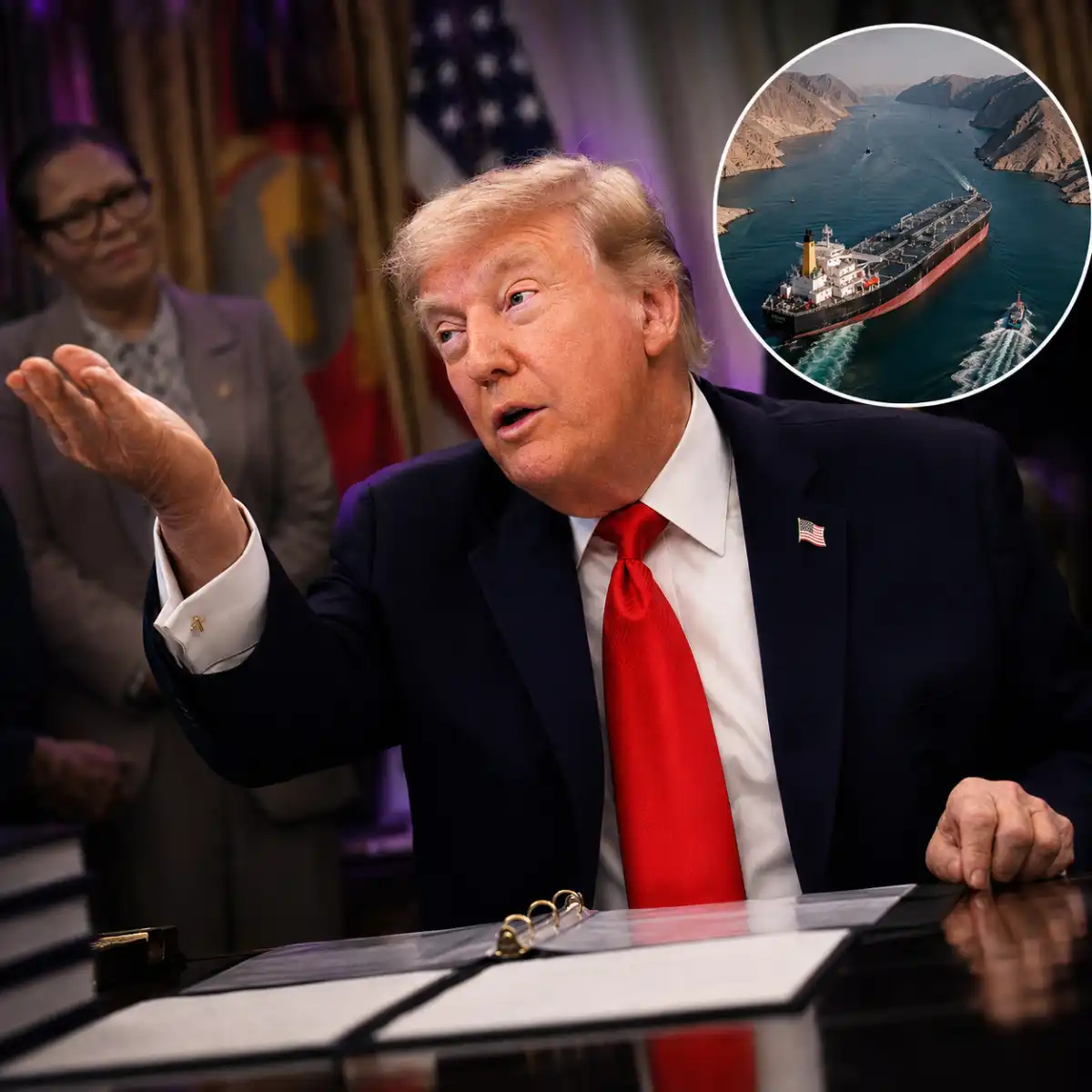
The US-Iran deal has pushed Brent crude lower and raised hopes that energy costs will stop doing their recent impression of a stress test. But the agreement is only a framework for a longer-term end to hostilities, and the global economy is unlikely to reset simply because the paperwork is moving.
More than three months after the United States and Israel began their war with Iran, the White House and the Iranian regime have agreed a framework intended to bring a more durable halt to the fighting. The conflict had effectively shut one of the world’s most important shipping channels for oil, liquefied natural gas and other essential commodities, squeezing supply and lifting prices.
Experts are warning that even if the politics holds, the logistics will take longer. Ships, crews, insurers and energy infrastructure all have to move back toward normal. None of those is known for instant obedience.
How fast can the Strait of Hormuz reopen?
US President Donald Trump welcomed the agreement in a social media post with the line: “Let the oil flow!” He said the arrangement would include reopening the Strait of Hormuz to commercial shipping.
Ship-tracking data checked by BBC Verify suggests traffic remains thin despite the announcement. According to MarineTraffic, only two vessels with active location trackers have left the waterway since Sunday: one bulk carrier and one tanker.
The strait has been closed to most shipping since 28 February. Only limited numbers of vessels considered friendly to Iran have been able to pass through. About 200 vessels are stuck in the Gulf, with the threat of sea mines or drone attacks keeping crews exposed and commercial operators cautious.
Neil Shearing, group chief economist at Capital Economics, said the question now is whether the agreement is “a fragile truce or a durable settlement”.
He added that it will probably “take some time for oil flows through the Strait to return to pre-war levels”.
“Even if ships now have safe passage, tankers are in the wrong place, oil production/refining facilities need time to return to full capacity, and questions over the cost and availability of insurance for ships traversing the Strait will remain,” he said.
Even during the ceasefire before the framework was announced, shipping firms were reluctant to move vessels out. Their first task is likely to be extracting stranded ships safely, not immediately restoring the old rhythm of global energy trade.
What happens next for oil and fuel prices?
In normal conditions, roughly a fifth of the world’s oil and liquefied natural gas supplies move through the Strait of Hormuz. When traffic stopped, oil prices climbed sharply. That fed into petrol, diesel and jet fuel costs, because energy markets have a sense of humour like that.
During the conflict, Brent crude, the global oil benchmark, reached about $120 a barrel. Before hostilities began, it had been trading just below $70. After news of the framework agreement, Brent fell to $83.55.
Trump said the Strait of Hormuz would reopen once the “deal” is signed on Friday. Florence Schmit, senior energy strategist at Rabobank, said there is a “strong possibility that we’ll see a lot of volatility” before any signing.
“Some things are not confirmed on both sides, important things: we don’t know if the deal will be signed,” she told the BBC.
“What we’ve seen so far is a deal for 60 days for the opening of the Strait, but what happens after that? What if the Iranians want to re-insert a toll system?
“A full-scale peace agreement could still be a long way off.”
Schmit said normal conditions in the system, including prices, “could return by the end of the year” if a full ceasefire is agreed. That would mean getting back to pre-war levels of about 26 crude oil tankers passing through the strait each day.
With markets reacting to positive headlines, she said Brent could fall below $80 a barrel in a sentiment-driven sell-off. But by year-end, it could average in the mid-$80s again as “the geopolitics is stripped out” and traders reassess the practical reality.
Could food prices also be affected?
Food prices could benefit if fertiliser supplies move closer to normal. Fertiliser is closely linked to energy markets, and its costs have risen sharply during the conflict, increasing pressure on farmers.
Maurizio Carulli, global energy analyst at Quilter Cheviot, said the ceasefire “should help ease the immediate pressure on fertiliser markets”, but he also warned that the effect will not be immediate.
He said about a third of traded fertiliser and major volumes of natural gas, used to make nitrogen-based fertiliser, pass through the Strait of Hormuz. Damage to energy infrastructure will also take time to repair.
“What’s more, the crop season has already begun in several parts of the world, so the resumption of deliveries of nitrogen and phosphate fertilisers will be too late for agricultural crops, which will negatively affect global produce,” he said.
Jet fuel, another oil by-product, has already moved lower in Northwest Europe trading. Northwest Europe jet fuel is now at $1,033 per tonne, compared with $831 per tonne before the conflict and around $1,840 at its peak.
That is a meaningful fall from the high point, though still comfortably above the pre-war level. Comfortable for producers, that is. Less so for airlines and passengers.
What could the wider economic effects be?
The war with Iran has affected economies well beyond the region because higher energy prices tend to feed into inflation. Fuel is an input across transport, manufacturing and agriculture, so price shocks do not politely stay in one category.
That has complicated the job of central banks, which use interest rates to try to keep inflation under control. Higher rates can slow borrowing and spending, but they also put pressure on households and businesses.
In the United Kingdom, the Bank of England had been widely expected to cut interest rates this year before the war began. Those expectations shifted quickly once energy costs surged, markets were expecting the Bank to hold rates or potentially raise them later in the year.
Russ Mould, investment director at AJ Bell, said: “Just last week, markets were pricing in two rate hikes by early 2027.
“The probabilities have now shifted to just one rate hike by December and then potentially no change for at least the first half of 2027.
“That could mean companies having greater confidence to hire more people, consumers being more willing to spend money, allowing the property market to warm up after having gone cold for sellers in recent months.”
The direction is encouraging for consumers and businesses, but the timing remains uncertain. A signed agreement, safer shipping, working infrastructure, available insurance and calmer energy markets all have to line up. For now, the deal reduces one major risk. It does not remove the backlog created while the world’s energy system was forced to route around a blocked artery.